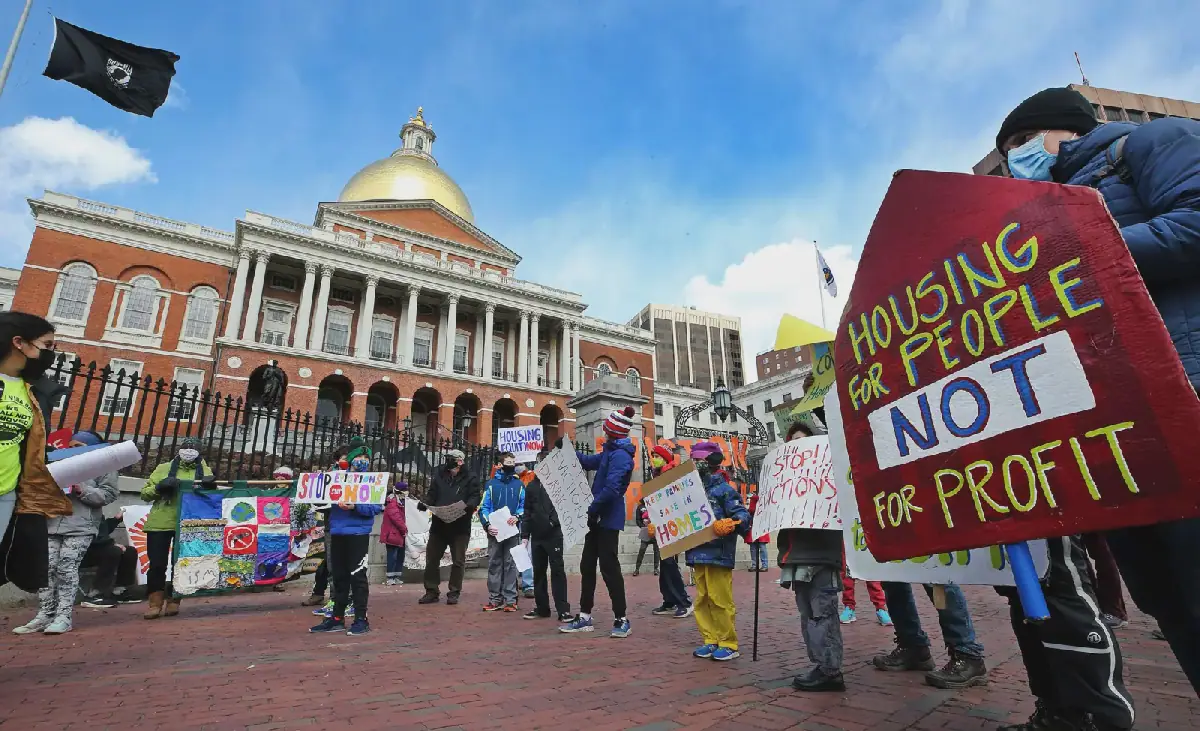
The Tenant Union Federation (TUF) released a report on October 26, criticizing the Trump administration's housing policy as a "catastrophic failure." The report, titled "The State of the Nation's Tenants," highlights a shortage of 7.1 million affordable housing units for low-income renters in the US. According to TUF, the median rent for a one-bedroom apartment in the 50 largest metropolitan areas is $1,572.
The report also notes that the federal minimum wage has been stuck at $7.25 per hour, requiring a minimum-wage worker to work 116 hours per week to afford a modest two-bedroom apartment. Furthermore, no state or major city in the US has an adequate supply of housing to meet the needs of low-income residents. The TUF report attributes the chronic shortage of affordable housing as a major factor in poverty, citing data from Pew Research.
The Trump administration has rolled back protections for low-income renters living in federally subsidized housing, making it easier for landlords to evict tenants. The administration has also proposed eliminating housing assistance for mixed-status immigrant families. Evictions are a leading cause of homelessness in the US, which has increased by 33% between 2020 and 2024, according to the John Hopkins Bloomberg School of Public Health.
TUF founder and director Tara Raghuveer stated that she frequently speaks with individuals who hold multiple jobs but struggle to pay rent due to a combination of inflation and a predatory real estate market. Raghuveer argues that policymakers have failed to regulate the market, leading to widespread displacement of low-income renters.
Some Democrats and liberals focus on increasing the housing supply, arguing that reducing regulatory barriers will lead to more construction and lower prices. However, Raghuveer and other tenant advocates see significant gaps in this approach. Raghuveer argues that the focus on supply ignores the number of affordable units lost each year due to an unregulated market.
The TUF report notes that between 2014 and 2024, the number of rental units costing over $2,000 per month increased by 5.8 million, while the number of units costing less than $1,000 per month decreased by over 9 million. Large landlords and private equity firms have acquired significant numbers of rental properties, leading to increased rents and decreased affordability.
Tenant advocates like Kenny Loth, a member of Tacoma Tenants and Newcastle Tenant Union, say that they have seen firsthand the effects of unaffordable housing. Loth, who has experienced homelessness, notes that large landlords often fail to maintain properties while raising rents. In response, some cities like Tacoma are considering measures to protect tenants, including voter-approved rent control measures.
Key points
- The US faces a shortage of 7.1 million affordable housing units for low-income renters.
- The Trump administration's housing policy has been criticized for rolling back protections for low-income renters.
- Tenant advocates argue that increasing the housing supply without regulations will not address the root causes of the affordable housing crisis.