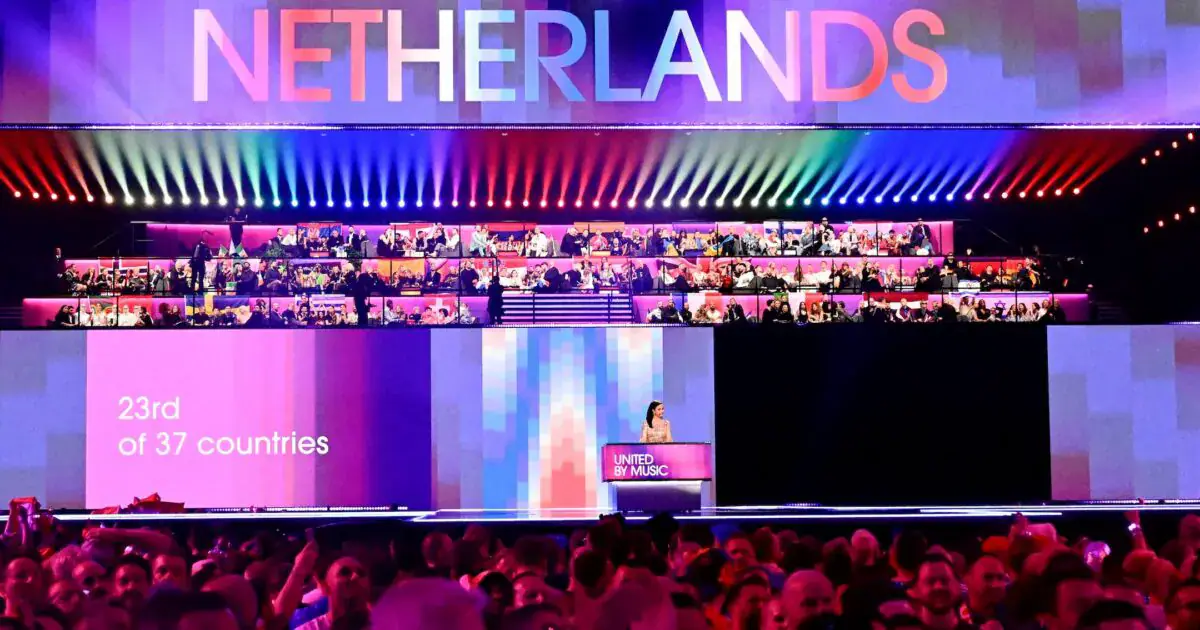
The Netherlands has announced its withdrawal from the Eurovision Song Contest, reversing an earlier decision to participate. The Dutch public broadcasting organisation, Nederlandse Publieke Omroep (NPO), cited a lack of support from broadcasters due to the sensitivity surrounding Israel's participation. NPO's media director, Jurre Bosman, acknowledged that Israel's participation elicits strong reactions in society, causing division and discussion.
The Netherlands initially planned to re-enter Eurovision in 2027, which will take place in Burgas, Bulgaria. However, the decision was met with backlash, with around 400 public broadcasting employees signing a letter urging NPO to reconsider. The employees emphasized that they only wanted to send an artist or staff to the festival if they had the full support of one or more broadcasters.
The controversy surrounding Israel's participation in Eurovision has sparked mass protests and impacted viewership. The 2026 contest drew 131 million viewers, a significant decrease of 35 million from the previous year. Eurovision director Martin Green expressed his disappointment, stating that the organisers understood and respected the strength of feeling behind the Netherlands' decision.
The Netherlands is not the only country to boycott Eurovision over Israel's participation. Ireland's broadcaster RTÉ announced in September that Ireland would not participate, citing the ongoing humanitarian crisis in Gaza. Spain's broadcaster RTVE also favours a continued boycott. Czechia pulled out of the event this month, citing budget cuts as the reason.
The Dutch network Avrotros, which usually oversees the Dutch entry, had withdrawn from Eurovision in August. Avrotros stated that the event "can no longer be considered neutral" with Israel taking part amid the severe humanitarian suffering in Gaza and restrictions on press freedom. Despite this, NPO initially believed there was sufficient support among public broadcasters to allow the Netherlands to return.
The Eurovision Song Contest will still be broadcast in the Netherlands by the network NOS. Eurovision director Martin Green said he was "deeply sorry" that the Netherlands would not participate. The organisers understand and respect the decision, acknowledging the strength of feeling behind it in the Netherlands.
The controversy surrounding Israel's inclusion in Eurovision has prompted significant debate and discussion. The Netherlands' withdrawal highlights the challenges faced by the contest in balancing participation with sensitivity towards current events. The 2027 Eurovision Song Contest is set to take place in Burgas, Bulgaria, with or without the Netherlands.
Key points
- The Netherlands withdraws from Eurovision due to sensitivity over Israel's participation.
- The controversy surrounding Israel's participation has sparked mass protests and impacted viewership.
- Several countries, including Ireland and Czechia, have also pulled out or expressed support for a boycott.