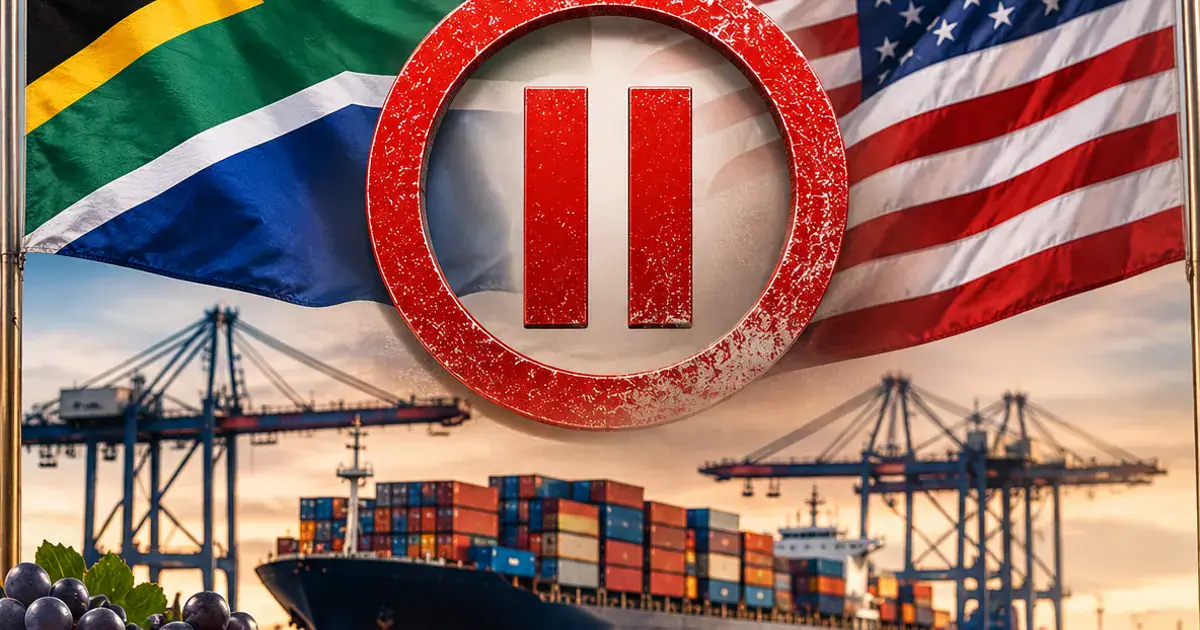
The Trump administration announced on Monday, November 2, 2026, that South Africa has been suspended from the African Growth and Opportunity Act (AGOA). This decision will result in South Africa losing its preferential duty-free access to the American market, effective January 1, 2027. The suspension was attributed to South Africa's trade barriers, corruption, and alleged threats to American national security and foreign policy interests, which are deemed inconsistent with AGOA's eligibility requirements.
The suspension is seen as a further blow to already strained relations between Washington and Pretoria. Tensions have escalated over several issues, including disagreements over South Africa's land reform and black economic empowerment policies. Additionally, false claims of persecution against white South Africans have contributed to the strained relations. The US has also expressed opposition to South Africa's recent move to take Israel to the International Court of Justice over allegations of genocide in Gaza.
Rwanda has also been suspended from AGOA, alongside South Africa. The Trump administration cited specific concerns regarding South Africa's trade practices and policies, which they believe do not align with the requirements of AGOA. This act is designed to promote economic development in Africa by providing eligible countries with duty-free access to the US market.
The African Growth and Opportunity Act (AGOA) is a significant piece of legislation that has been instrumental in fostering economic ties between the US and eligible African countries. By providing duty-free access to the US market, AGOA aims to stimulate economic growth, create jobs, and encourage investment in participating countries. South Africa's suspension from AGOA may have far-reaching implications for its economy, particularly for industries that heavily rely on exports to the US.
The decision to suspend South Africa from AGOA has been met with concern from various stakeholders. The impact of this suspension on South Africa's economy and its trade relations with the US will be closely monitored. As the country prepares for the implementation of this decision, it is expected to explore alternative markets and strategies to mitigate the effects of losing duty-free access to the US market.
The US Embassy in South Africa has yet to provide a detailed statement on the implications of this decision. However, it is clear that the suspension of South Africa from AGOA marks a significant shift in US trade policy towards the country. As trade relations between the two nations continue to evolve, stakeholders will be watching closely for any further developments.
The suspension of South Africa from AGOA underscores the complexities of international trade relations and the importance of compliance with eligibility requirements. As South Africa navigates this new landscape, it will need to address the concerns raised by the US and work towards resolving the issues that led to its suspension from AGOA.
Key points
- South Africa's suspension from AGOA will result in the loss of duty-free access to the US market from January 1, 2027.
- The suspension is attributed to South Africa's trade barriers, corruption, and alleged threats to American national security and foreign policy interests.
- The decision marks a significant shift in US trade policy towards South Africa and may have far-reaching implications for the country's economy.