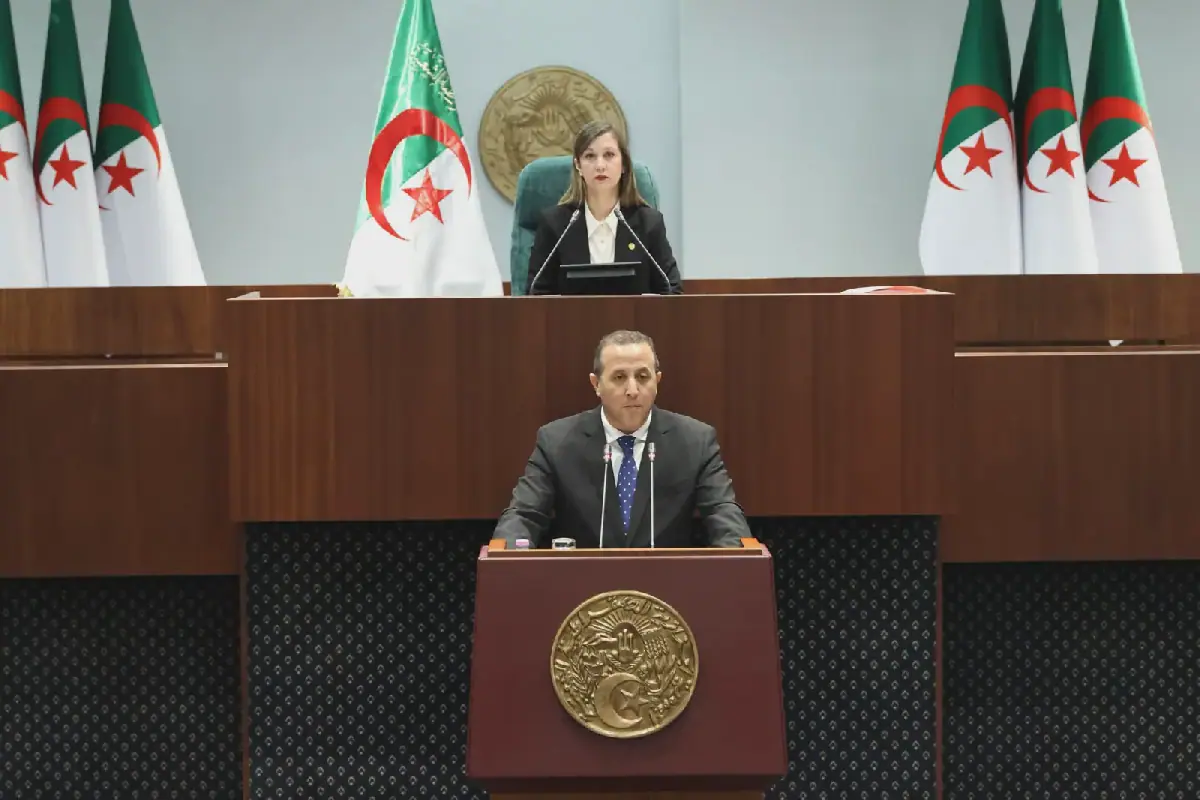
Algeria's Minister of Finance, Mohamed Lamine Labo, presented the 2027 finance bill to the National People's Assembly, outlining measures to support the national economy and improve citizens' living standards. The bill aims to stimulate economic growth, enhance the business environment, and ensure sustainable development. Labo emphasized that the bill was prepared in a challenging international context marked by geopolitical uncertainty, inflationary pressures, and fluctuations in energy markets.
The 2027 finance bill includes several key measures to promote economic growth and improve living standards. These measures focus on encouraging productive investment, promoting economic diversification, and preserving citizens' purchasing power. The bill also aims to expand the tax base, mobilize resources, simplify procedures, and accelerate the modernization of administration. Additionally, it seeks to enhance tax compliance, transparency, and combat tax evasion and fraud.
To stimulate investment, the bill proposes reorganizing the institutional framework governing investment by establishing three new bodies: the National Agency for Investment Promotion, the National Investment Council, and the Single Window for Investment. This reform aims to simplify procedures and improve the business environment. Labo also highlighted the bill's proposal to make electronic declaration and payment mandatory for taxpayers subject to the unique lump-sum tax.
The 2027 finance bill also includes measures to support citizens' living standards. The bill proposes extending the exemption from value-added tax (VAT) on imports and sales of dry legumes, fresh fruits and vegetables, eggs, and locally produced chicken and turkey until December 31, 2029. This measure aims to preserve citizens' purchasing power and support low-income households.
According to Labo, the 2027 finance bill forecasts a 4.2% economic growth rate, with projected budget revenues exceeding 9251.1 billion Algerian dinars (DZD) and budget expenditures reaching 17251.6 billion DZD in terms of commitment and 17882.6 billion DZD in terms of payment appropriations. The bill also allocates 4356.64 billion DZD for transfer expenditures, primarily directed towards subsidies for widely consumed products.
Labo also provided an update on the expected 2026 economic performance, forecasting a 4.3% economic growth rate, driven by the good performance of economic activity outside the hydrocarbons sector, which is expected to record 4.8% growth. The hydrocarbons sector is also expected to recover, with a 1% growth rate. The minister highlighted that the country's GDP is expected to reach over 48723 billion DZD in 2026.
The 2027 finance bill aims to improve the country's fiscal balances, with projected budget revenues exceeding 8611 billion DZD and expenditures reaching 17636 billion DZD in 2026. The bill also forecasts a positive oil revenue of 4157.2 billion DZD, which will allow for the financing of the Revenue Regulation Fund with an amount of approximately 1459 billion DZD. The bill will now be discussed by the National People's Assembly.
Key points
- The 2027 finance bill aims to boost Algeria's economy through measures such as encouraging productive investment, promoting economic diversification, and preserving citizens' purchasing power.
- The bill forecasts a 4.2% economic growth rate in 2027 and allocates significant funds for transfer expenditures to support low-income households.
- The bill proposes reorganizing the institutional framework governing investment and making electronic declaration and payment mandatory for taxpayers.