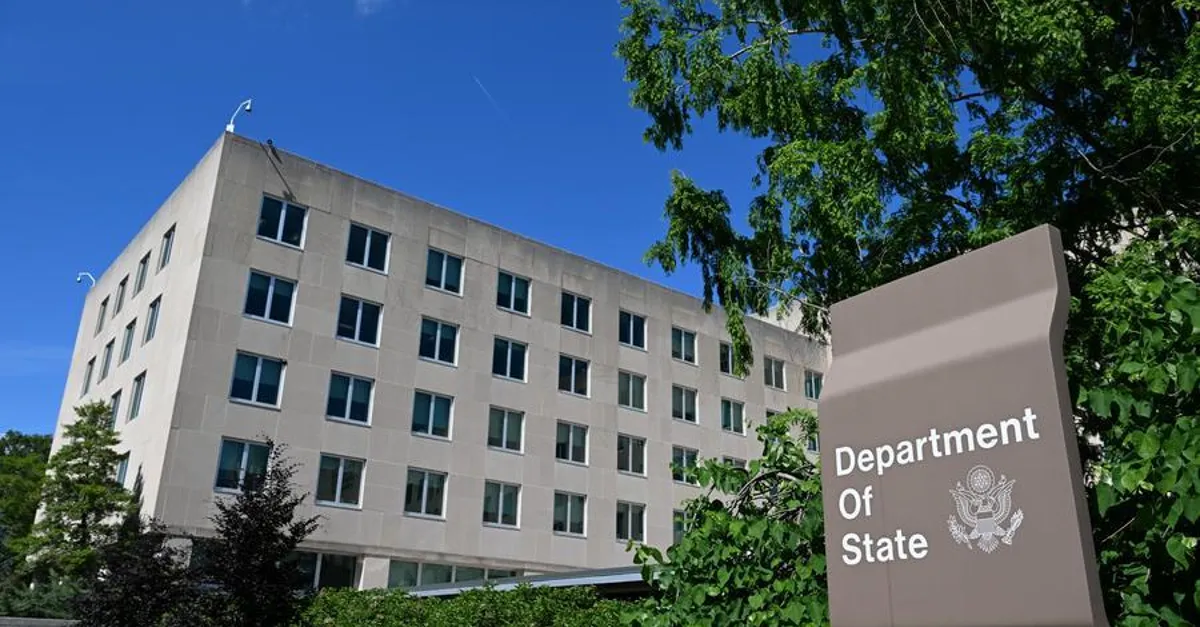
The United States, under the leadership of President Donald Trump, has outlined its international policy priorities, focusing on global security and stability, promoting economic prosperity through trade and technology with allies, and supporting peace efforts while protecting national sovereignty. These principles are seen as fundamental to addressing global challenges, including the situation in the Middle East. The region's complexities, such as the Strait of Hormuz, underscore the importance of these priorities.
The US has made it clear that it does not envision a future where Iran possesses nuclear weapons, aligning with President Trump's commitment to preventing the Iranian regime from acquiring such capabilities. Furthermore, Washington seeks to curb Iran's aggressive actions towards neighboring countries and its support for terrorist networks and armed groups that destabilize the region and threaten civilians. The US aims to ensure that these groups, which directly challenge the sovereignty of regional states, are addressed.
In the context of the Middle East, the US emphasizes the need for Iran to cease its support for terrorist networks and armed organizations that undermine stability and pose a threat to local populations. The US views these groups as a direct threat to the sovereignty of regional nations. This stance is part of a broader effort to promote peace and stability in the region, reflecting the Trump administration's priorities.
Regarding Egypt's role in addressing Middle Eastern crises, the US considers Egypt a strategic partner across various domains. This partnership encompasses economic and trade relations, with bilateral trade exceeding $16 billion, marking significant growth in relations between the two nations. The US values its relationship with Egypt, highlighting the importance of their collaboration.
The strategic partnership between the US and Egypt extends beyond trade, reflecting a deep and multifaceted relationship. The two countries cooperate on various regional and global issues, sharing common interests in stability and security. This cooperation is seen as vital to addressing the complex challenges facing the Middle East.
The US reaffirms its commitment to supporting Egypt and other regional partners in their efforts to promote peace and stability. By working together, the US and Egypt aim to tackle shared challenges and foster a more secure environment. This collaborative approach is central to the US's policy in the region.
As the US continues to engage with Egypt and other regional actors, it remains focused on its policy priorities, including preventing the proliferation of nuclear weapons and combating terrorism. The US-Egypt strategic partnership is a key component of this effort, underscoring the importance of cooperation in achieving shared goals.
Key points
- The US sees no future for Iran with nuclear arms.
- Egypt is a strategic partner for the US in the Middle East.
- US-Egypt trade exceeds $16 billion.