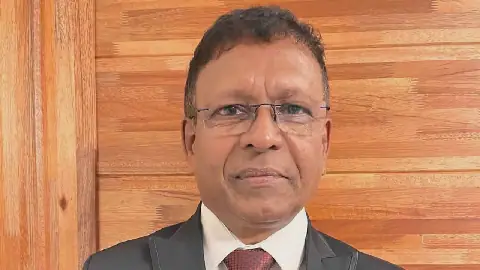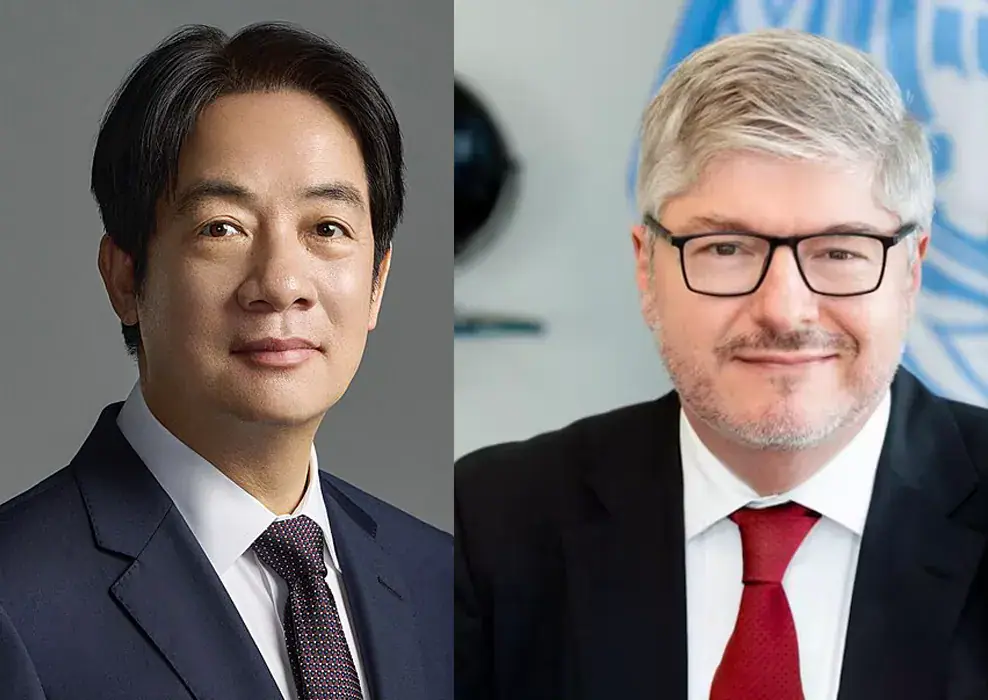
The United States has escalated a major diplomatic confrontation with China at the United Nations' ICAO conference. The US demanded answers over the abrupt revocation of overflight permits, resulting in the disruption of Taiwanese President Lai Ching-te's State visit to the Kingdom of Eswatini earlier this year. President Lai had originally been scheduled to arrive in the Kingdom on April 22, 2026, to attend celebrations marking His Majesty King Mswati III's 40th anniversary on the Throne.
The overflight clearances over the Indian Ocean were withdrawn just days before departure without any cited safety or operational concerns. Taiwanese authorities were forced to postpone the State visit at short notice. President Lai eventually travelled to Eswatini from May 2 to May 4 aboard a private aircraft sent by His Majesty King Mswati III. The rescheduled visit was officially announced only after the Taiwanese leader had safely landed in the country.
At the heart of the American challenge before the 36-member ICAO Council is a fundamental question of international aviation law. The question is where does a nation's sovereign airspace end and what are its legal obligations when managing international skies over the high seas? The US working paper challenged the decisions made by the governments of Mauritius and Seychelles to revoke previously approved overflight permits for a chartered China Airlines aircraft carrying President Lai to Eswatini.
Taiwan's flag carrier, China Airlines, had secured all necessary operational permits for the April charter flight to cross designated portions of airspace managed by Mauritius and Seychelles. However, both Indian Ocean island nations rescinded those permits days before the scheduled flight, offering no technical, meteorological or safety justifications for the sudden reversal. The US argued that countries entrusted with managing air traffic services inside FIRs over international waters do not acquire sovereignty over that airspace.
The US paper warned the ICAO Council that allowing the revocations by Mauritius and Seychelles to pass unchallenged would 'set a dangerous precedent' for global civil aviation. This could potentially encourage other States to weaponise airspace administration or bow to external political pressure to disrupt legitimate international flights. Washington formally requested the ICAO Council to take three specific steps to prevent similar diplomatic interference in the future.
The three steps include expressing formal concern over the unexplained withdrawal of previously granted overflight permits by Mauritius and Seychelles. The ICAO secretary general is also to seek formal written explanations from the governments of both island nations regarding the cancellations. Furthermore, the Council needs to determine whether additional regulatory measures or remedies are required to enforce strict compliance with international civil aviation rules.
Out of 54 African nations, Eswatini is the only country that maintains official diplomatic relations with Taipei rather than the People's Republic of China. The US State Department had already voiced strong concern over the flight disruption in April, stating that the responsibility for managing international airspace beyond a country's sovereign territory existed 'solely to ensure aviation safety, not to serve as a political tool for Beijing.'
Key points
- The US has challenged the decisions made by Mauritius and Seychelles to revoke overflight permits for a chartered China Airlines aircraft carrying President Lai to Eswatini.
- The US paper warned the ICAO Council that allowing the revocations to pass unchallenged would 'set a dangerous precedent' for global civil aviation.
- Eswatini is the only country in Africa that maintains official diplomatic relations with Taipei rather than the People's Republic of China.
Reporting sources
- US seeks answers over blocked Taiwan-Eswatini flight · Times of Swaziland