The United States has imposed sanctions on Rwanda's defence ministry due to its alleged support for the M23 rebel group in eastern Democratic Republic of Congo. This move increases pressure on Kigali to withdraw its troops and halt support for the rebels. The sanctions were announced by US Treasury Secretary Scott Bessent, who stated that Rwanda must halt its support for M23 and withdraw its troops from eastern DRC.
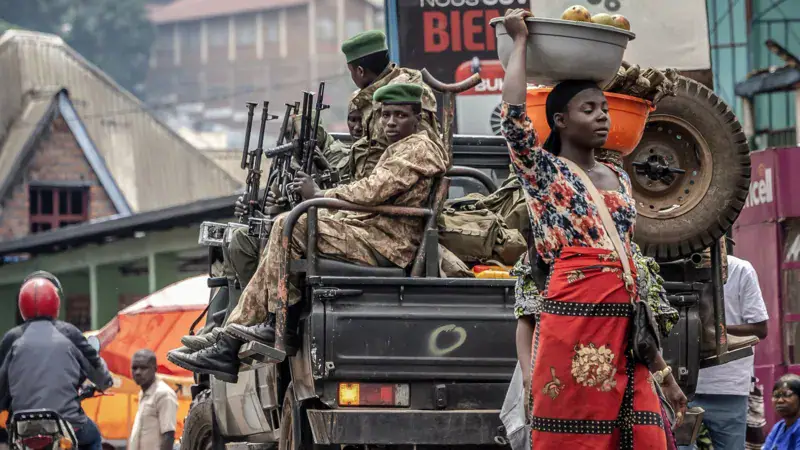
Eastern DR Congo has been plagued by conflict, with M23 recapturing Goma and then Bukavu in early 2025. The group has seized mineral-rich areas, including gold-mining sites in South Kivu and Rubaya, a major coltan-producing area in North Kivu. The US Treasury alleges that Rwanda's defence ministry directed thousands of troops to fight alongside M23 in eastern DR Congo, providing weapons, equipment, logistics, and training.
The sanctions come months after Rwanda and DR Congo signed a US-brokered peace agreement aimed at ending the conflict. The deal, signed in December 2025 under US mediation, aimed to end the conflict and expand regional trade and investment. However, fighting has continued in eastern DR Congo. Rwanda denies backing M23, but Washington says minerals from rebel-held territory enter Rwanda's supply chains, alleging that Rwanda exports more minerals than it produces.
DR Congo President Félix Tshisekedi has urged the international community to increase pressure on Rwanda. On 24 October, he called for concrete sanctions against Rwanda, stating that this was necessary to secure a lasting peace in his country. The DR Congo foreign ministry welcomed the sanctions and urged Rwanda to honour its commitments under the Washington Accords, respect the UN Charter, and withdraw its troops from Congolese territory.
The Rwandan government has responded to the sanctions, with spokesperson Yolande Makolo stating that Rwanda remains ready to fully implement the Washington Accords. However, she noted that this must be done concurrently with the willingness of the DRC to fulfill those commitments, and with the mediator holding all parties accountable. The FDLR, a militia linked to perpetrators of Rwanda's 1994 genocide, is considered a security threat by Kigali.
The US has also sanctioned Zigama Credit and Savings Society, a popular bank and financial institution serving Rwanda's security services. Washington alleges that it facilitated tens of millions of dollars in transactions for M23 and its political wing, the Congo River Alliance, and helped pay for military equipment for Rwandan forces from China. The sanctions freeze the designated entities' assets under US jurisdiction and generally prohibit US individuals and businesses from conducting transactions with them.
Pressure is also mounting on Rwanda over its international sports partnerships. Two US senators have urged the National Basketball Association (NBA) to reconsider its commercial relations with Kigali, questioning whether it aligns with the league's stated commitment to human rights. Rwanda has used high-profile sports sponsorship to raise its international profile, including a 10-year deal to host Formula 1's African Grand Prix in the early 2030s.
Key points
- The US has imposed sanctions on Rwanda's defence ministry over its alleged support for the M23 rebel group in eastern Democratic Republic of Congo.
- The sanctions aim to pressure Kigali to withdraw its troops and halt support for the rebels.
- The move is part of a broader effort to address the conflict in eastern DR Congo, which has been ongoing since early 2025.