The United States has announced sanctions targeting Rwanda's Ministry of Defence and a Rwandan financial institution, Zigama Credit and Savings Society, in a bid to increase pressure on Kigali to end its support for the Front for the Refoundation of the Nation, or FRN, led by former Congolese president Joseph Kabila. The measures, announced on October 28, have sparked mixed reactions in Goma, a city in eastern Democratic Republic of Congo.
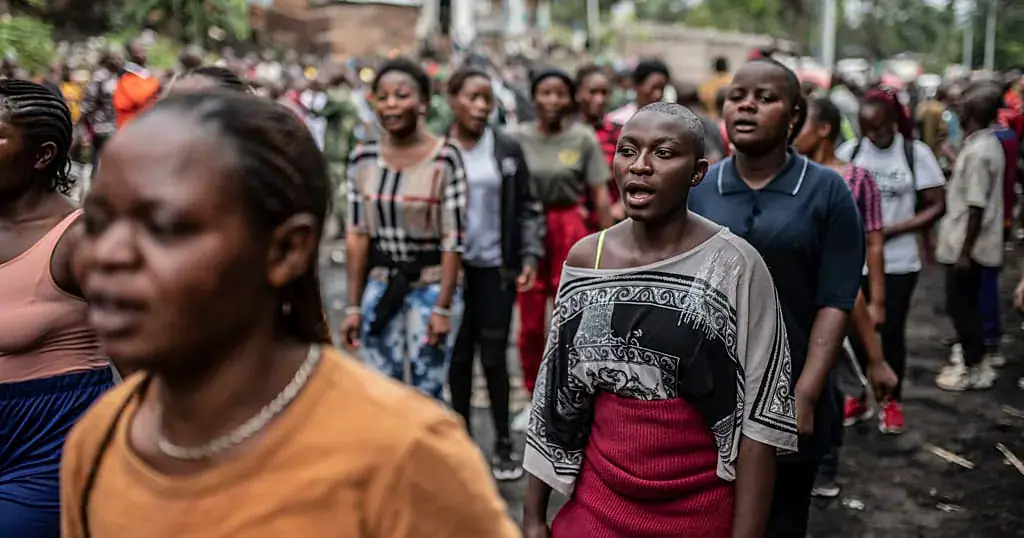
Residents in Goma have expressed both hope and scepticism about the effectiveness of the sanctions. Some believe the decision could increase pressure on Kigali and help bring about a return to peace, while others remain doubtful after several diplomatic initiatives failed to restore lasting peace. Jimmy Buhenwa, a resident of Goma, doubts the effectiveness of the measures, saying that previous agreements and sanctions have not produced the expected changes.
The conflict in eastern DRC continues to shape daily life, and residents are cautious about decisions made abroad. For many, the priority is simple: tangible improvements in security. David Kalamembo shares a sense of helplessness, expressing a wish to see the war come to an end. "They talk about sanctions, but they change nothing. That is why we are asking God to help us by ending the war, so that we can return to the way things were," he said.
The sanctions come as several diplomatic initiatives seek to end the conflict in eastern DRC. Washington accuses Kigali of providing military support to the FRN. By targeting state and financial structures, Washington is seeking to increase pressure on Kigali and reinforce commitments made during diplomatic efforts to resolve the crisis. Some residents, like Michel Kamango, hope the sanctions will affect the parties concerned and help bring about a return to peace.
However, others are more sceptical about the impact of the sanctions. Fidel Banso, an independent analyst, questions the actual effectiveness of the measures within the framework of the diplomatic commitments already made. "Have all these sanctions contributed to ensuring that the Washington process is respected? These US sanctions against the Rwandan government and Rwanda's defence sector may have implications for the Rwandan government. But I do not see how these sanctions can have an impact on the politico-military movement in Goma," he said.
The Congolese authorities have welcomed the US sanctions, with Crispin Mbadu, the deputy foreign minister responsible for Francophonie and the Congolese diaspora, expressing support for the decision. In contrast, Rwanda's Foreign Minister, Olivier Nduhungirehe, told Agence France-Presse that Rwanda bore no responsibility for the Congolese crisis. These opposing positions illustrate the persistent divisions between the two countries.
In Goma, residents remain caught between hope and disillusionment. Some see the sanctions as an opportunity to increase pressure on Kigali, while others are waiting for proof that they will change daily life. For communities exhausted by war, a diplomatic measure is judged by its results, not its announcement. Until peace brings tangible improvements in security, the sanctions risk becoming another promise whose impact remains unproven.
Key points
- The US sanctions target Rwanda's Ministry of Defence and a financial institution accused of facilitating support for the armed movement.
- Residents in Goma have expressed mixed reactions to the sanctions, with some hopeful for change and others sceptical.
- The impact of the sanctions on security will depend on their implementation and how the parties respond.