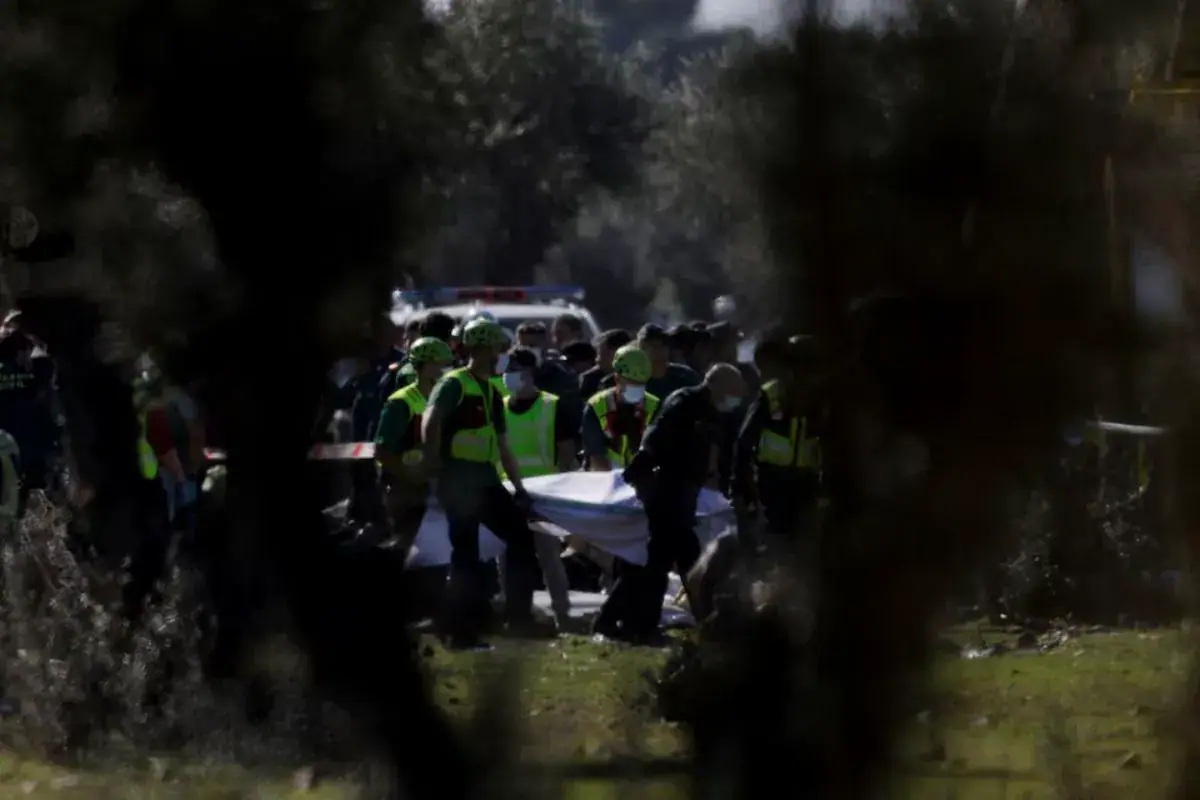
Rescuers in Spain are desperately searching through wrecked carriages for survivors of a deadly high-speed train crash that has claimed 68 lives. The accident occurred in a rural area of the central province of Toledo on Wednesday. Emergency workers were seen carrying a body wrapped in a blanket from one of the trains as cranes worked through the night to lift parts of the wreckage.
The rescue efforts are being carried out with caution, as authorities are unsure if there are more victims trapped in the twisted wreckage. Esther Padilla, a spokeswoman for the regional government of Castilla-La Mancha, stated that rescue teams are working carefully to ensure no one else is trapped. A canine unit was deployed to aid in the search, and they will continue to search the area to confirm that no one else remains.
The train crash has sparked concerns about railway safety in Spain, which has the longest railway network in Europe. Spanish Transport Minister Oscar Puente stated that the crash occurred after several trains stopped automatically due to a signal failure, and a state-run Renfe train was authorized to proceed at normal speed despite a stationary Iryo-operated train ahead.
The incident has also led to a previously planned strike by train drivers in Spain, who are pressing for more investment in railway safety. The strike, which was scheduled before the accident, aims to push for structural changes in railway safety. The Spanish train drivers' union, SEMAF, stated that they wish to exercise caution until they have a detailed understanding of the cause of the crash.
The crash has had significant repercussions, including the suspension of campaign events for a November 29 snap election by leaders of Spain's two main parties. Socialist Prime Minister Pedro Sanchez and Alberto Nuñez Feijoo, leader of the centre-right People's Party, were due to travel to the crash site to monitor and coordinate the emergency response.
In response to the tragedy, Spain's government has declared three days of national mourning for those killed in the accident. The crash is Europe's deadliest train accident since a 2013 derailment in Spain's Santiago de Compostela. Authorities continue to investigate the cause of the crash, with SEMAF stating that they will study further action.
The train crash has reopened a debate about safety on Spain's railways, which was previously a source of pride in the country. As investigations continue, the focus remains on the rescue efforts and providing support to those affected by the tragedy. The incident has also raised questions about the need for improved safety measures on Spain's rail network.
Key points
- 68 people have been confirmed dead in the high-speed train crash in Spain's Toledo province.
- Rescuers are searching for survivors, with caution, due to concerns about potential victims trapped in the wreckage.
- The crash has sparked concerns about railway safety in Spain, leading to a strike by train drivers and a debate about safety measures.