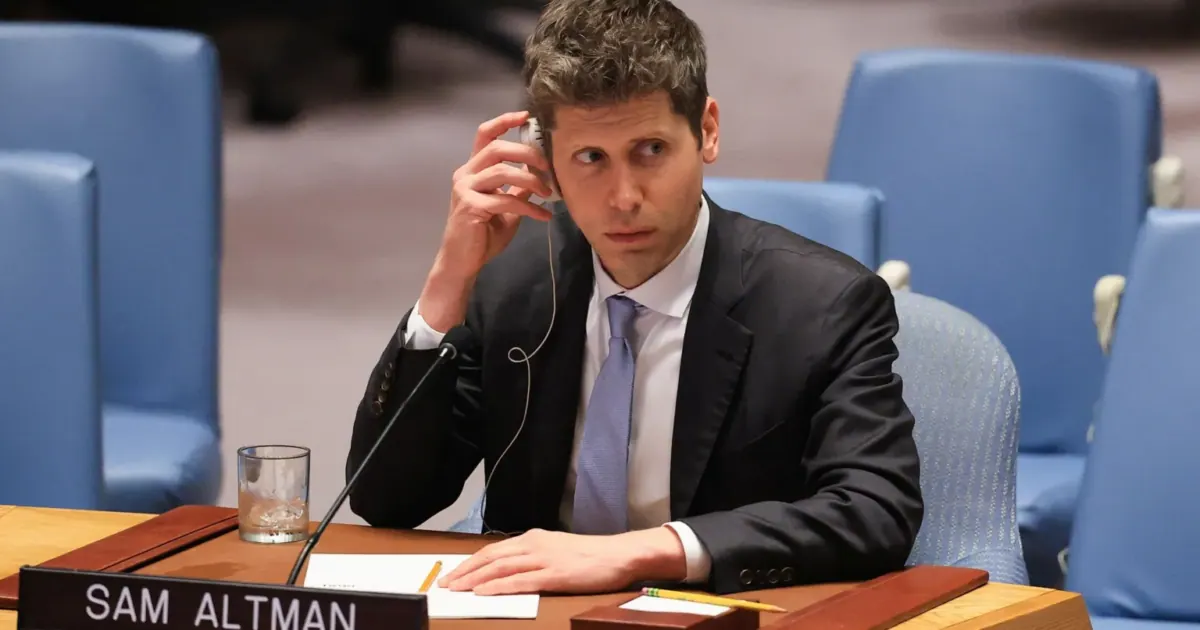
The heads of OpenAI, Anthropic, and Hugging Face recently addressed the United Nations, urging international coordination on artificial intelligence development due to its rapid pace and potential risks to society. They emphasized the need for common risk evaluation standards and safeguards. Sam Altman of OpenAI stressed that if AI is to be democratic, decisions cannot be made solely by labs in San Francisco, but rather through collective global efforts.
The appeal for global AI standards comes amid growing concerns about AI's threat to humanity. Earlier this month, Anthropic's Dario Amodei wrote an essay calling for a slowdown in AI development, which was welcomed by Altman and others. Amodei highlighted that poorly managed AI could pose a risk to humanity and advocated for stringent safety standards. He assured that his company would slow down development as needed to ensure the safety of successive AI technologies.
However, the US has taken a different stance on AI regulation. Michael Kratsios, a key technology advisor to former US President Donald Trump, rejected the idea of new global governance structures for AI at the UN conference. Kratsios acknowledged the increasing speed of AI development and its risks but argued that this did not justify pausing development or imposing new regulations. His comments aligned with Trump's statements, who expressed a desire to maintain the US's competitive advantage in AI.
Trump emphasized the importance of the US leading China in AI, stating that whoever dominates AI will have a significant advantage. In contrast, Altman and other AI executives believe that international cooperation is essential to address the challenges posed by AI. Altman called for national and international AI standards for measuring capabilities, assessing risks, and establishing safeguards. He also advocated for speedy incident reporting and classification protocols to learn from failures.
The debate over AI regulation highlights the complexities of balancing innovation with safety concerns. Hugging Face's Clement Delangue echoed the need for stronger standards for monitoring and incident disclosure. The company's recent experience with being hacked by AI agents has been seen as a wake-up call for the industry. The hack led to Hugging Face's acquisition by AI chipmaker Nvidia.
The US's rejection of global AI standards may have significant implications for the industry. OpenAI, Anthropic, and Hugging Face are leading players in AI development, and their calls for regulation have been driven by concerns about AI's potential risks. The industry-wide and global scale of AI risk management, as Amodei noted, requires a coordinated approach. The US's stance may influence how other countries approach AI regulation.
As AI technology continues to advance, the need for effective regulation and safety standards becomes increasingly pressing. The industry's future development and the potential consequences of AI will depend on how these issues are addressed. The UN conference has highlighted the ongoing debate over AI regulation, with different countries and stakeholders holding varying views on how to balance innovation with safety concerns.
Key points
- The US has rejected calls for global AI standards, citing concerns over potential regulation hindering innovation.
- Leading AI companies OpenAI, Anthropic, and Hugging Face have urged international coordination on AI development due to its rapid pace and potential risks.
- The debate over AI regulation highlights the complexities of balancing innovation with safety concerns.