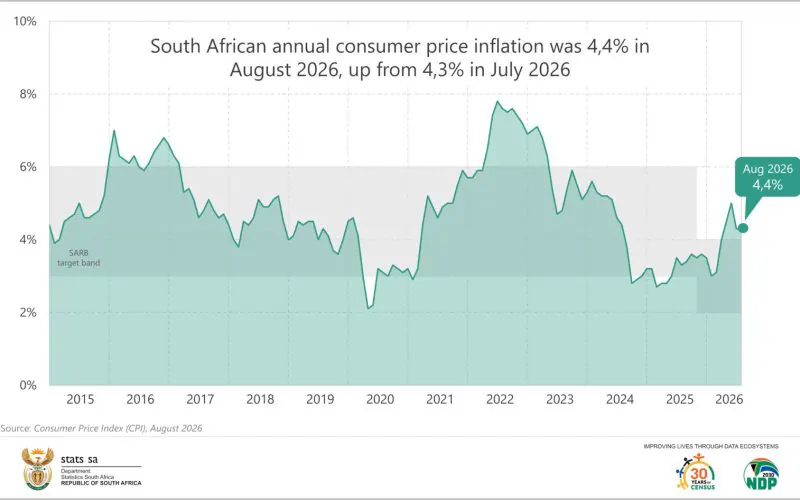
South Africa's annual consumer inflation increased to 4.4% in August from 4.3% in July, according to Statistics South Africa. This modest increase was influenced by various factors, including a rise in food and non-alcoholic beverages inflation. For the first time in nine months, food and non-alcoholic beverages inflation quickened, contributing to the overall inflation rate.
The annual food and non-alcoholic beverages inflation rate rose to 1.1% in August from 0.9% in July, marking the first increase since November 2022. Several categories experienced higher annual rates, including cereal products, fish and other seafood, and milk, dairy products, and eggs. Notably, white rice and white bread prices increased, while trends for meat were mixed, with pork prices climbing and beef prices remaining in deflationary territory.
The fish and other seafood category continued to experience a sharp price increase, with the annual rate accelerating to 7.5% in August from 6.6% in July. Specific products, such as hake, frozen fish fingers, and battered or crumbed fish, saw significant price hikes. In contrast, the price index for alcoholic beverages and tobacco eased by 0.1% month-on-month in August, with decreases recorded for spirits, liqueurs, and wine.
The health index also edged lower by 0.1% between July and August, driven by decreases in various medicines, including painkillers, cough and respiratory products, and vitamin and mineral supplements. The aggregate annual health inflation rate was 3.4% in August. Meanwhile, annual transport inflation decreased to 8.8% from 8.9% recorded in July, primarily due to slower annual fuel inflation.
Fuel inflation continued to ease, with petrol prices decreasing by 2.0% between July and August, while diesel prices rose by 3.1%. The annual fuel inflation rate eased to 20% in August from 20.6% in July. This decrease contributed to the modest increase in overall consumer inflation.
The Statistics South Africa report highlighted mixed trends across various product categories. While some categories experienced price increases, others saw decreases or remained in deflationary territory. The data suggests that the inflation landscape remains complex, with various factors influencing price movements.
The August consumer inflation data provides valuable insights into the current economic landscape. With inflation rates remaining within a moderate range, the data is likely to inform monetary policy decisions and influence economic forecasts. The South African Reserve Bank and other stakeholders will closely monitor inflation trends to ensure economic stability.
Key points
- South Africa's annual consumer inflation increased to 4.4% in August from 4.3% in July.
- Food and non-alcoholic beverages inflation quickened for the first time in nine months.
- Fuel inflation continued to ease, with petrol prices decreasing by 2.0% between July and August.