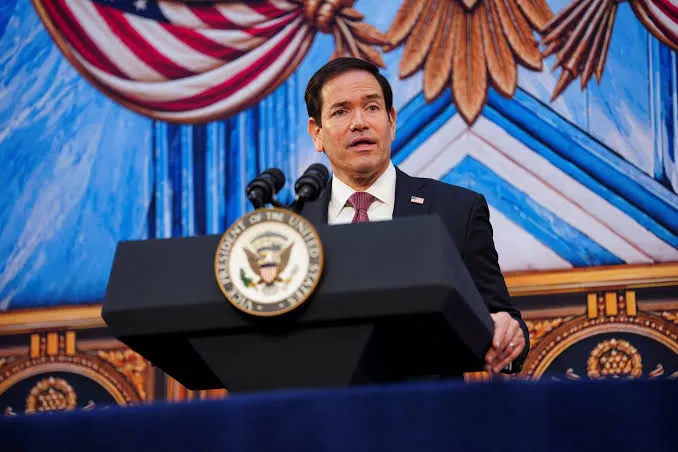
US Secretary of State Marco Rubio has expressed strong support for a proposed undersea power cable project in the Mediterranean, emphasizing the project's significance in promoting energy diversification and security in the region. In an interview with a Greek newspaper, Rubio stated that the US is committed to the project, which aims to connect the European mainland with Cyprus and potentially Israel. The project, estimated to cost around 1.9 billion euros, is being developed by Greek power grid operator IPTO.
The project has faced delays due to a dispute between Greece and Turkey over the maritime area where the cable will be laid. Greece wants to resume surveying the seafloor to determine the cable's route, a move Turkey says requires prior coordination between the two countries. The planned route passes through an area subject to a 2019 maritime agreement between Turkey and Libya, which Greece rejects. Rubio's comments come as the US seeks to strengthen its diplomatic efforts to overcome potential obstacles to the project's implementation.
The undersea power cable project aims to improve energy security in Cyprus, which is currently the only EU country without a connection to the European electricity market. The project also seeks to promote energy diversification in the region, a goal that has gained increased importance in light of Russia's conflict in Ukraine and tensions in the Strait of Hormuz. By supporting this project, the US aims to enhance regional stability and reduce reliance on single energy sources.
French investment group Meridiam signed an agreement in August to become the largest shareholder in the project, further solidifying support for the initiative. The project's development has been slow, but proponents argue that it has the potential to significantly enhance energy security and cooperation in the region. Rubio's comments underscore the US commitment to promoting energy diversification and security in the Mediterranean.
The US is not the only country to express support for the project, with the European Union also backing the initiative. The EU has emphasized the importance of enhancing energy security and promoting cooperation in the region. The project's success could have significant implications for regional energy dynamics, potentially paving the way for increased cooperation and stability.
Despite the challenges posed by the dispute between Greece and Turkey, proponents of the project remain optimistic about its prospects. Rubio's comments suggest that the US is willing to engage in diplomatic efforts to address concerns and promote a resolution. The project's success will depend on the ability of stakeholders to navigate complex regional dynamics and overcome obstacles.
The Mediterranean undersea power cable project is a significant initiative aimed at promoting energy security and cooperation in the region. With the US and EU expressing support, the project has the potential to make a positive impact on regional energy dynamics. Key stakeholders will be closely watching developments, as the project's success could have far-reaching implications for regional stability and cooperation.
Key points
- The US has reaffirmed its commitment to a 1.9 billion euro undersea power cable project in the Mediterranean, aiming to enhance energy diversification and security in the region.