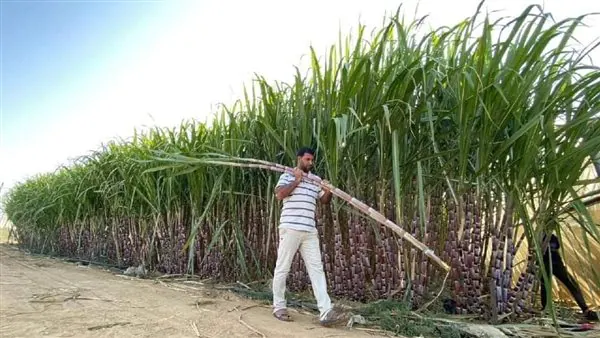
Egypt's former agriculture minister, Ayman Farid Abu Hadid, has expressed concerns that reducing the cultivation areas of sugarcane could threaten the country's sugar production and lead to a new crisis in sugar prices. He emphasized that sugarcane should not be viewed solely as a water-intensive crop, but also as a crucial contributor to the country's sugar production. Abu Hadid pointed out that one acre of sugarcane yields around 4.2 tons of sugar, compared to 2.5 tons from one acre of beet.
According to Abu Hadid, the importance of sugarcane extends beyond its role in producing sugar and molasses. He noted that sugarcane is used in over 25 secondary industries and products, adding to its economic and strategic value. Therefore, any decisions regarding the cultivation areas of sugarcane should take into account its overall impact on the sugar industry and the market. The former minister stressed that sugarcane is a strategic crop linked to food security.
Abu Hadid warned that reducing the areas allocated to sugarcane cultivation would inevitably affect production levels, which could, in turn, impact the availability and prices of sugar in the market. He emphasized the need for a balanced approach that considers both the management of water resources and the maintenance of sugar production. Sugarcane plays a vital role in Egypt's food security, and any reduction in its cultivation could have far-reaching consequences.
The former agriculture minister called for a review of the current policies governing sugarcane cultivation, cautioning that any reduction in cultivation areas without careful consideration of market needs and production levels could lead to a new sugar crisis. He urged policymakers to take a comprehensive approach that considers the multiple uses of sugarcane and its significance to the country's food security.
Abu Hadid's concerns come at a time when discussions around the water consumption of sugarcane are gaining traction. He argued that the focus on sugarcane's water usage should be balanced with an understanding of its contribution to sugar production. By evaluating the efficiency of sugarcane cultivation based on its sugar output per acre, rather than just its water usage, a more nuanced understanding of its value can be gained.
The Egyptian government has been exploring ways to optimize the use of water resources, particularly in the agricultural sector. However, Abu Hadid's warnings highlight the need for careful consideration of the potential impacts of any policy changes on the country's sugar production and food security. The former minister's statements underscore the importance of sugarcane as a strategic crop in Egypt's agricultural landscape.
As Egypt continues to grapple with the challenges of managing its water resources, the debate around sugarcane cultivation is likely to intensify. With the country's sugar production and food security at stake, policymakers will need to carefully weigh the competing demands on water resources and the potential consequences of any decisions regarding sugarcane cultivation.
Key points
- Reducing sugarcane cultivation areas could lead to a sugar crisis and impact prices in Egypt.
- Sugarcane plays a vital role in Egypt's food security, and its cultivation is linked to multiple industries and products.
- Egypt's former agriculture minister calls for a review of current policies governing sugarcane cultivation to ensure a balanced approach that considers both water management and sugar production.