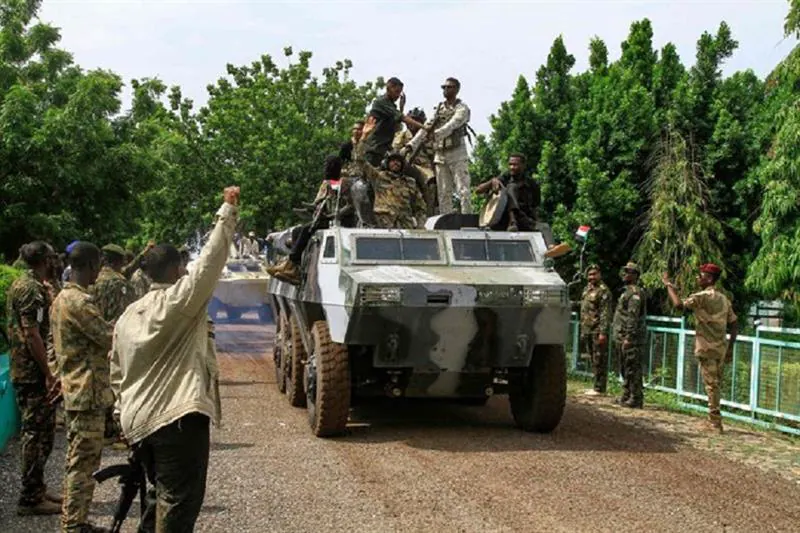
The United States has urged Sudan's army chief Abdel Fattah al-Burhan to join ceasefire talks, which began in Switzerland on Wednesday. The talks, co-hosted by Saudi Arabia and Switzerland, aim to end the devastating war between the Sudanese army and the paramilitary Rapid Support Forces (RSF). US Secretary of State Antony Blinken spoke with Burhan by telephone, emphasizing the need for his participation in the talks. The conflict has triggered one of the world's worst humanitarian crises, with millions displaced and tens of thousands killed.
The war in Sudan has been raging since April 2023 between the Sudanese army, led by Burhan, and the RSF, led by his former deputy Mohamed Hamdan Daglo. The conflict has forced one in five people to flee their homes, while over 25 million people face acute hunger. The talks in Switzerland, which could last up to 10 days, are being held behind closed doors in an undisclosed location. The RSF delegation is participating, but the Sudanese armed forces (SAF) are unhappy with the format arranged by Washington.
The Sudanese army has repeatedly accused the United Arab Emirates (UAE) of backing the RSF, allegations the UAE denies. Sudanese Media Minister Graham Abdelkader said the government was rejecting "any new observers or participants" after Washington insisted on the UAE's participation as an observer. The African Union, Egypt, the UAE, and the United Nations are acting as a steering group for the talks. The focus is on achieving a cessation of hostilities, enhancing humanitarian access, and establishing enforcement mechanisms.
US Special Envoy for Sudan Tom Perriello said it was "high time for the guns to be silenced". He emphasized the urgent need for both sides to end the war and guarantee humanitarian access for millions of Sudanese suffering. Vittorio Oppizzi, Sudan program manager for Doctors Without Borders (MSF), accused both parties of manipulating humanitarian access in violation of international law. MSF is operating in conflict zones and requires safe and unhindered access.
The Sudanese army's absence from the talks has raised concerns about Burhan's willingness to negotiate. Alan Boswell, Horn of Africa project director at the International Crisis Group, said Burhan was facing "serious internal divisions" with some in his camp in favor of talks and others opposed. The presence of main outside actors with leverage over the warring parties in one room together could put pressure on Burhan if he is seen as the main obstacle to ending the war.
Previous talks in Jeddah failed to produce an agreement. Cameron Hudson from the Center for Strategic and International Studies' Africa programme said Washington had tried to create the illusion of momentum to force the army's hand, but it was a bluff and the SAF saw through it. The only way to get them to talk is through brute force, he said. Despite the challenges, demonstrators gathered outside the UN headquarters in Geneva, chanting "Action for Sudan" and holding a banner reading "Stop the catastrophic war".
The conflict shows no signs of abating, with reports of increased indiscriminate artillery shelling by the RSF on civilian areas. The Emergency Lawyers, a group of volunteer lawyers, documented human rights violations during the war, including strikes on a school, a bus carrying civilian passengers, and a hospital. The situation remains dire, with hundreds of demonstrators calling for an end to the war and justice for the Sudanese people.
Key points
- US Secretary of State Antony Blinken urges Sudan's army chief Abdel Fattah al-Burhan to join ceasefire talks in Switzerland.
- The conflict has triggered one of the world's worst humanitarian crises, with millions displaced and tens of thousands killed.
- The talks aim to achieve a cessation of hostilities, enhance humanitarian access, and establish enforcement mechanisms.