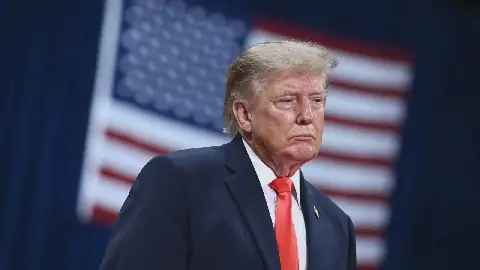
The recent US midterm elections have dealt a significant blow to the Republican Party, leaving them to reassess their strategy for the 2028 presidential election. The defeat has raised questions about who will succeed President Donald Trump, with several potential candidates emerging. Trump's influence within the party has waned, and his legacy has become a liability for some Republican hopefuls.
Vice President Mike Pence's allies had considered him a strong contender to succeed Trump, but his prospects have been damaged by his close association with the president. Pence's attempts to distance himself from Trump may not be enough to convince voters. Other potential Republican candidates include Senator Marco Rubio, who has kept a low profile during the midterm elections, and Governor Ron DeSantis, who has begun to speak out about the election results.
The Democratic Party, on the other hand, has seen a surge in enthusiasm following their unexpected gains in the midterm elections. Several Democratic politicians have emerged as potential candidates for the 2028 presidential election. Senator Jon Ossoff from Georgia, who won re-election, has been mentioned as a possible contender, with his charisma and youth drawing comparisons to former President Barack Obama.
Other Democratic hopefuls include Governor Gavin Newsom of California, who has clashed with Trump on several occasions, and Senator Kamala Harris, who was considered a front-runner for the nomination before the midterm elections. However, some Democrats prefer a candidate who has not lost a presidential bid before. Representative Alexandria Ocasio-Cortez has also expressed interest in running, but her candidacy may be divisive.
The midterm elections have also highlighted the growing diversity within the Democratic Party. Potential candidates include Mayor Rahm Emanuel, former Mayor of Chicago, and Governor J.B. Pritzker of Illinois, a billionaire who has outlined a national agenda. Governor Andy Beshear of Kentucky and Senator Mark Kelly of Arizona, a former astronaut, are also being considered.
The 2028 presidential election is expected to be highly competitive, with both parties seeking to capitalize on the momentum from the midterm elections. The Republican Party will need to regroup and reassess its strategy, while the Democratic Party will seek to build on its recent gains. Several factors, including the economy and foreign policy, are likely to shape the election.
As the country looks ahead to the 2028 presidential election, several key issues will likely dominate the campaign. These include the economy, healthcare, and national security. The election will also be shaped by the ongoing impact of the COVID-19 pandemic and the country's response to global challenges.
Key points
- The US midterm elections have significant implications for the 2028 presidential election.
- Several potential candidates have emerged from both parties.
- The election will be shaped by key issues such as the economy, healthcare, and national security.