Nine months into the conflict with Iran, President Trump faces limited options to end the war. Recently, he stated that the US has billions of Iran's dollars frozen in overseas accounts, suggesting that a deal with Iran is not necessary. This stance comes as mediator Qatar works to bridge the divide between the US and Iran, with Trump meeting Qatar's prime minister at the White House.
Trump's comments indicate that Gulf Arab allies prefer the current situation of continued economic pressure on Iran. Despite this, the US remains "locked and loaded," although an attack seems unlikely at this point. This marks a shift from previous threats to carry out swift and intense strikes on Iran. The change in approach may be attributed to recent election setbacks and the loss of Republican majority in Congress.
The ongoing conflict has significant regional implications, with Iran maintaining its chokehold on the Strait of Hormuz. Official Iranian social media accounts frequently post videos of attacks on ships in the Strait for violating new rules requiring permission to navigate the waterway. The US is assisting oil tankers through the Strait using a route close to Oman's coastline, but this does not address the larger issue of restoring pre-war production levels of vital products.
The current situation has severe economic consequences for Gulf Arab states, which are in recession despite higher oil prices. The International Monetary Fund reports that Kuwait, Qatar, and Iraq's economies are contracting by approximately 16% this year, while Bahrain's economy has declined by 11%. The US naval blockade has cut Iran off from at least $25 billion in revenue, and the UAE has severed all economic and trade ties with Iran.
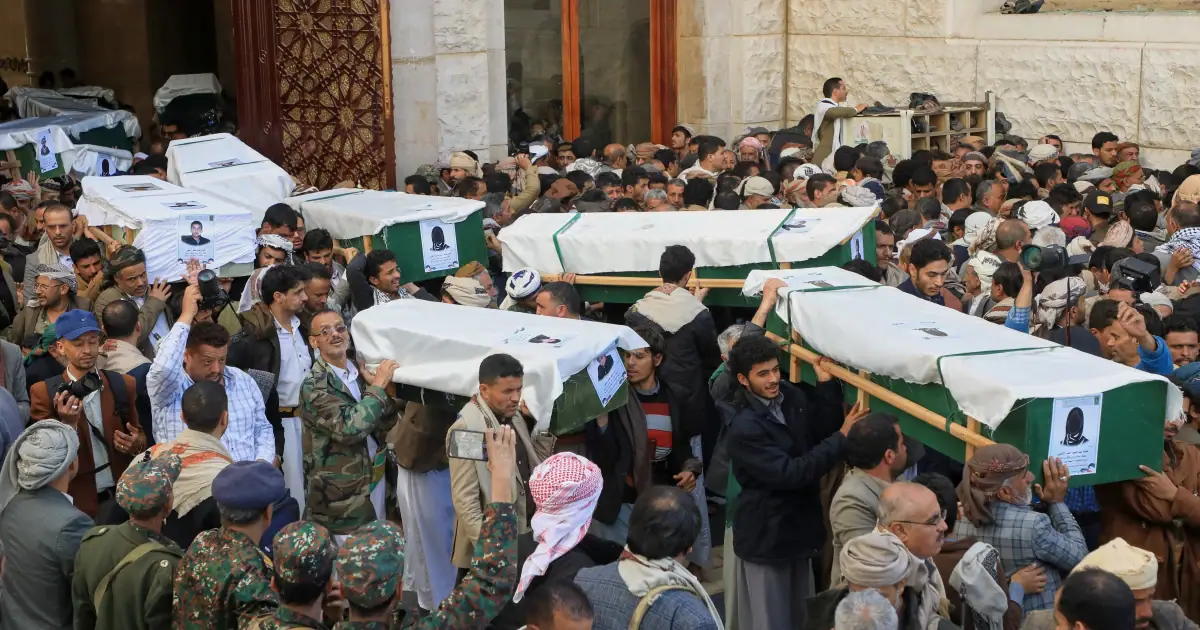
The conflict has also led to an intensification of the war in Yemen, with the Houthis, supported by Iran, facing off against Saudi Arabia. The renewed fighting has resulted in significant humanitarian crises, with 330,000 Yemenis displaced. Pakistan, Turkey, and Egypt have entered the fray with defensive support to Saudi Arabia, while the US provides intelligence on the Houthis.
Efforts by mediators continue, but neither side appears willing to budge. Iran has expressed willingness to pause attacks on ships in the Strait of Hormuz, but insists on meeting seven demands, including lifting sanctions and ending the naval blockade. US Secretary of State Marco Rubio has described these conditions as "absurd," and Iran's head of Supreme National Security Council has stated that they will not remove enriched nuclear material from the country.
The ongoing conflict and current strategy suggest that the situation may remain unstable, with the possibility of escalation still looming. Senior UAE diplomat Anwar Gargash has warned that the region must prepare for a prolonged period of uncertainty. As the situation stands, it appears that Trump's strategy is to maintain the status quo, at least for the time being.
Key points
- President Trump's strategy on Iran appears to be focused on maintaining the current situation, with a reliance on economic pressure and a reduced likelihood of military action.
- The ongoing conflict has significant regional implications, including a severe economic downturn in Gulf Arab states and an intensification of the war in Yemen.
- Efforts by mediators to find a resolution have so far been unsuccessful, with Iran insisting on meeting seven key demands before entering into direct talks.