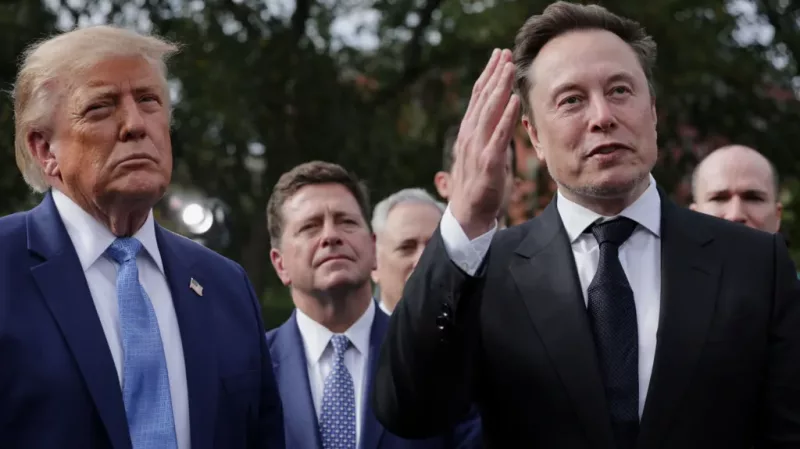
US President Donald Trump hosted a meeting with top technology executives on Tuesday to discuss the development and regulation of artificial intelligence. The meeting, which was held at the White House, included leaders from OpenAI, Anthropic, Nvidia, SpaceX, Meta, and Google. The executives signed a "morally binding" document that aims to ensure the safety of their AI technology. The accord, which was posted online by Trump, emphasizes the importance of self-regulation in the AI industry.
The AI safety accord, signed by Trump and tech leaders including Sundar Pichai, Mark Zuckerberg, and Elon Musk, aims to promote the responsible development of AI. Under the agreement, companies are responsible for ensuring the safety of their own technology and implementing safeguards to prevent unintended consequences. The firms also agreed to work with independent auditors to assess the performance of their AI systems. The accord was hailed by some as a historic step towards ensuring the safe development of AI.
However, not all experts are impressed with the accord. Some have raised concerns that the agreement does not address accountability for AI-related incidents. Nanyang Technological University AI governance researcher Jose Miguelito Enriquez said the pact shows emerging consensus but lacks clear guidelines for accountability. Law professor Kimberlee Weatheral from the University of Sydney described the accord as "deeply unimpressive" and argued that it allows companies to define their own safety standards.
Trump also reiterated his support for the rapid expansion of data centres, which are critical to the development of AI. The construction of data centres has drawn opposition due to concerns about electricity usage and their potential impact on local communities. A recent survey found that 65% of registered voters opposed data centres being built in their areas. Trump said tech companies would work to address these concerns and make people "happy" about data centre construction.
The tech summit also saw the announcement of an executive order instructing US government departments and agencies to adopt the term "Super Intelligence" instead of artificial intelligence. The order, signed by Trump, requires government agencies to use the term "SI" in official correspondence, websites, and reports. Some tech leaders, including Zuckerberg and Musk, have already started using the term, which Trump believes will help to rebrand AI.
The use of the term "Super Intelligence" has been met with skepticism by some experts. Jeannie Paterson from the Centre for Artificial Intelligence and Digital Ethics at the University of Melbourne said the term may not gain widespread traction. Paterson also expressed concerns that self-regulation could lead to companies setting only minimal safeguards for their AI technology.
The tech summit and the announcement of the AI safety accord and executive order mark a significant development in the US government's approach to AI regulation. While some experts have welcomed the move, others have raised concerns about the effectiveness of self-regulation and the potential risks associated with AI. The US "may well be able to set the nomenclature" for AI, Paterson said, but the impact of the accord and executive order remains to be seen.
Key points
- Tech leaders sign AI safety accord, emphasizing self-regulation
- Trump announces executive order to adopt term "Super Intelligence"
- Experts raise concerns about accountability and effectiveness of self-regulation