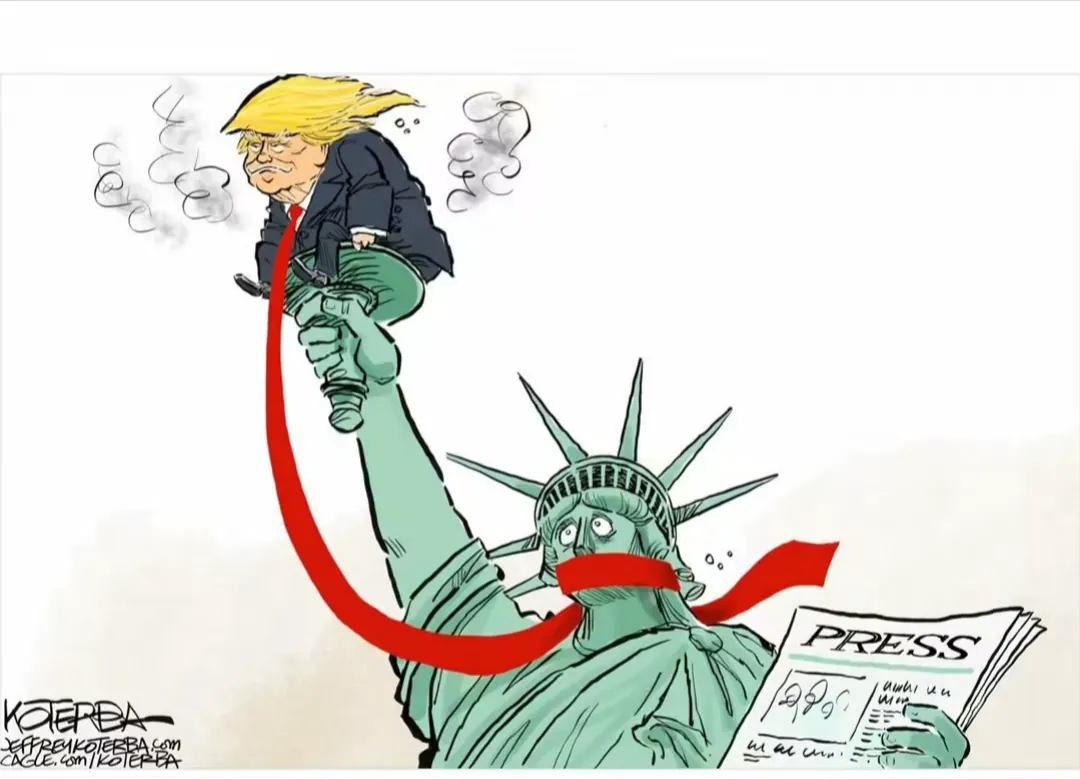
US President Donald Trump has been engaged in a long-standing feud with the press, which escalated recently as he sought to ban CNN, MS Now, and Politico from White House briefings. The ban was temporarily lifted by a judge, allowing the media outlets to continue covering events at the White House. This move is part of a larger pattern of tension between the Trump administration and the press.
Trump's relationship with the press began to deteriorate early in his presidency, following leaks about his National Security Adviser's contacts with Russia. On February 17, 2017, Trump tweeted that "Fake News" media outlets, including CNN, NBC News, ABC, CBS, and others, were "the enemy of the American people." This rhetoric has been seen as a concerning echo of dark periods in history.
The feud has led to several high-profile incidents, including the revocation of CNN journalist Jim Acosta's White House pass after a tense exchange. A court ultimately ordered the administration to reinstate Acosta's pass, but the issue of free speech was not fully resolved. Trump's administration has also restricted access to the Pentagon and attempted to limit the press's ability to cover certain events.
Critics argue that Trump's attacks on the press are having a "chilling effect" on free speech and the ability of journalists to do their jobs. The Committee to Protect Journalists has documented numerous instances of Trump administration officials making veiled threats or using aggressive language towards reporters. Experts warn that such rhetoric can have serious consequences for press freedom.
Trump's recent attempts to ban certain media outlets from White House briefings have been met with skepticism by experts, who argue that the administration's claims of "fake news" are unfounded. The first amendment to the US Constitution protects freedom of expression, and courts have generally ruled that the government cannot punish or prohibit speech simply because it is unpopular.
The issue may ultimately be decided by the courts, with some experts predicting that Trump's administration will lose. Even if the case reaches the Supreme Court, many believe that the president will struggle to justify his actions. In the meantime, the feud between Trump and the press continues to draw attention and spark debate about the role of the media in a democratic society.
As Trump continues to clash with the press, experts warn that the consequences could be far-reaching. The administration's actions have been seen as an attempt to intimidate and silence critics, which could have a lasting impact on the ability of journalists to hold those in power accountable. The situation remains a contentious issue in the United States, with implications for the health of democracy and the role of the press.
Key points
- Trump's feud with the press has been ongoing for nearly a decade.
- The administration's actions have been criticized for having a "chilling effect" on free speech.
- Experts believe that Trump's attempts to ban certain media outlets from White House briefings may ultimately be unsuccessful.