The United Nations General Assembly has once again urged an end to the decades-long US economic embargo on Cuba, with a significant number of countries voting in favor of the resolution. The vote, which took place on Wednesday, saw 130 nations support the resolution, while 25 abstained and 17 countries, including the US and Israel, voted against it. This represents a notable shift from last year's vote, where 165 countries voted in favor, 7 against, and 12 abstained.
Several Western countries, including Germany and Italy, abstained from the vote for the first time in many years. The US lobbying push appeared to have an impact, as more countries than usual chose to abstain or vote against the resolution. The UN vote carries significant political weight, but it is worth noting that only the US Congress has the authority to lift the Cold War-era embargo.
The US envoy to the UN, Mike Waltz, expressed satisfaction with the outcome of the vote, citing a tripling of countries that have shifted their position on the issue. He attributed this shift to diplomatic efforts and expressed confidence that the trend would continue to grow. Waltz also announced that a Cuban diplomat, Richard Tur de la Concepcion, would be expelled from the US following an incident involving an American diplomat.
Tensions between the US and Cuba escalated ahead of the vote, with reports of shouting matches between diplomats and physical altercations on the floor of the General Assembly. The Cuban foreign minister, Bruno Rodriguez, responded to the vote by accusing the US government of attempting to strangle the Cuban people and subject them to collective punishment.
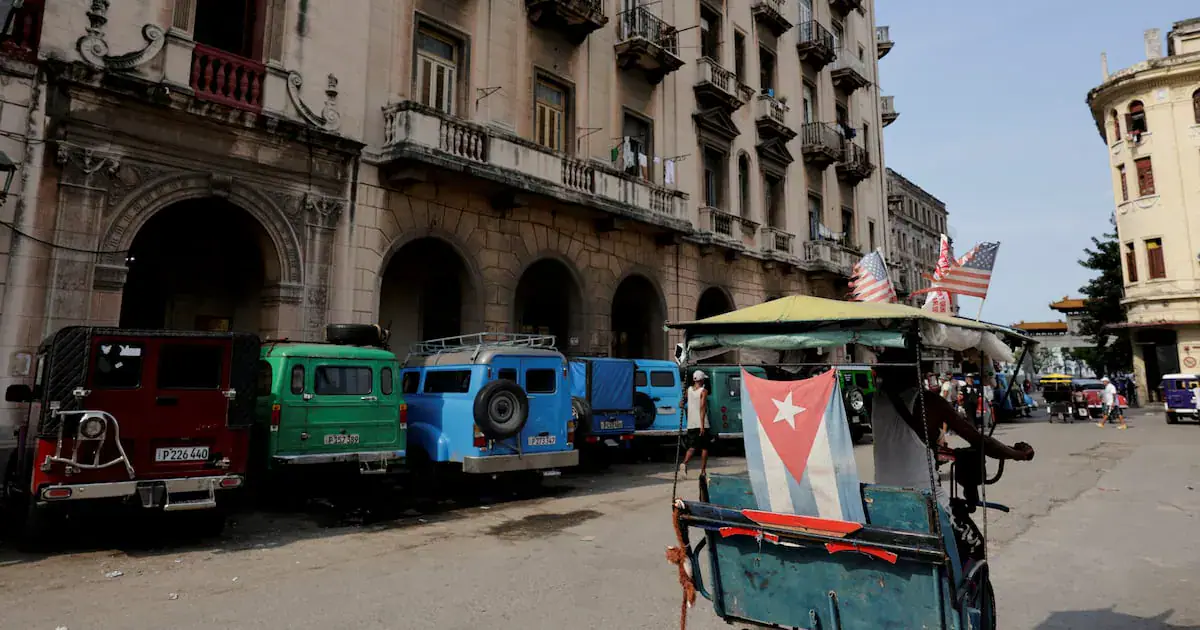
The US has maintained a trade embargo on Cuba for over 60 years, with the Trump administration stepping up pressure on the island nation. The embargo has been blamed by Cuba for the country's economic crisis, which has resulted in shortages of basic goods, collapsing infrastructure, and runaway inflation.
The US has consistently voted against UN resolutions calling for an end to the embargo since 1992, but abstained for the first time in 2016 under President Barack Obama. The Obama administration had forged a closer relationship with Havana, but the Trump administration has taken a harder line.
The outcome of the vote is likely to be seen as a setback for the US, with Cuban foreign minister Bruno Rodriguez describing the US efforts as "insane pretexts" and "media circus." The US position on the embargo remains unchanged, with President Trump recently describing Cuba as a failed state and suggesting that freedom would come to the island nation.
Key points
- The US lobbying push led several countries to oppose or abstain from the UN vote on the Cuba embargo.
- The UN General Assembly voted 130-17, with 25 abstentions, in favor of ending the US economic embargo on Cuba.
- The US Congress is the only body that can lift the Cold War-era embargo on Cuba.