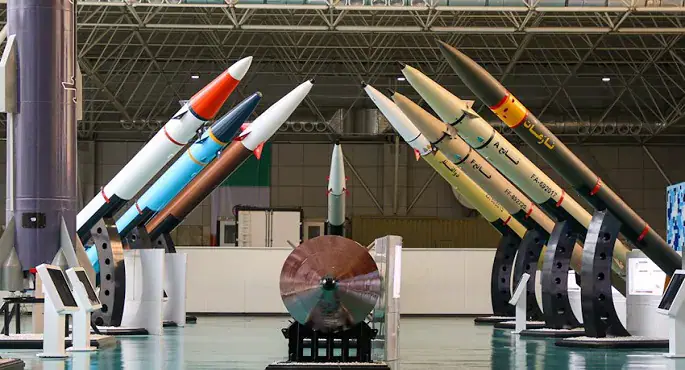
US officials have indicated that Iran's reconstruction of its missile system has slowed down compared to before the war. Although Iranian facilities producing missiles were damaged by US and Israeli strikes, Tehran has continued to rebuild its arsenal, albeit at a slower pace. Officials noted that Iran is relying on previously stored components to rebuild its missile system.
According to Jim Lamson, a visiting researcher at King's College London and former CIA analyst, estimating the number of missiles Iran possesses is extremely challenging due to the secrecy surrounding the matter. Multiple factors, including the number of new missiles that can be manufactured from pre-stored components, contribute to the uncertainty. Lamson added that even with access to classified information, assessments of Iran's missile stockpiles before the war were not reliable.
Israeli military officials estimate that Iran has over 1,500 ballistic missiles, although estimates vary due to the difficulty in accurately determining the number. Meanwhile, a White House official stated that the US operation against Iran, dubbed "Operation Epic Fury," has left Iranian forces incapacitated. The economic sanctions have weakened the Iranian regime more than ever before.
US Defense Secretary Pete Hegseth announced that Iran's defense industry base has been "finished" and over 80% of its nuclear industrial base has been destroyed. He emphasized that the US has achieved a "historic military victory" by all standards. These developments come as US officials revealed that President Trump informed his advisors that he would not attack Iran and might halt further strikes if Tehran refrains from provocations.
US Secretary of State Marco Rubio stated that there is no need for additional military operations against Iran, as the economic hardships imposed by the US have severely weakened the regime. Rubio made these comments during a speech at the Federalist Society. The US has been engaged in a campaign of economic pressure and military strikes against Iran.
The situation surrounding Iran's missile system and the US military operations against it continues to unfold. Iran's ability to produce new missiles from stored components and its existing stockpile of drones and short-range missiles remain a concern for US officials. The international community is closely watching the developments, with many hoping for a peaceful resolution to the conflict.
The conflict between the US and Iran has significant implications for regional and global security. The US efforts to weaken Iran's military capabilities, particularly its missile system, are ongoing. However, the effectiveness of these efforts and the potential for further escalation remain uncertain. The situation will likely continue to be closely monitored by policymakers and analysts.
Key points
- US officials believe Iran's rebuild of its missile system has slowed due to damage from US and Israeli strikes.
- Iran is relying on previously stored components to rebuild its missile system.
- Estimates of Iran's missile stockpiles vary, with Israeli officials estimating over 1,500 ballistic missiles.