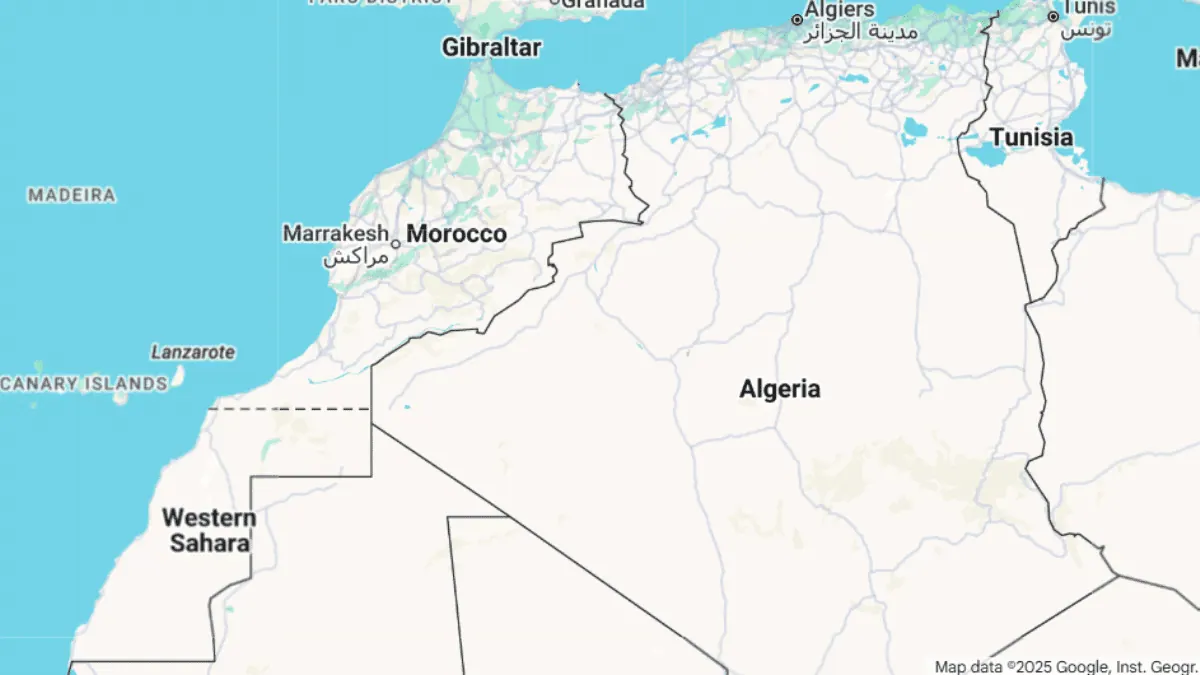
The Moroccan press is reeling from recent statements made by Massad Boulos, adviser to US President Donald Trump on Arab and African affairs. In an interview with France 24 on September 26, Boulos expressed that no solution is currently in sight for Western Sahara. His comments have left Moroccan analysts and commentators scrambling for answers. Boulos described Algeria as a "very good partner" of the US, emphasizing that Algiers cannot impose a solution, and that the final decision lies with the Sahrawis, represented by the Polisario Front.
The Moroccan government had been aligning its diplomacy with US priorities under the Trump administration, often going above and beyond what its own diplomatic corps had previously accepted. This included elevating liaison offices with Israel to embassy status, contributing financially to the Peace Council, and participating in the International Stabilization Force in Gaza. However, it appears that Rabat's efforts have not yielded the desired results, as Boulos' statements have effectively dashed Moroccan hopes of a breakthrough in Western Sahara.
A key factor in the US's differing approach towards Morocco and Algeria lies in their respective strategic interests. The US has significant concerns in the Sahel region, where it has lost ground since its withdrawal from Niger. Algeria's cooperation on security issues, particularly in combating jihadist networks, is seen as vital by Washington. Additionally, the US has significant energy and mining interests in Algeria, with companies like ExxonMobil, Chevron, and Sinopec eyeing opportunities in the country's gas and rare earth mineral sectors.
The diplomatic approach taken by Morocco has been based on making concessions to gain favor with the US. However, this strategy appears to have fallen short, as Rabat had assumed that Washington's support for its position on Western Sahara would translate into a tangible outcome. The US, on the other hand, has maintained that its support for Morocco does not preclude it from engaging with Algeria and exploring other options for a peaceful resolution to the Western Sahara conflict.
One potential model for a resolution to the conflict could be a sovereign state or autonomous entity in free association with another country. There are examples of such arrangements in the Pacific, where states have chosen to organize themselves in this way. While these models may not be directly applicable to Western Sahara, they do demonstrate the range of possible institutional arrangements that could be explored.
The reaction in Morocco to Boulos' statements has been intense, with some commentators lashing out at the US adviser. However, it is clear that Rabat's diplomacy has been based on a flawed assumption that US support would automatically translate into a favorable outcome. The US, on the other hand, appears to be taking a more nuanced approach, prioritizing its strategic interests in the region while also seeking a mutually acceptable solution to the Western Sahara conflict.
In the end, it seems that Morocco's diplomatic efforts have been based on a misreading of US priorities and interests. While Washington continues to support Rabat's position on Western Sahara, it is clear that this support does not constitute a binding commitment to a particular outcome. The US can work with both Morocco and Algeria, engaging with the Polisario Front while also pursuing a compromise that is acceptable to all parties involved.
Key points
- US-Morocco relations have been put to the test following Massad Boulos' statements on Western Sahara.
- Algeria's strategic importance to the US has been highlighted, with Washington seeking to strengthen ties with Algiers.
- Morocco's diplomacy has been based on a flawed assumption that US support would automatically translate into a favorable outcome.