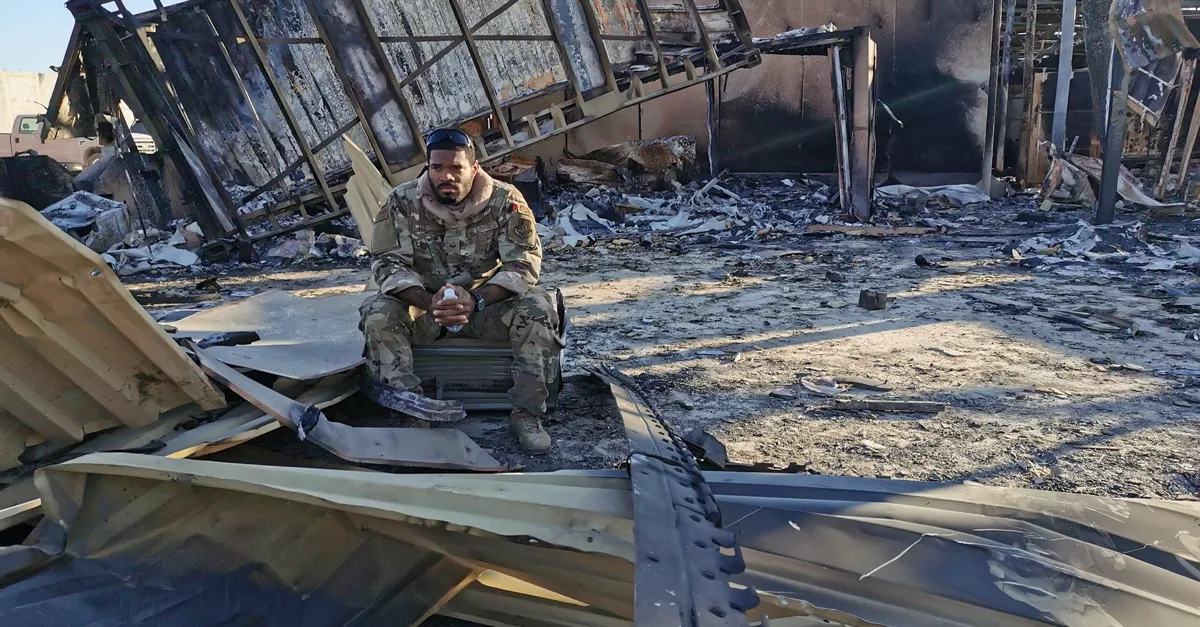
A recent assessment has revealed that US military planners are facing a significant challenge in planning future wars in the Middle East. The assessment suggests that they must choose between rebuilding damaged bases, which no longer play a vital role in projecting US influence, or relying on long-range precision weapons, which face significant challenges. This dilemma has arisen due to the changing nature of warfare in the region.
During the recent Iran-US conflict, which began in April and lasted for approximately four months, Iran launched a series of attacks on US facilities in the region, causing significant damage to aircraft, radar systems, communication equipment, and hundreds of buildings and facilities. The attacks have highlighted the vulnerability of US military bases in the region, which are no longer as secure as they once were.
The proximity of military bases to areas of conflict was once considered a key advantage for the US military, allowing for more frequent sorties, shorter supply lines, and a rapid response to crises. However, the development of precision-guided munitions and drones by US adversaries, such as Iran, has reduced the effectiveness of these bases. The assessment suggests that the US military must adapt to these changes and develop new strategies for projecting power in the region.
The US military is considering a more naval-centric approach to future wars in the region, relying on long-range bombers and aircraft carriers to project power. This approach would reduce the need for forward-based military installations and minimize the vulnerability of US forces to attack. However, it also raises significant challenges, including the need for a larger and more capable naval fleet.
The US Navy is currently facing significant challenges, including a shortage of shipyards and a aging fleet of aircraft carriers and submarines. The Navy's four shipyards, which were built in the 19th and 20th centuries, are struggling to keep up with the demands of modern warfare, and the service is exploring new options, including building ships in foreign yards.
Despite the advantages of a more naval-centric approach, the US military still requires forward-based installations to support its operations, including logistics and refueling. The assessment suggests that US planners must carefully consider the trade-offs between rebuilding damaged bases and investing in new technologies and strategies.
The US military faces a difficult choice in the Middle East, where it must balance the need to project power with the need to protect its forces from attack. The development of new technologies and strategies will be critical to addressing these challenges, but it will also require significant investment and a willingness to adapt to changing circumstances.
Key points
- The US military is facing a dilemma in planning future wars in the Middle East, where it must choose between rebuilding damaged bases or relying on long-range precision weapons.