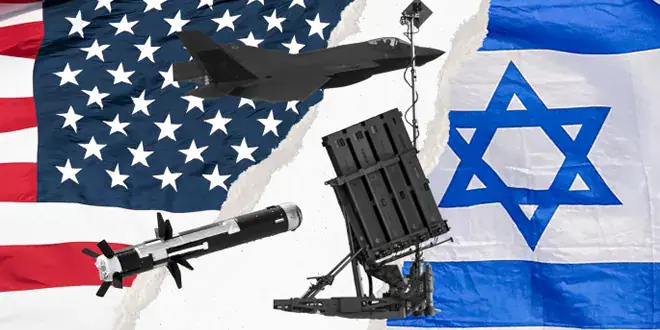
US President Donald Trump has announced that the United States will end its annual military aid to Israel by the end of 2026. The aid, which currently stands at $3.8 billion per year, is part of a 10-year agreement signed in 2016. Trump made the announcement on November 3, during the US midterm elections, stating that he had reached an agreement with Israeli Prime Minister Benjamin Netanyahu.
The agreement between Washington and Jerusalem includes $38 billion in military aid over 10 fiscal years, from 2019 to 2028. The annual package comprises $3.3 billion for military equipment purchases and $500 million for joint missile defense programs. These funds are subject to Congressional approval. Trump's announcement has raised questions about the future of US-Israel military cooperation, particularly regarding the potential sale of US arms to Israel.
Trump's decision has been met with mixed reactions. He cited Israel's prosperity and the political costs of the aid for Republicans as reasons for the decision. The President also mentioned that Israel could continue to purchase US arms. In contrast, critics argue that the aid is essential for Israel's security, particularly in light of ongoing conflicts in the region.
A group of 12 US senators, including Chris Van Hollen, Bernie Sanders, and Elizabeth Warren, have expressed concerns about the implications of Trump's announcement. They have written to Congressional leaders, urging them to remove provisions that would enhance military cooperation and intelligence sharing with Israel. The senators argue that these measures would limit the administration's ability to make independent decisions about US national security.
The debate over US military aid to Israel has been ongoing for several years. Some have argued that the aid is necessary to support Israel's defense against regional threats, while others have raised concerns about the humanitarian impact of Israeli military actions in Gaza and the West Bank. Trump's announcement has added a new layer of complexity to this debate.
The timing of Trump's announcement, made during the US midterm elections, has also sparked speculation. Some have suggested that the move was intended to appeal to certain voters, particularly those who have been critical of US support for Israel. Others have argued that the decision reflects a shift in US policy towards the region.
The future of US-Israel military cooperation remains uncertain. While Trump's announcement suggests that the US will end its annual military aid to Israel, it is unclear what this will mean for future arms sales or other forms of cooperation. The issue is likely to remain a topic of debate in the US Congress and among policymakers in the coming months.
Key points
- Trump's announcement does not necessarily mean an end to US military cooperation with Israel.
- The US will continue to allow Israel to purchase US arms.
- The decision has sparked debate about the future of US-Israel relations and the role of the US in the region.