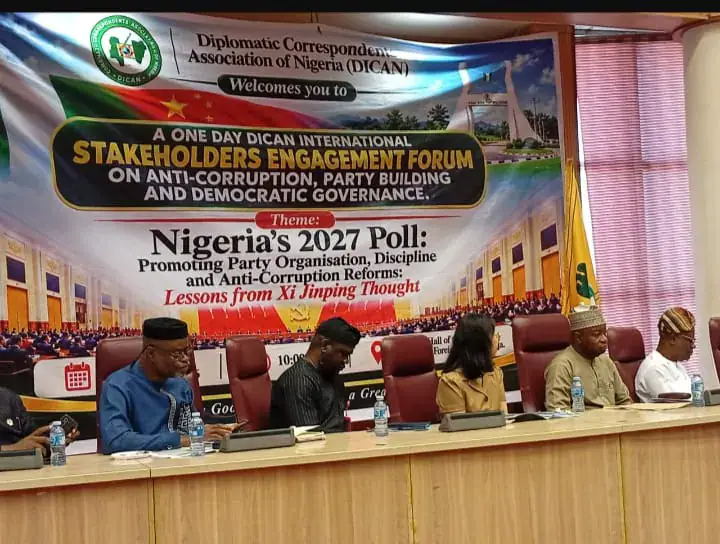
The Diplomatic Correspondents' Association of Nigeria (DICAN) has called for stronger political party discipline, greater accountability, and far-reaching anti-corruption reforms ahead of the 2027 general elections. This call was made at an international forum examining China's governance experience and its possible lessons for Nigeria. The forum, held at the Ministry of Foreign Affairs in Abuja, brought together diplomats, government officials, and media professionals.
DICAN Chairman, Frederick Idehai, stated that democratic development must go beyond conducting elections to building credible institutions and responsible political parties. He urged political parties to uphold their constitutions, strengthen internal democracy, promote transparency, and ensure accountability among their members. Idehai emphasized that Nigeria's engagement with China's governance model was not intended to replicate its political system but to identify relevant practices to strengthen Nigeria's democratic institutions.
Counsellor Dong Hairong, representing the Chinese Embassy in Nigeria, disclosed that about 8.1 million corruption cases had been recorded in China since 2012, with over 7.9 million officials facing disciplinary and administrative sanctions. This included over 900 senior officials at vice-ministerial level and above, reaffirming China's commitment to accountability and institutional oversight. Hairong expressed China's readiness to share its governance experience with Nigeria and strengthen bilateral cooperation in anti-corruption initiatives.
Political analyst, Dr. Charles Onunaiju, identified weak internal democracy, excessive monetization of elections, and poor party discipline as major challenges to Nigeria's democratic development. He maintained that electoral technology alone cannot guarantee credible elections without ideologically grounded political parties committed to transparency and accountability. Onunaiju's comments underscored the need for comprehensive reforms in Nigeria's electoral process.
Participants at the forum called for stronger institutional collaboration, responsible political leadership, and sustained reforms, stressing that credible elections depend not only on transparent voting processes but also on disciplined political parties and accountable governance. The forum's theme, "Nigeria's 2027 Poll: Promoting Party Organisation, Discipline and Anti-Corruption Reforms – Lessons from Xi Jinping's Thoughts," reflected the importance of adopting best practices in party organization and governance.
The international forum was attended by diplomats, government officials, political party leaders, academics, civil society organizations, and media professionals. The diverse range of participants highlighted the need for a collaborative approach to addressing Nigeria's democratic challenges. By engaging with China's governance experience, Nigeria aims to identify practical solutions to strengthen its democratic institutions and ensure credible elections.
As Nigeria prepares for the 2027 general elections, the Diplomatic Correspondents' Association of Nigeria's call for party discipline and anti-corruption reforms serves as a timely reminder of the need for comprehensive electoral reforms. With credible elections dependent on responsible political parties and accountable governance, Nigeria's democratic development hinges on the adoption of effective reforms and best practices in party organization and governance.
Key points
- DICAN Chairman, Frederick Idehai, urged political parties to uphold their constitutions and strengthen internal democracy to promote transparency and accountability.
- China has recorded 8.1 million corruption cases since 2012, with over 7.9 million officials facing disciplinary and administrative sanctions.
- Participants at the forum emphasized the need for stronger institutional collaboration, responsible political leadership, and sustained reforms to ensure credible elections.