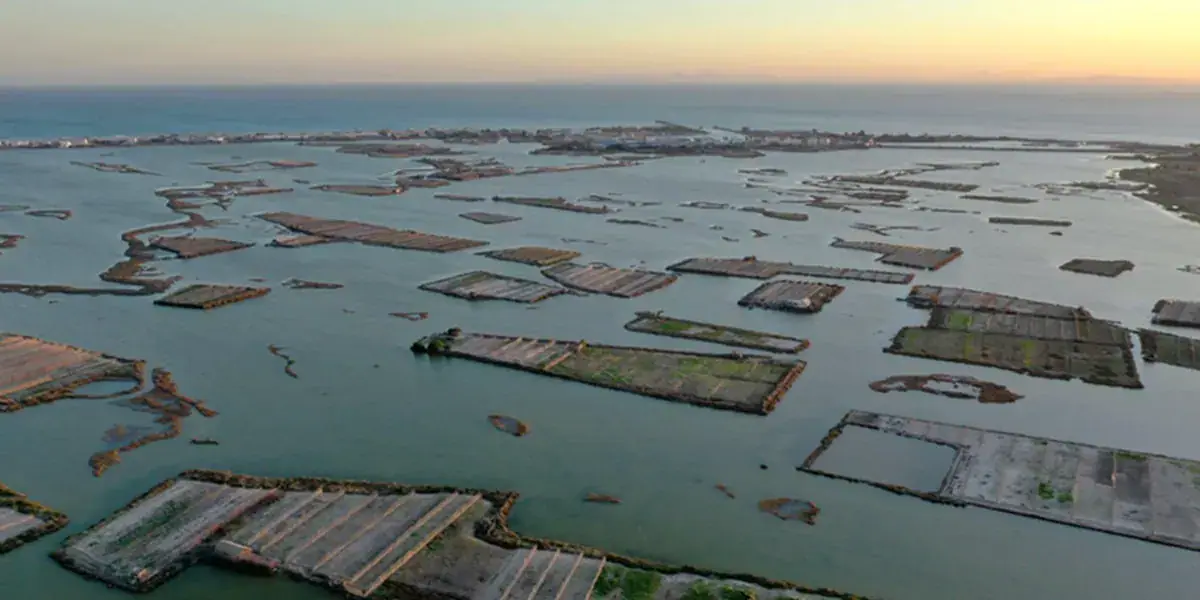
The Tunisian National Institute of Marine Science and Technology has initiated a research project, ECOVAL-RISC, to study three major risks facing the country's coastline: erosion, marine submersion, and saltwater intrusion. The project was launched in Salammbô, at the INSTM's headquarters, on November 20. The research will focus on the Ghar El Melh lagoon in the Bizerte governorate, a region known for its unique agricultural practices. The lagoon's specific context makes it an ideal location for studying these coastal risks.
For centuries, farmers in Ghar El Melh have cultivated plots of sand where the tide brings water up to the roots of their crops. This technique, called "ramli" or "on the sand," was introduced in the 17th century by Andalusian populations. It relies on the difference in density between fresh and saltwater, allowing rainwater to infiltrate the sand and form a layer above the saltwater. When the tide rises, it lifts this freshwater reserve up to the roots of the crops. The method has been recognized by the FAO as an ingenious system of global agricultural heritage.
The research project, led by scientist Oula Amrouni, aims to study the risks facing the lagoon and the services it provides to local inhabitants. The team will investigate how the movement of water under the sand ensures irrigation for the crops. The unique agricultural practice in Ghar El Melh allows for a concrete understanding of one of the services provided by the lagoon. By analyzing these dynamics, researchers hope to better understand the impacts of erosion, submersion, and saltwater intrusion on the lagoon's ecosystem and local agriculture.
One of the main challenges facing farmers in Ghar El Melh is managing the height of their plots to avoid exposing roots to saltwater or leaving them dry. If a plot is too high, the roots will not receive enough water; if it's too low, they will be exposed to salt, which can destroy the crop. The intrusion of saltwater is a particular concern, as it can occur even if the plot appears above water. This highlights the importance of understanding the complex interactions between freshwater, saltwater, and the soil in this unique agricultural system.
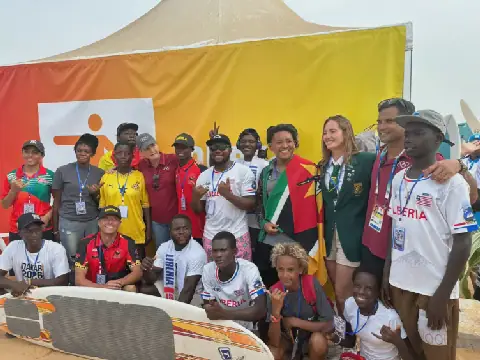
The project launch included workshops with local children and young people to educate them about the functioning of the coastline. These activities aim to raise awareness about the importance of preserving the lagoon's ecosystem and the traditional knowledge of local farming communities. In this part of the Tunisian coast, the height of a plot, the amount of sand added, and the water pushed by the tide towards the roots are all knowledge passed down through generations of farming families.
The ECOVAL-RISC project is a significant step towards understanding and mitigating the impacts of coastal risks on Tunisia's coastline. By studying the Ghar El Melh lagoon, researchers hope to develop strategies for preserving the ecosystem and supporting local communities. The project's findings could also have implications for other coastal regions facing similar challenges. The recognition of Ghar El Melh's agricultural practices as a global agricultural heritage highlights the importance of preserving traditional knowledge and techniques.
The research project is also an opportunity for Ghar El Melh to strengthen its status as a Ramsar site, a designation reserved for wetlands of international importance. The town's unique ecosystem and agricultural practices make it an exemplary model for sustainable development and environmental conservation. As the project progresses, it is likely to provide valuable insights into the complex relationships between coastal ecosystems, agriculture, and local communities.
Key points
- The Tunisian National Institute of Marine Science and Technology has launched a research project to study erosion, submersion, and saltwater intrusion in the Ghar El Melh lagoon.
- The project aims to understand the risks facing the lagoon and the services it provides to local inhabitants.
- The research will focus on the unique agricultural practices in Ghar El Melh, recognized by the FAO as an ingenious system of global agricultural heritage.