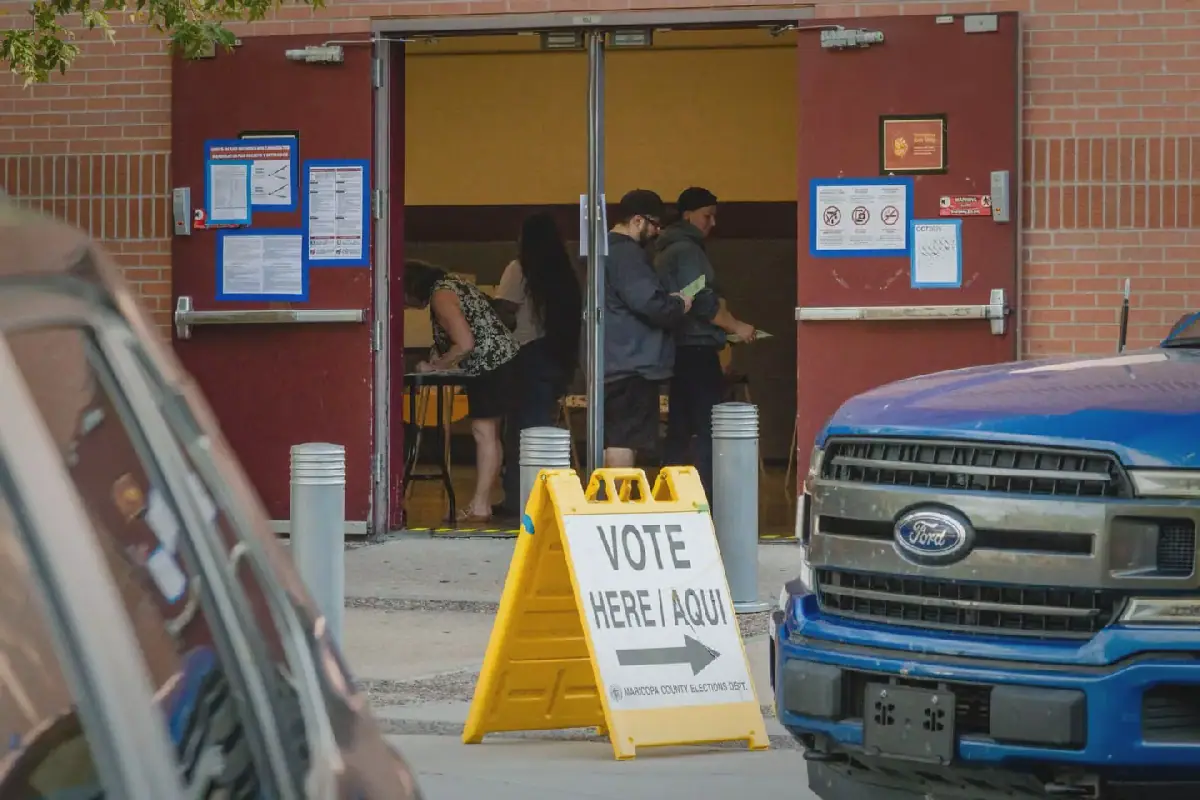
On Tuesday, November 3, millions of American voters will cast their ballots in the highly anticipated midterm elections. The polls will renew the entire 435 seats in the House of Representatives and 35 out of 100 seats in the Senate, including two special elections in Florida and Ohio. Additionally, 36 states and three territories will elect their governors, making a total of 39 gubernatorial elections. The parliaments of most states and numerous local officials, including mayors, sheriffs, prosecutors, judges, and school board members, will also be up for election.
The estimated electorate stands between 175 and 200 million registered voters, with over 54 million ballots already cast in advance. The current majorities in Congress are narrow, with Republicans holding 218 seats in the House and 53 seats in the Senate, while Democrats have 214 House seats. To gain control of either chamber, the opposition needs to win at least four more seats in each. Recent polls suggest that Democrats are leading in the House with 47% of the vote, compared to 35% for Republicans, but the electoral map complicates the translation of this gap into seats.
The electoral landscape has been altered by redistricting efforts in several states, particularly those controlled by Republicans, which may favor them but to a lesser extent than expected. Seven Senate races were classified as highly competitive as of October 20, in Alaska, Iowa, Kansas, Maine, Michigan, Ohio, and Texas. These midterm elections are traditionally unfavorable to the incumbent president, and a Democratic-controlled House could hinder the passage of laws and the budget, while also paving the way for parliamentary investigations.
A Democratic-controlled Senate would also enable them to block certain presidential nominations, including judicial appointments. Former President Donald Trump, who concluded his campaign rallies with events in Iowa and Kansas on Sunday, stated that he could become a "Mr. Veto" if the opposition wins control of Congress. The outcome of these elections has significant implications for various issues, including economic policy, as the Federal Reserve has delayed its decision on interest rates until after the polls.
The timing of the elections also coincides with significant business events, such as the planned initial public offering of Anthropic, which is scheduled to take place after November 3. Furthermore, unconfirmed US reports suggest that military strikes against Iran may resume on November 4. The elections will be closely watched, both domestically and internationally, as they have the potential to shape the US legislative agenda for the next two years.
The campaigns have been intense, with both parties vying for control of Congress. The Democratic Party has focused on issues such as healthcare, education, and the economy, while Republicans have emphasized topics like immigration, national security, and taxes. Voters have been bombarded with advertisements, debates, and rallies, as both sides seek to persuade them to cast their ballots.
As the polls open on November 3, millions of Americans will have the opportunity to shape the future of their country. The outcome of these midterm elections will have far-reaching consequences, not only for the US Congress but also for the presidency and the balance of power in Washington. The results will be closely monitored, and their impact will be felt for years to come.
Key points
- The US midterm elections will determine the balance of power in Congress, with 435 House seats and 35 Senate seats up for grabs.
- The elections are seen as a referendum on the incumbent president's policies, with a Democratic-controlled House potentially hindering the passage of laws and the budget.
- The outcome of the elections has significant implications for various issues, including economic policy, business events, and international relations.