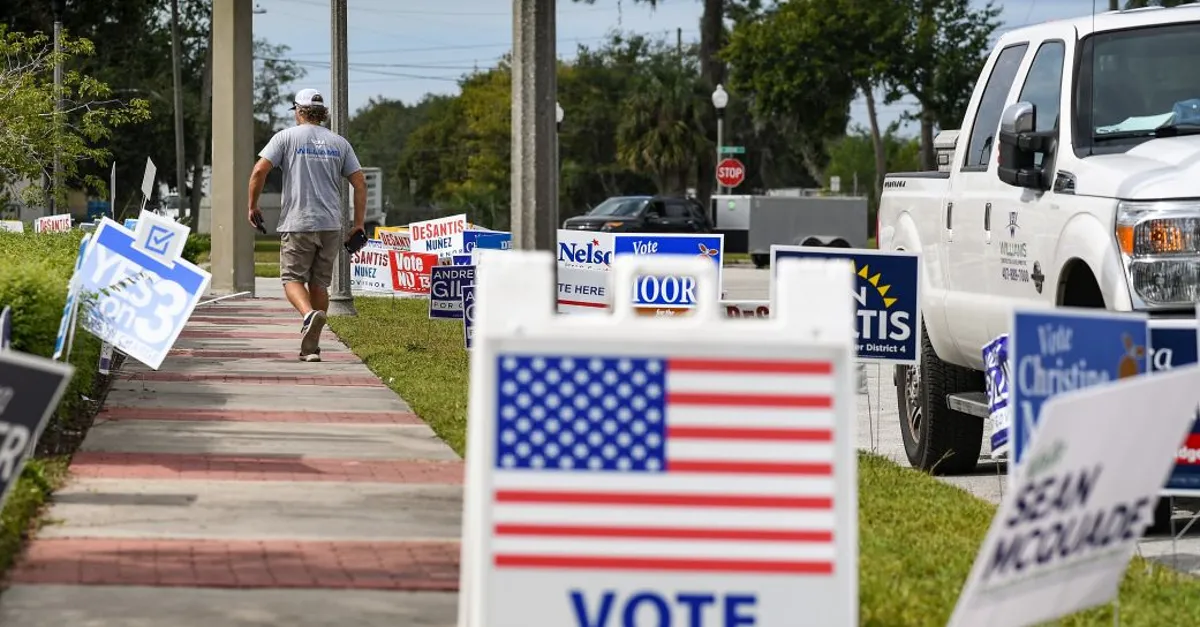
The US midterm elections, set to take place on November 3, are gaining significant attention this year as they coincide with the midpoint of President Donald Trump's second term. Trump has chosen to make his personal presence and political record a central focus of the Republican campaign. The elections will be held against a highly competitive political backdrop, with Trump's popularity, the administration's performance on economic and social issues, and the electoral map for both the House of Representatives and the Senate playing crucial roles.
The current electoral landscape shows that the Republican Party holds a slim majority in the House of Representatives with 220 seats, compared to 215 for the Democrats. In the Senate, the Republicans control 53 seats, while the Democrats have 47. To maintain their majority, the Republicans do not need to make significant gains but must defend a limited number of seats that have become highly contested. Recent indicators suggest that the Republicans are facing clear pressure, particularly in the House of Representatives, due to declining evaluations of Trump's performance and rising living costs in the US.
The Republicans are entering the 2026 elections with a very narrow margin in the House of Representatives, with a difference of just five seats. This fact is significant because the Democrats need only three net seats to regain control of the House. According to recent rankings by Inside Elections, a notable number of Republican-held districts are highly competitive, with an estimated potential gain for the Democrats ranging from two to ten seats. The Senate picture is more complex, with the Republicans holding 53 seats and the Democrats 47, meaning the Democrats need a net gain of four seats to control the Senate.
Several factors will influence the midterm elections, including Trump's popularity, the economy, rising living costs, voter turnout, candidate personalities, and the nature of swing districts and states. Trump's declining electoral popularity represents a pressure point for the Republican Party. A recent Reuters/Ipsos poll conducted from September 17 to 20 showed that Trump's approval rating had dropped to around 32%, with approximately 66% of respondents disapproving of his performance. This decline is not limited to non-Republican voters, as the poll also indicated a decrease in approval ratings among Republicans compared to the beginning of the year.
The economy and living costs are at the forefront of the electoral battle. Even if the ruling party has a strong electoral base, persistent concerns about prices and income can lead voters to reassess their support. A Pew Research Center survey in July showed that the economy remained a top concern for voters as the midterm elections approached. Other polls have indicated that Republicans retain advantages on issues like immigration and crime, while facing more challenging competition on economic issues and living costs.
The Democrats are showing progress in national voting indicators. A Generic Congressional Ballot, which measures voter preferences between Republican and Democratic candidates, showed that Democratic candidates led with 52% of the vote, compared to 38% for Republicans, according to an Economist/YouGov survey published on September 22. While this difference cannot be directly translated into a specific number of seats, it represents a pressure point for the Republican Party, particularly in districts where Republicans won by narrow margins in previous elections.
The electoral landscape for Senate seats is more complex than that for the House of Representatives, particularly in swing states. The Cook Political Report indicates that highly competitive races are underway in several states, including Alaska, Iowa, Maine, Michigan, New Hampshire, Ohio, and Texas. Senate elections are characterized by the significant role played by local candidate personalities, and some states with clear party leanings can see different competition if one candidate is more effective at attracting independent voters or retaining their party's base.
Key points
- Trump's popularity and economic concerns are significant factors influencing voter sentiment in the US midterm elections.
- The Republicans face pressure in defending their slim majority in the House of Representatives and Senate.
- The Democrats are showing progress in national voting indicators, posing a challenge to the Republican Party.