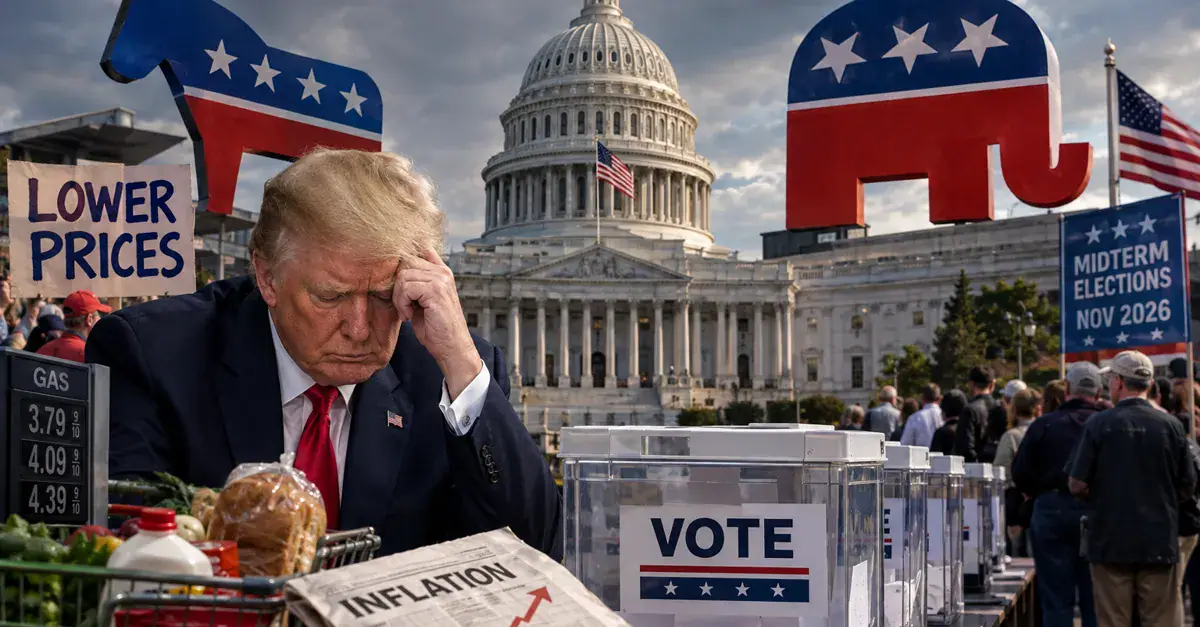
In a surprising turn of events, the issue that helped Donald Trump win the presidency in 2024 is now posing a threat to his Republican Party's majority in Congress. The high prices and inflation that led to the Democrats' downfall are now expected to cost Republicans their majority in the midterm elections. Trump had boasted about his ability to lower prices, but the current inflation rate is higher than what he inherited, and gas prices have increased by over $1 per gallon.
According to reports, the US economy has shown a mixed picture, with a 3.4% annual growth in GDP and a 3.8% increase in consumer spending. However, the inflation rate accelerated in September, surpassing wage gains and affecting various aspects of daily life, from fuel to groceries and healthcare. S&P Global's chief economist, Satyam Pandey, described the economy as "moving with remarkable strength," but inflation remains a "pain point" that overshadows any optimism.
The New York Times analyzed several decisions and events that contributed to the rising inflation over the past two years. Trump's tariffs on imports led to higher prices for foreign goods, despite generating revenue for the treasury. The tax cuts package added to the burden, increasing the national debt to over $40 trillion and affecting borrowing costs for citizens and businesses. Additionally, changes to the law reduced food and healthcare benefits for low-income families.
The ongoing conflict with Iran, now in its ninth month, has further exacerbated economic pressures, driving up energy prices and affecting transportation, agriculture, and heating costs. Economist Thomas Philipson, who advised Trump during his first term, noted that some measures serve legitimate strategic goals, but acknowledged that people are more concerned about their daily expenses than macroeconomic statistics.
The Trump administration's response to the crisis has been characterized by mixed messaging, veering between optimism and denial. While the National Economic Council director, Kevin Hassett, described growth numbers as "huge" and having a "downward pressure on prices," he previously dismissed concerns about affordability as an "myth." Trump has also downplayed inflation, claiming it has decreased, and boasted about a strong economy.
The situation has drawn comparisons to the scenario that led to the Democrats' losses in previous elections. Alex Jacquez, a former advisor to President Joe Biden, warned that failing to deliver on price reductions would be a decisive factor in the midterm elections. Some Trump supporters have taken to holding signs reading "Lower Prices," highlighting the importance of this issue.
As the midterm elections approach, the Republican Party's majority in Congress hangs in the balance. The party's strategy of blaming Democrats for high prices may ultimately backfire, as voters prepare to hold them accountable for the current economic situation. With inflation and living costs showing no signs of easing, the GOP may face a tough battle to retain their majority.
Key points
- The US midterm elections will be crucial in determining the balance of power in Congress, with the Republican Party's majority at risk due to high prices and inflation.
- Trump's campaign strategy of blaming Democrats for high prices may backfire as voters hold Republicans accountable for the current economic situation.
- The US economy has shown a mixed picture, with growth in GDP and consumer spending, but rising inflation and living costs affecting various aspects of daily life.