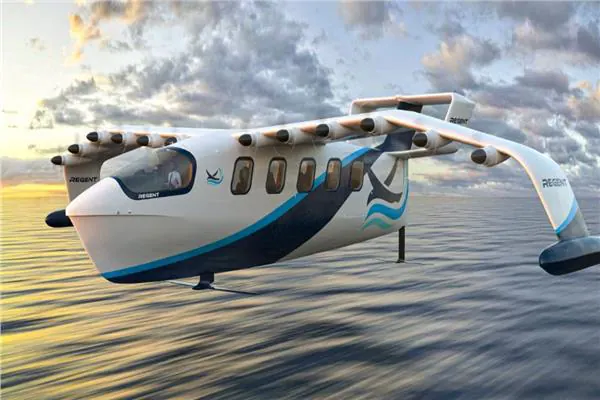
The US Marine Corps Warfighting Lab has increased its partnership with REGENT, a company specializing in electric marine vehicles, by adding $5 million to their contract, bringing the total to $19.25 million. This partnership, in its fourth phase, focuses on testing the "Viceroy" seaglider in realistic operational environments and integrating it with military command and control systems. The goal is to assess the vehicle's capabilities in various scenarios.
The "Viceroy" seaglider uses advanced technology that combines the characteristics of boats and aircraft, taking off and landing on water without traditional runways and flying at low altitudes using ground effect. This allows it to reach speeds of approximately 290 km/h and operate over distances of the same range. Its capabilities make it ideal for supply and medical evacuation missions, as well as reconnaissance and intelligence gathering due to its low radar signature.
The seaglider's design and capabilities represent a significant shift in naval operations, offering a potential solution to logistical and combat challenges in coastal and complex marine environments. By utilizing electric seagliders, the US military aims to enhance its ability to transport equipment and personnel quickly and securely, while minimizing detection by enemy radar.
The partnership between the US Marine Corps Warfighting Lab and REGENT reflects the military's focus on integrating advanced electric transportation into its future fleet to improve naval superiority and operational flexibility. The testing phase is crucial in determining the seaglider's effectiveness in real-world scenarios and its potential to transform military logistics.
The use of electric seagliders like the "Viceroy" could provide the US military with a strategic advantage in terms of speed, stealth, and operational range. As the testing continues, the outcomes will likely influence future decisions on the adoption and deployment of such technology in various military contexts.
The development and testing of electric seagliders are part of a broader effort by the US military to leverage innovative technologies and maintain a competitive edge. The integration of such advanced vehicles into military operations could redefine the nature of naval and coastal engagements.
The US Marine Corps' investment in electric seagliders demonstrates its commitment to modernizing its capabilities and adapting to emerging challenges. The success of these tests could pave the way for further innovations and collaborations in the field of military technology.
Key points
- The US Marine Corps is testing electric seagliders for enhanced military logistics and operations.
- The "Viceroy" seaglider can reach speeds of approximately 290 km/h and operate over distances of the same range.
- The partnership aims to integrate electric seagliders into the US military's future fleet for improved naval superiority and operational flexibility.