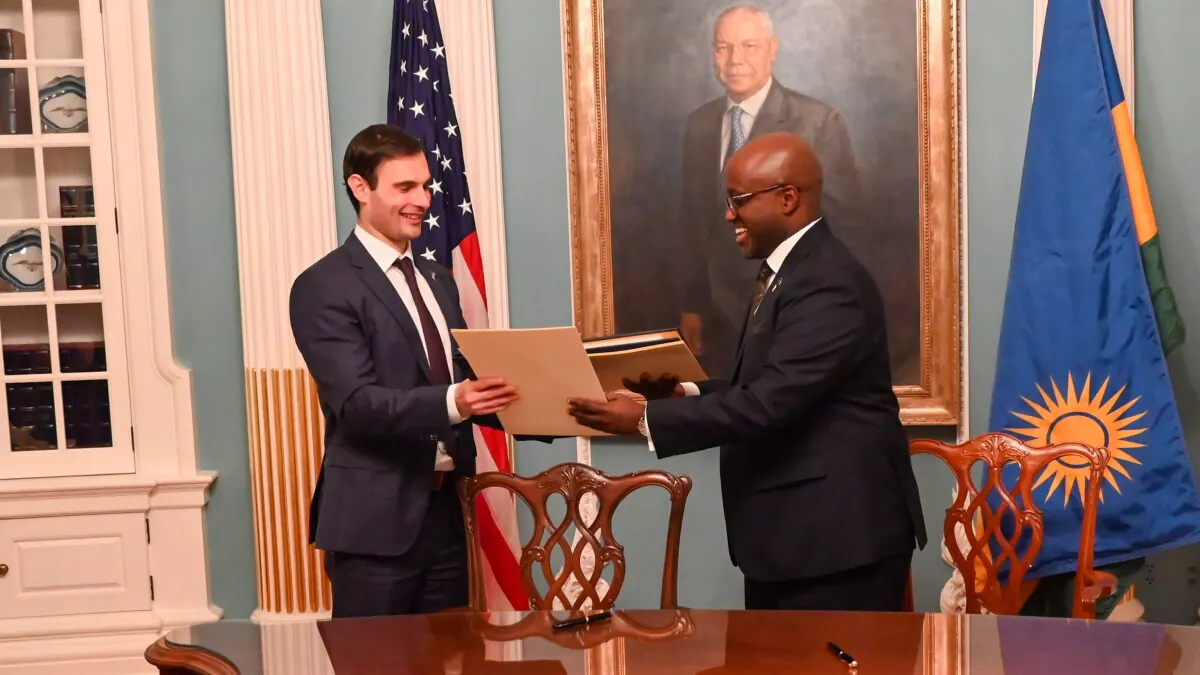
The Trump administration has launched a new era in US foreign aid, marking a significant shift in its global health strategy. The "America First Global Health Strategy" aims to promote American health innovation and protect the homeland by preventing infectious disease outbreaks. The strategy involves rewriting the rules for funding healthcare in low- and middle-income countries, with a focus on achieving concrete benefits for the US.
A key part of the strategy is the requirement for countries to sign a Memorandum of Understanding (MOU) detailing the amount of money the US will invest and the country's financial pledge. The administration believes this approach will make countries more self-reliant and less dependent on US assistance. According to Jocilyn Estes, a policy analyst at the Center for Global Development, the idea has merit, but she wonders if the plan is being rolled out too rapidly.
The US has signed MOUs with 35 countries, committing around $14 billion in health investments over five years. The countries include Nigeria, Rwanda, the Philippines, Tajikistan, Bolivia, and El Salvador. In Rwanda, for example, the US will provide $157 million, and Rwanda will contribute $70 million. In return, Rwanda will share patient data with the US and accept the US Food and Drug Administration's approval of medicines for use during outbreaks.
However, not all countries have agreed to sign MOUs with the US. Ghana, Namibia, and Zimbabwe have refused to sign, citing sovereignty issues. Ghana's president, John Dramani Mahama, described the American proposal as "humiliating," citing the requirement to hand over medical records of patients and pathogen data. The consequences for not signing can be serious, as seen in the case of Zimbabwe, which has lost all global health funding from the US.
Global health specialists have mixed views on the new strategy. While some see it as a pragmatic approach to healthcare aid, others are concerned about the rapid rollout and the reduced funding. According to Stephen Morrison, the baseline funding from the US has been significantly reduced, which may upset countries with large at-risk populations for HIV.
The implementation of the agreements was originally supposed to begin in April 2026, but was delayed by six months to October 1. However, it is unclear if the money from the State Department will flow on time. Estes warns that this rapid-fire rollout is a high-risk moment for the future of US global health assistance, with real patients and people potentially suffering the consequences.
The new strategy has sparked debate about the role of the US in global healthcare and the balance between promoting American interests and supporting global health objectives. As the strategy unfolds, it remains to be seen whether it will achieve its goals and how it will impact countries that have refused to sign MOUs with the US.
Key points
- The US has signed MOUs with 35 countries, committing $14 billion in health investments over five years.
- Three countries, Ghana, Namibia, and Zimbabwe, have refused to sign MOUs with the US, citing sovereignty issues.
- The new strategy requires countries to co-invest in healthcare programs and share data in exchange for US funding.