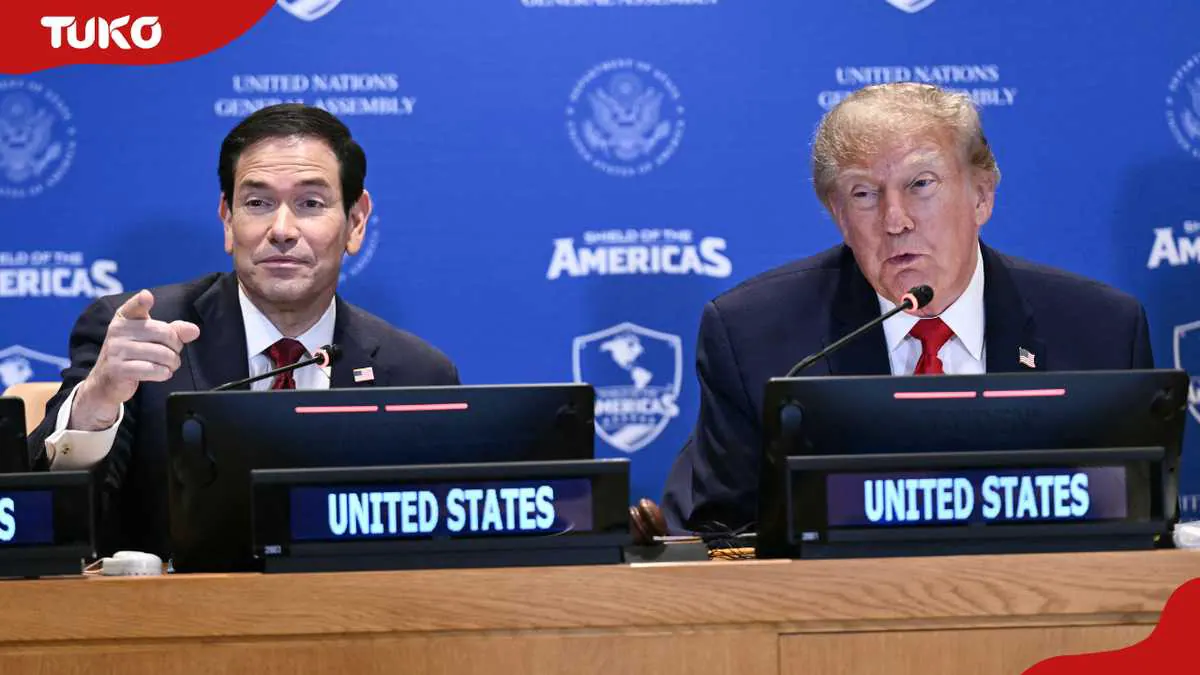
The US Secretary of State, Marco Rubio, has announced a new visa restriction policy aimed at foreign officials who impede the resolution of international parental child abduction cases. This policy allows the State Department to deny visas to individuals responsible for obstructing the return of American children held abroad, along with their immediate family members. The move is part of the Trump Administration's efforts to recover American children wrongfully held outside the country. The policy will target those who deliberately fail to implement or comply with laws, court orders, or policies designed to return children to their country of habitual residence.
The new visa restriction policy is grounded in Section 212(a)(3)(C) of the Immigration and Nationality Act, which permits the Secretary of State to bar entry to any foreign national whose admission would have potentially serious adverse foreign policy consequences for the United States. Rubio described the measure as a fresh enforcement mechanism against governments failing to honour their international obligations. The policy gives the Department a new accountability tool to press non-compliant countries to meet their obligations. This move aims to protect American children abducted across international borders and reunite them with their parents.
The announcement came alongside the State Department's annual International Parental Child Abduction (IPCA) compliance report, which named South Korea and 13 other countries as exhibiting a pattern of noncompliance with the 1980 Hague Abduction Convention. The other countries listed are Argentina, the Bahamas, Belize, Brazil, Ecuador, Egypt, Honduras, India, Jordan, Peru, Poland, Serbia, and the United Arab Emirates. These countries have demonstrated a pattern of noncompliance with the Hague Convention, which aims to prevent and resolve cases of international child abduction.
South Korea has faced noncompliance citations since 2022, and this year's report noted that South Korean authorities regularly failed to enforce return orders. One unresolved case dating back to 2019 saw authorities fail for the seventh consecutive time to enforce a court-ordered return of a child to the United States. The report stated that the competent authorities of South Korea failed to take appropriate steps to locate children after a Convention application was filed, contributing to a pattern of noncompliance.
IPCA cases typically arise during separations or divorce proceedings, when one parent unlawfully removes or retains a child in a foreign country. The Hague Convention, adopted in 1980, currently has 103 contracting states. Data from 71 of those states showed that 2,180 applications for the return of abducted children were filed under the convention. The US government is committed to protecting the safety and well-being of all American children and will maintain robust engagement with foreign authorities to address outstanding cases.
The State Department said it would consider deploying the full range of tools available under the Goldman Act to address outstanding cases. Rubio emphasized that protecting American children abducted across international borders and reuniting them with their parents is a top priority for the Trump Administration. The new visa restriction policy aims to hold foreign officials accountable for their actions and ensure that they comply with their international obligations.
The US government's efforts to recover American children wrongfully held abroad are ongoing, and the new visa restriction policy is a significant step in this direction. The policy will help to ensure that foreign officials who obstruct the resolution of international parental child abduction cases are held accountable. The US government will continue to work with foreign authorities to address outstanding cases and protect the safety and well-being of American children.
Key points
- The US has introduced a new visa restriction policy targeting foreign officials who obstruct the resolution of international parental child abduction cases.
- South Korea and 13 other countries have been named as exhibiting a pattern of noncompliance with the 1980 Hague Abduction Convention.
- The new visa restriction policy aims to hold foreign officials accountable for their actions and ensure that they comply with their international obligations.