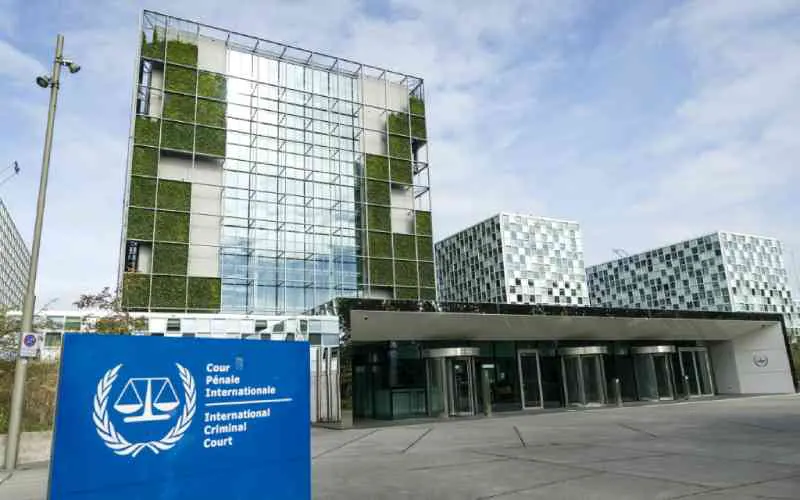
The United States has announced sanctions on the International Criminal Court, a move that has been met with widespread criticism from countries around the world. The sanctions were announced by Secretary of State Marco Rubio, who described the ICC as a "rogue court." The US has long been critical of the ICC, which it has never joined. Rubio stated that the sanctions were necessary to protect US security personnel and elected officials from prosecution by the ICC.
The sanctions, which come into effect immediately, will ban transactions with the ICC. However, a series of exemptions have been introduced, offering a de facto six-month grace period. The State Department stated that this period is intended to give the court's member states time to address US concerns. The exemptions could be adjusted depending on the success or failure of these efforts. The ICC has rejected the US sanctions, describing them as an attack on international law.
The announcement of the sanctions has been widely condemned by countries including Canada, France, Germany, Japan, and the United Kingdom. In a joint statement, these countries expressed their strong disagreement with the US decision. UN Secretary-General Antonio Guterres has also spoken out, describing the sanctions as a "serious blow" to the pursuit of international criminal justice. The European Union has called the sanctions "deeply regrettable" and stated that it is ready to take any necessary measures to enable the ICC to carry out its work.
The sanctions have been welcomed by Israeli Prime Minister Benjamin Netanyahu, who faces an ICC arrest warrant over alleged crimes in Gaza. Netanyahu described the ICC as a "political body" that poses a threat to law-abiding democracies. The US move has also been seen as a significant escalation of the Trump administration's campaign against the ICC. Last month, President Donald Trump called on all ICC member states to quit the body, denouncing it as "out of control" and a "rogue institution."
The ICC has been in the spotlight recently, with the Norwegian Nobel Committee awarding the peace prize to South Africa's Navi Pillay, an 85-year-old jurist who headed the Rwanda genocide tribunal and served on the ICC. The award was announced on the same day as the US sanctions. Rubio's statement did not mention Pillay or the Nobel award, instead focusing on the need to protect US personnel from prosecution.
The US has already sanctioned 17 people linked to the ICC, including its prosecutor and several judges, over the ICC's investigations involving the US and Israel. The Trump administration has been critical of the ICC for over a year, spelling out "basic gestures of good faith" it expected from the court. Rubio stated that no meaningful steps had been taken to address US concerns, leading to the imposition of sanctions.
The sanctions have sparked widespread concern among human rights groups, with Amnesty International urging countries to "resist" the move. The organization stated that the sanctions were designed to isolate and ultimately destroy the ICC. The European Commission has expressed hope that the six-month delay means there is room for dialogue. The US decision has significant implications for international criminal justice and the role of the ICC.
Key points
- The US has imposed sanctions on the International Criminal Court, banning transactions with the tribunal.
- The sanctions have been widely condemned by countries around the world, including Canada, France, and Germany.
- The move has significant implications for international criminal justice and the role of the ICC.