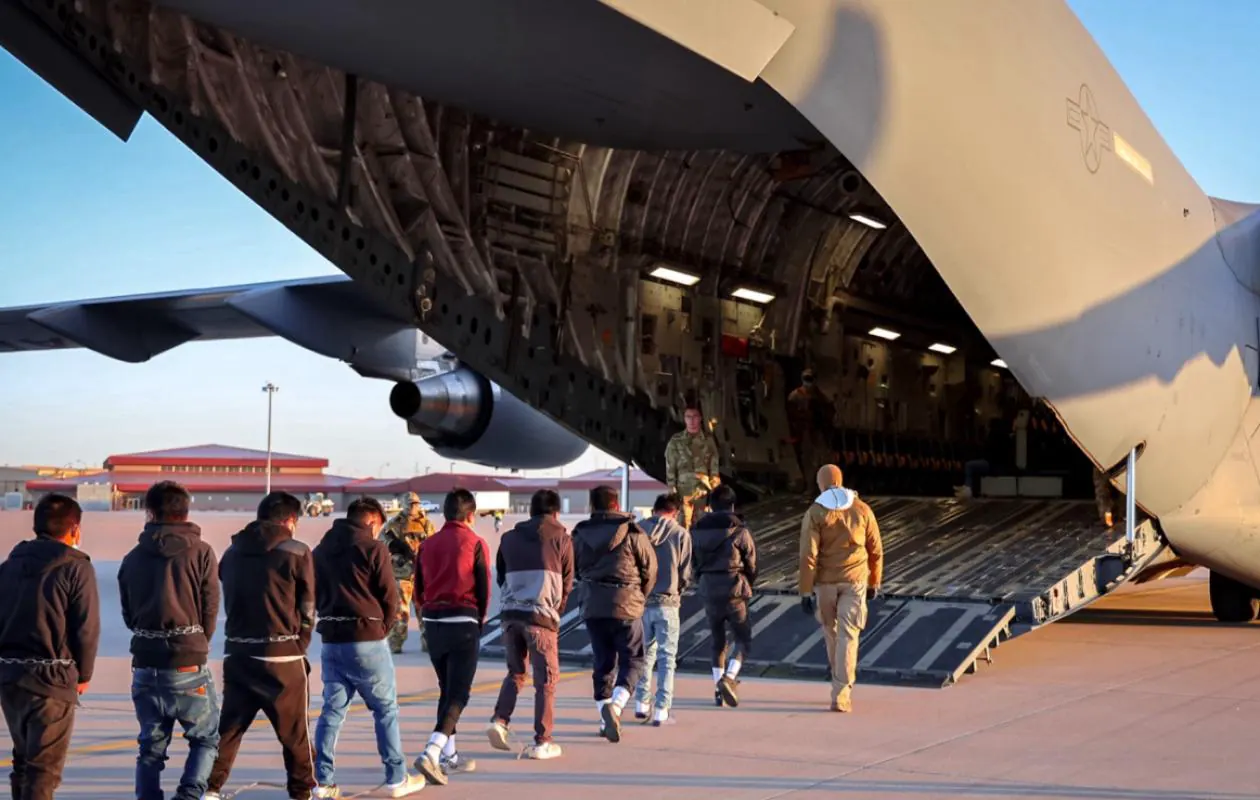
The US government has expelled over 25,000 foreigners to third countries under secret agreements with 35 countries, according to an investigation by Forbidden Stories, a global journalism consortium. The agreements, signed since US President Donald Trump returned to the White House in January 2025, allow the US to send foreigners who cannot be legally returned to their home countries. The investigation, conducted by 72 journalists from 23 media outlets in 15 countries, reveals that the US government has allocated at least $410 million to pay host countries or UN agencies for the returns.
The expulsions have been carried out under agreements with countries in Latin America, Africa, and the Pacific. As of August 31, 2026, at least 25,447 people had been transferred to 28 countries, with around 20,000 sent to neighboring Mexico alone. The terms of the agreements vary, including the nationalities that can be accepted and the treatment of individuals with criminal records. According to Forbidden Stories, 49 of 54 African countries were approached to accept expelled citizens.
The investigation also reveals that the US government has used pressure tactics to persuade countries to accept expelled foreigners. An AFP investigation in early 2026 found that Washington threatened countries with tariffs, visa suspensions, or reduced aid to secure their cooperation. Lawyers told AFP that once in the host country, expelled individuals often fall into a "legal black hole," detained without charge in an unfamiliar country, sometimes without access to their rights.
A little-known US State Department service, the Bureau of Remigration, created in May 2025, has led the negotiations and payments. The bureau is headed by Christian Jové Ehrhardt, a 41-year-old diplomat with experience as a security attaché in several embassies. The investigation highlights the case of Cameroon, which signed a protocol agreement with the US in December to accept expelled foreigners.
The US has also provided significant financial support to countries accepting expelled foreigners. In January, the US State Department allocated an additional $30 million to the UN High Commissioner for Refugees (UNHCR) in Cameroon to facilitate the voluntary return of refugees and combat illegal immigration. The first plane carrying expelled foreigners arrived in Cameroon on January 14.
Other agreements have resulted in direct payments to governments. The Pacific island nation of Palau, with a population of less than 18,000, signed an agreement in December to accept 75 foreigners for $7.5 million. However, only three people have been sent there so far. In Eswatini, 32 people have arrived since July 2025, out of a possible 160 under an agreement worth $5 million.
The investigation raises concerns about the treatment and rights of expelled foreigners in host countries. As the US continues to implement its expulsion policy, human rights groups and lawyers are calling for greater transparency and accountability in the treatment of these individuals. The US government's use of secret agreements and pressure tactics has sparked criticism from some quarters, with concerns about the impact on the rights and well-being of those being expelled.
Key points
- The US government has expelled over 25,000 foreigners to third countries under secret agreements with 35 countries.
- The agreements have been criticized for lacking transparency and for potentially violating the rights of expelled individuals.
- The US government has allocated at least $410 million to pay host countries or UN agencies for the returns.