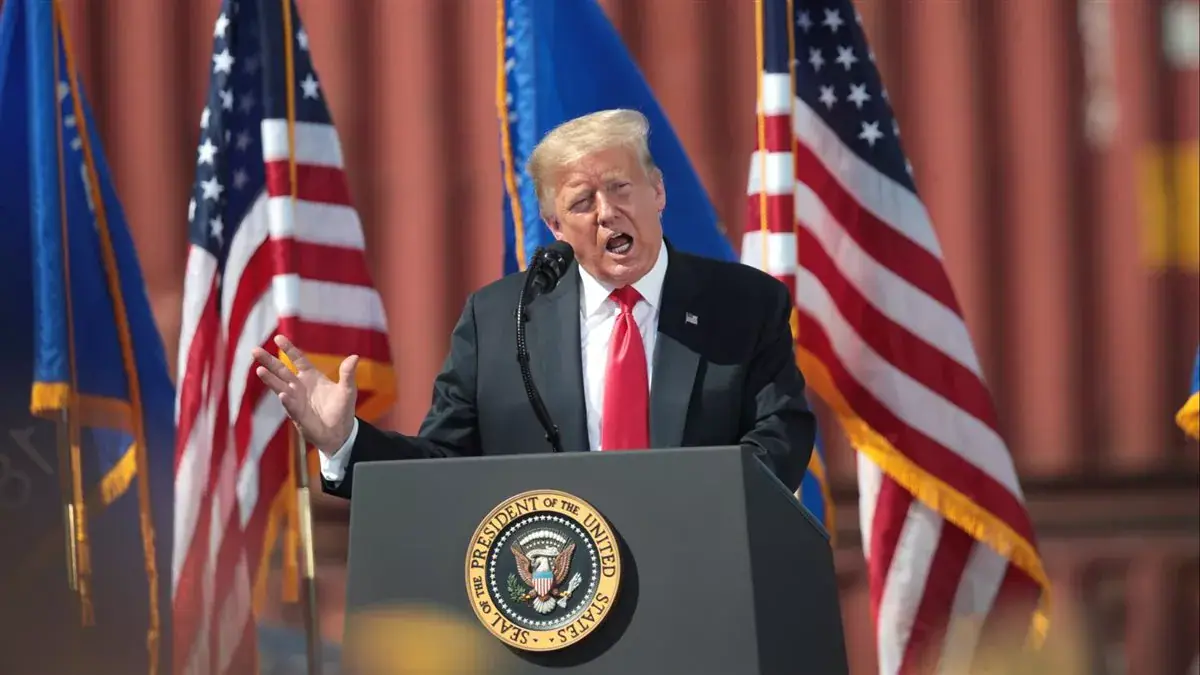
As the US counts down to the midterm elections on November 3, the conflict with Iran appears to be at a crossroads, influenced by domestic politics and military escalation ambitions. US Vice President Mike Pence sent a diplomatic message to Iranian National Security Council Secretary Mohsen Rezaei via Qatar in an effort to revive peace talks and prevent another American military attack. Meanwhile, Trump stated that the war with Iran is nearly over, continuing to criticize Tehran and its government.
According to reports, Trump is considering resuming military operations against Iran after the midterm elections, running parallel to giving diplomatic efforts another chance to reach an interim agreement to halt escalation. The Washington Post reported that the conflict with Iran is approaching a turning point, with Washington aiming to convey a message to Iranian “hardliners” that diplomatic efforts are genuine. The message follows a difficult economic situation in Iran.
Israeli Prime Minister Benjamin Netanyahu supports changing the Iranian regime, seeing it as the only way to eliminate the threat entirely. In contrast, Pence prefers a peaceful agreement with Iran over renewed military conflict. The Guardian warned that Trump and Netanyahu are likely to resume the war that started in June 2025 and expanded in February 2026. The Wall Street Journal reported that US Central Command head General Kenneth McKenzie briefed Trump on potential plans for a new attack on Iran.
The meeting, described as rare, occurred after Senator Chris Murphy warned that potential plans by the Trump administration to resume military operations against Iran after the midterm elections are “insane” and unlikely to achieve their goals. Murphy expressed concerns that some lawmakers have been informed about the military plan, describing it as having the potential to spark a new cycle of escalation. The US military is repositioning forces, reinforcing ammunition supplies, and preparing for additional deployments.
The plans face challenges, including Trump’s administration encountering difficulties in passing the Pentagon’s budget for the upcoming year. The approved amount is estimated to be $1.1 trillion, $400 billion less than Trump’s request. The Guardian’s foreign affairs editor, Simon Tisdall, stated that it is clear the US and Israel will fail to completely destroy Iran’s nuclear capabilities and that the Iranian regime will survive.
Tisdall linked Trump’s decision to resume war to the expected midterm election results, stating that Trump is trying to avoid blame for the anticipated Republican defeat, caused in part by high fuel and consumer prices due to the war with Iran. Once the midterm elections conclude, the opinions of voters will be less relevant to Trump, allowing him to pursue his foreign policy and defense goals.
The outcome of the midterm elections and their impact on Trump’s Iran policy remain uncertain. The US and Iranian governments have been at odds since 2018, when Trump withdrew from the Joint Comprehensive Plan of Action, a nuclear agreement between Iran and six world powers. The current situation raises concerns about potential escalation and its regional and global implications.
Key points
- The US may delay a potential military strike against Iran until after the midterm elections.
- Trump’s administration faces challenges in passing the Pentagon’s budget for the upcoming year.
- The conflict with Iran may have significant implications for regional and global stability.