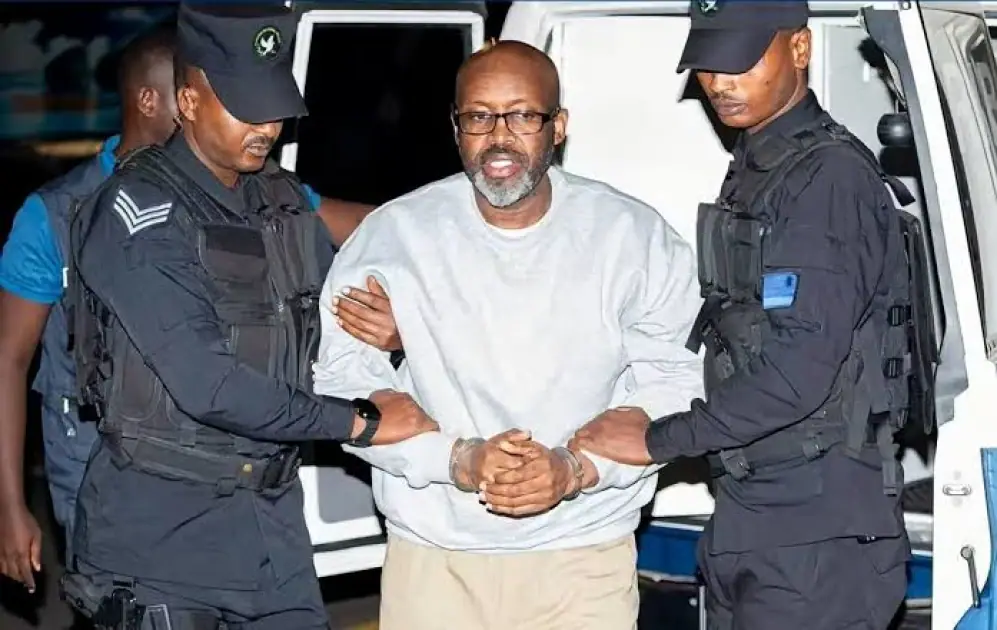
After over three decades on the run, Jean Léonard Teganya, a Rwandan national accused of involvement in the 1994 Genocide against the Tutsi, has been deported from the United States to Rwanda. Teganya was handed over to Rwandan police at Kigali International Airport on the evening of Monday, November 9, 2026, under armed escort. His deportation marks the end of a multi-nation pursuit that spanned over thirty years across Africa, North America, and Europe.
During the 1994 Genocide against the Tutsi, Teganya was a medical student at the University Teaching Hospital of Butare (CHUB) in southern Rwanda. Rwanda's prosecutors accuse him of collaborating with the notorious Interahamwe militia and actively participating in targeting, betraying, and participating in the murder of Tutsi patients, medical staff, and hiding students at the hospital complex. Teganya's alleged actions during the genocide led to his indictment by Rwandan prosecutors in 2014.
Following the collapse of the genocidal regime in July 1994, Teganya fled Rwanda into what was then Zaire (now the Democratic Republic of the Congo), later making his way through Kenya and India. In 1999, he allegedly entered Canada using a fraudulent Zimbabwean passport and requested political asylum. However, Canadian authorities denied his claim due to allegations of his involvement in human rights violations, ordering his deportation.
To evade Canadian deportation, Teganya allegedly slipped across the border on foot near Houlton, Maine, on August 3, 2014, where he was apprehended by U.S. border agents. He immediately applied for U.S. asylum, omitting his political affiliations with the ruling MRND party and his actions during the genocide. The U.S. Department of Justice charged him with concealing his past to exploit the immigration system.
In April 2019, following an 18-day trial in Boston, Massachusetts, a federal jury found Teganya guilty of two counts of immigration fraud and three counts of perjury. Federal Judge F. Denis Saylor IV sentenced him to 97 months in federal prison, noting that Teganya had committed perjury by lying on the witness stand. Upon completing his U.S. prison sentence, Teganya was transferred to immigration custody for removal proceedings.
Upon landing in Kigali, Teganya was handcuffed and escorted off the aircraft into custody. The Rwanda's National Public Prosecution Authority (NPPA) commended U.S. judicial authorities for their collaboration in curbing international impunity for genocide fugitives. Teganya is set to be formally charged before the Rwandan courts, where he will stand trial over his suspected role in the 1994 atrocities.
According to U.S. Immigration and Customs Enforcement (ICE), during the genocide, Teganya “led teams of soldiers…to locate Tutsi patients and refugees hiding in the hospital. Once discovered, the Tutsis were taken and killed behind the maternity ward.” The NPPA confirmed that Teganya will face trial in Rwanda, bringing closure to the victims and their families.
Key points
- Jean Léonard Teganya was deported from the US to Rwanda to face charges for his alleged involvement in the 1994 Genocide against the Tutsi.
- Teganya was accused of collaborating with the Interahamwe militia and actively participating in the murder of Tutsi patients and medical staff.
- Teganya's deportation marks the end of a multi-nation pursuit that spanned over thirty years across Africa, North America, and Europe.