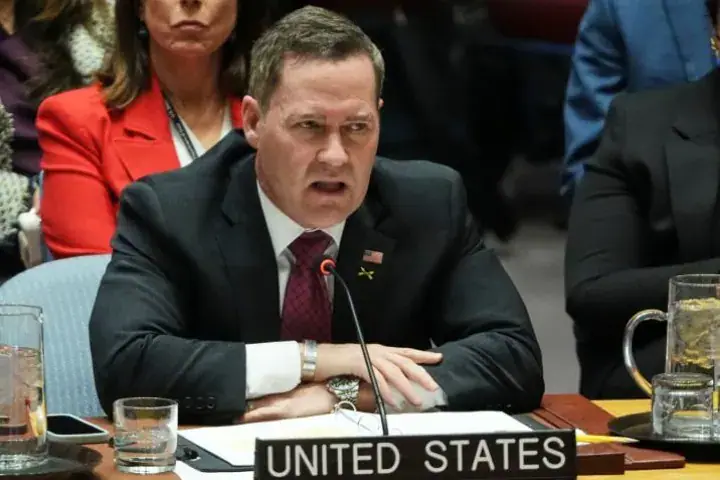
The United States has strongly condemned Russia's veto of a Western Sahara resolution in the UN Security Council. The resolution, which gained 11 votes in favor, was blocked by Russia's veto power. US Ambassador to the UN, Mike Walter, delivered a stern statement, highlighting the long-standing impasse in organizing a referendum since the mid-1990s. He noted that successive UN officials, including Secretaries-General Boutros Boutros-Ghali and Kofi Annan, and personal envoys, have warned of the impracticality of this option due to complex realities on the ground.
Walter emphasized that insisting on outdated formulas perpetuates the unsustainable and inhumane status quo. Citing UN reports, he revealed that two-thirds of children under five in Tindouf refugee camps suffer from anemia and stunted growth, while 90% lack access to basic healthcare, condemning generations to a life of displacement. The US Ambassador stressed his country's opposition to any proposal that prolongs a five-decade conflict, recalling historical resolutions that considered Morocco's autonomy proposal credible and a foundation for negotiations.
The US presented a clear path to halt the devastating humanitarian crisis and transition to a realistic and lasting political solution. Walter announced that the US would not support "business as usual" that perpetuates the stalemate, expressing readiness to work with the UN Secretary-General, Personal Envoy Miroslav Di Mistura, and all parties to ensure an orderly and safe transition that protects UN personnel and establishes a durable and just peace.
The Russian veto has sparked concerns about the humanitarian situation in Western Sahara. The US and other countries have urged a peaceful resolution to the conflict, which has lasted for over five decades. Morocco's autonomy proposal has been considered a viable option, while the Polisario Front, backed by Algeria, seeks independence.
The UN has been involved in efforts to resolve the conflict, with the Security Council repeatedly discussing the issue. The veto has raised questions about the role of the UN in conflict resolution and the impact of veto power on international relations. The situation in Western Sahara remains a pressing concern, with many calling for a peaceful and lasting solution.
The US Ambassador's statement reflects the country's commitment to finding a solution to the Western Sahara conflict. The US has worked closely with the UN and other countries to address the humanitarian crisis and promote a peaceful resolution. The situation in Western Sahara requires a concerted effort from the international community to ensure a lasting and just peace.
The Russian veto has significant implications for the conflict and international relations. The US and other countries have expressed disappointment and concern about the veto, highlighting the need for a peaceful resolution to the conflict. The situation in Western Sahara will continue to be a pressing concern for the international community.
Key points
- The US has condemned Russia's veto of a Western Sahara resolution, citing concerns about the humanitarian situation and the need for a peaceful resolution.