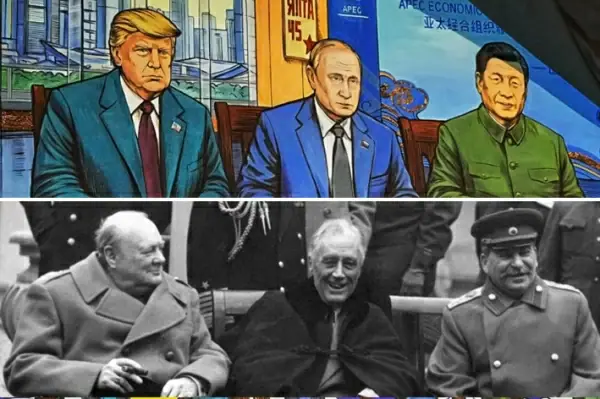
The meeting between the three world leaders in Shanghai has sparked fears that the world may be returning to an era of closed deals and spheres of influence, reminiscent of the 1945 Yalta Conference. The Yalta Conference was a meeting between the leaders of the three main Allied powers - the United States, the United Kingdom, and the Soviet Union - that shaped the post-World War II international order. The current summit has raised concerns that a similar agreement may be made at the expense of countries such as Ukraine, Taiwan, and Iran.
Russian President Vladimir Putin has long advocated for a new world order based on security principles, with limited space for liberal values. He has suggested that the three-way summit could be the beginning of a series of meetings between major powers to organize a new global system. This has raised concerns among some countries that they may be excluded from important decisions that affect their security and interests.
Ukraine is particularly concerned about the potential outcome of the summit, as it fears that decisions may be made about its future without its participation. Ukrainian President Volodymyr Zelensky has expressed concerns that direct talks between Trump and Putin could lead to a deal that would harm Ukraine's interests. This concern is rooted in the country's experience with the 1994 Budapest Memorandum, which provided security assurances to Ukraine in exchange for its nuclear disarmament.
The Yalta Conference has been criticized for its handling of Eastern European countries, which were not represented at the talks. The conference led to the division of Europe into Soviet and Western spheres of influence, with many countries losing their independence. Some critics have argued that a similar agreement today could have far-reaching consequences for global stability and security.
The United States and Russia are seeking China's help in managing international crises, including the conflicts in Ukraine and Iran. China, under the leadership of President Xi Jinping, is seen as a key player in shaping the new world order. However, China's role is not without controversy, as some countries are concerned about its growing influence and its stance on key international issues.
The summit has also highlighted divisions within the United States about how to engage with major powers like China and Russia. Some American policymakers, such as John Ikenberry, have argued that the US should uphold the principles of the liberal international order, while others, like Charles Kupchan, believe that the US needs to adapt to the changing geopolitical landscape and work with emerging powers.
The outcome of the summit and its implications for the global order remain to be seen. However, one thing is clear: the meeting has sparked a renewed debate about the future of international relations and the role of major powers in shaping the world order. As the world navigates this uncertain landscape, it will be important to watch how the US, China, and Russia navigate their relationships and how they balance their competing interests.
Key points
- The summit has raised concerns about a potential new world order based on spheres of influence.
- Ukraine and other countries are worried about being excluded from important decisions that affect their security and interests.
- The meeting has highlighted divisions within the United States about how to engage with major powers like China and Russia.