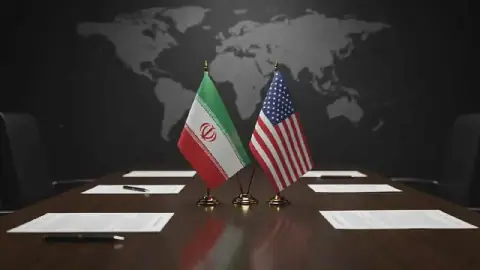
On September 23, a significant meeting took place at Andrews Air Force Base, where a high-ranking guest was personally received by the US President. This level of courtesy marked a departure from diplomatic conventions, demonstrating the high esteem and respect the US has for this visit. The meeting has far-reaching implications for China, the US, and the world, marking a new phase in US-China relations.
The US-China relations have undergone a crucial transformation, shifting from an unequal relationship to one of equality. After the "outburst of anger" in Alaska, the relations have changed significantly. The imposition of tariffs by President Trump and China's response with "rare earth cards" revealed a decline in US-China relations. The US has faced challenges, including turmoil in the Middle East and an impasse in the Russia-Ukraine conflict.
The US has experienced a decline in its global power, with a massive sell-off of US Treasury bonds leading to a rise in interest rates. The yields on 2-year, 3-year, 5-year, 10-year, and 30-year Treasury bonds have reached levels not seen since the 2008 financial crisis. This decline has constrained the US President to find a compromise with China to ease growing tensions. For China, improving relations with the US is a priority to gain more space and time for its national rejuvenation.
During the visit, China and the US jointly released an eight-point consensus, covering strategic relations, historical issues, current and future projects, macroeconomic frameworks, and micro-level implementation. The consensus includes cooperation on artificial intelligence, nuclear energy, and climate action, as well as people-to-people exchanges. The two sides have agreed to establish a "constructive and stable strategic relationship between China and the US, based on respect, fairness, and equality."
The first point of consensus emphasizes the establishment of a stable strategic relationship, marking a shift from a cycle of confrontation to a predictable and manageable coexistence. The two sides have agreed to consolidate the meaning of a constructive and stable strategic relationship, recognizing the limits of power and interests. This positioning is a synthesis of recent developments and a framework for the next four years and beyond.
The second point of consensus involves mutual support for the success of the APEC leaders' informal meeting and the G20 summit. The agreement has significant implications, demonstrating a common commitment to multilateral mechanisms and sending a clear signal to the international community that US-China relations are stabilizing. The personal presence of the US President at the APEC meeting organized by China holds strong symbolic significance.
The eight-point consensus marks a new phase in US-China relations, with implications for global governance and stability. The two sides have recognized the need to define the limits of competition and conflict, preserve space for cooperation and dialogue, and avoid unilateral actions that could destabilize the global situation.
Key points
- The US and China have agreed to establish a "constructive and stable strategic relationship" based on respect, fairness, and equality.
- The two sides have committed to mutual support for the success of the APEC and G20 meetings.
- The consensus marks a shift in US-China relations from confrontation to a predictable and manageable coexistence.