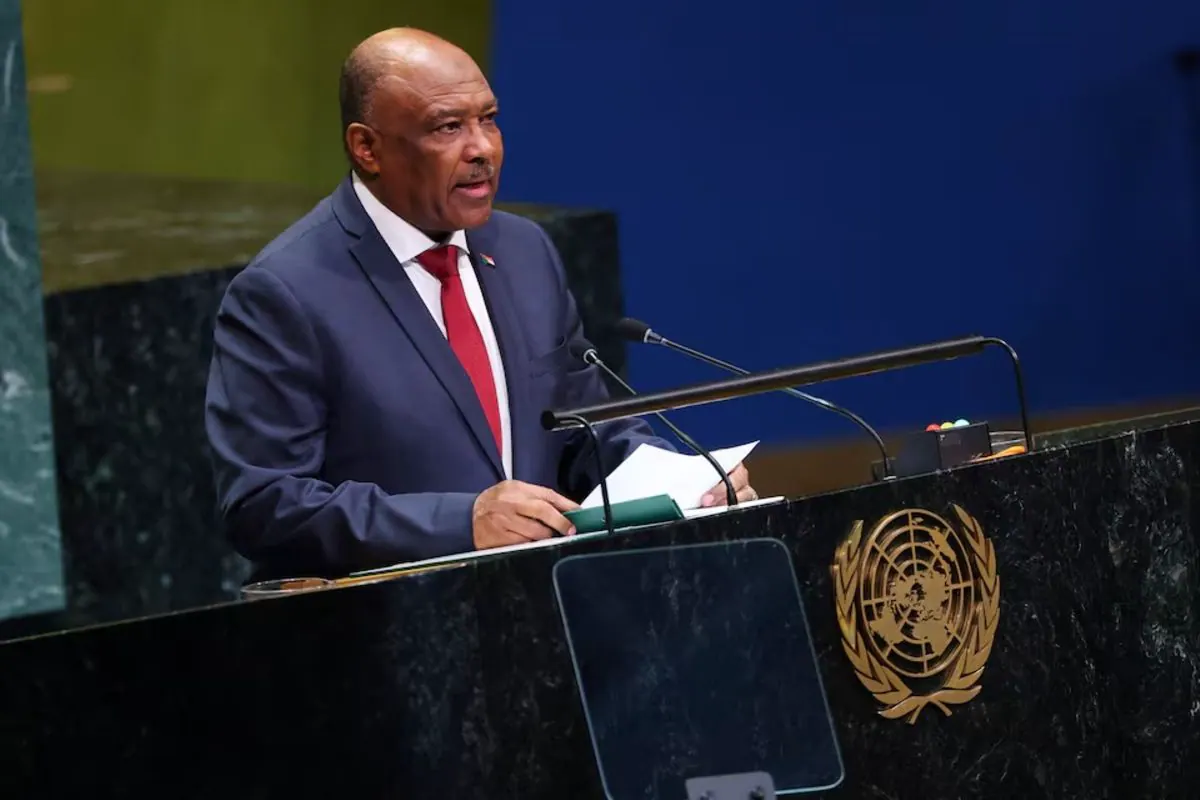
A top adviser to Sudan's army-led authorities has expressed concerns that a US ceasefire proposal to pause Sudan's civil war may lead to a Libya-style partition. Amjad Farid, adviser to General Abdel Fattah al-Burhan on political and international affairs, told Reuters that the army-led government had presented its proposed changes to the deal, but the US appeared to ignore them. The proposal, put forward by US Senior Advisor for Arab and African Affairs Massad Boulos, would impose a 90-day ceasefire, followed by negotiations to end the war and resume the move to civilian rule.
Sudan's army has been fighting the paramilitary Rapid Support Forces (RSF) since April 2023, when the two fell out over issues including how to integrate their forces in a planned transition to civilian rule. The conflict has raised fears of a de facto division of Sudan that resembles neighbouring Libya, which has been split into rival eastern and western administrations for over a decade. The RSF has been trying to establish its own parallel government in the city of Nyala in the western Darfur region.
Farid stated that the US proposal appears to accommodate the RSF's continued existence and preserve a place for it in Sudan's political future. He added that the approach Mr Boulos continues to advance appears to accommodate the militia's continued existence and preserve a place for it in Sudan's political future. The Sudanese delegation had been preparing to meet Boulos to discuss the ceasefire in Washington last week, but the meeting was cancelled after Burhan's visa was withheld.
The US State Department did not immediately respond to a request for comment. Last week, it said neither the RSF nor the armed forces represents legitimate, constitutional governance for Sudan. The US has accused the RSF of committing genocide and the army of carrying out war crimes, including the use of chemical weapons.
Analysts and officials have long raised fears that the conflict could lead to a de facto division of Sudan. Since last year, the RSF has been trying to establish its own parallel government in Nyala. Ministers have been appointed and some police are active, though they have not set up public services or institutions such as schools, hospitals and courts.
Following recent battlefield defeats, the RSF has not made any recent statements on the US proposal, and its leader has said its fighters intend to continue the war. A week ago, Reuters reported that army leader General Abdel Fattah al-Burhan's visa to attend the UN General Assembly in New York had been withheld because he had not yet accepted the proposal.
The situation in Sudan remains volatile, with the conflict showing no signs of abating. The international community is closely watching the developments, with the US and other countries calling for a peaceful resolution to the conflict. The Sudanese government and the RSF must find a way to end the violence and work towards a peaceful transition to civilian rule.
Key points
- The US ceasefire proposal may lead to a Libya-style partition of Sudan.
- The Sudanese government has presented proposed changes to the US deal.
- The conflict in Sudan has raised fears of a de facto division of the country.