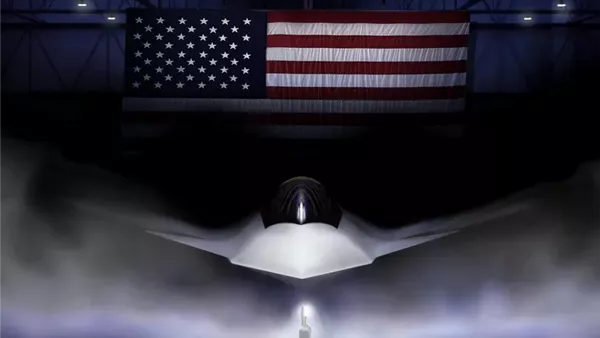
The United States is on the cusp of introducing its latest-generation fighter jet, the F-47, which is expected to surpass the capabilities of its predecessors, the F-22 Raptor and F-35 Lightning. The F-47 is being developed by Boeing and is expected to cost around $300 million per unit, with a total production cost estimated at $20 billion by the end of the decade. The new fighter jet is designed to have advanced stealth capabilities, high-speed performance, and a range of cutting-edge technologies.
China, however, is not far behind, with its own fifth-generation fighter jet, the J-36, which has been making headlines with its public appearances. The J-36 boasts a unique design, with three engines and no tail, which is believed to provide enhanced maneuverability and stealth capabilities. According to experts, the J-36 is likely to be a significant threat to US air superiority, and the US is taking steps to counter China's growing military capabilities.
The development of the F-47 is being driven by the US Air Force's need for a next-generation fighter jet that can maintain air superiority in the face of growing global threats. The F-47 is expected to have a range of advanced features, including a highly maneuverable design, advanced sensors, and a range of air-to-air and air-to-ground missiles. The US Air Force has been tight-lipped about the F-47's capabilities, but it is believed to be a highly advanced aircraft that will provide a significant edge on the battlefield.
One of the key features of the F-47 is its use of advanced materials and design techniques, which are believed to provide enhanced stealth capabilities. The aircraft's design includes a range of curved surfaces and angled edges, which are designed to reduce its radar cross-section and make it harder to detect. The F-47 is also expected to have a highly advanced sensor suite, which will provide pilots with real-time data on their surroundings and enable them to make more informed decisions.
The competition between the US and China over advanced fighter jets is not just about military capability, but also about economic and strategic influence. The development of the F-47 and J-36 is driving innovation and investment in the aerospace industry, with significant implications for the global economy. The US and China are also vying for influence in the region, with the US seeking to maintain its military edge and China seeking to expand its military presence.
According to US Air Force Secretary, Troy Meink, the F-47 is being designed to operate in a highly contested environment, with advanced sensors and communication systems that will enable it to coordinate with other aircraft and ground-based systems. The F-47 is also expected to have a range of advanced countermeasures, which will enable it to evade enemy radar and missile systems.
The development of the F-47 and J-36 is a significant indicator of the rapidly evolving nature of air combat, with a growing emphasis on advanced technologies, stealth capabilities, and networked systems. As the US and China continue to invest in their military capabilities, it is likely that we will see further innovations in the field of aerospace engineering, with significant implications for global security and stability.
Key points
- The US and China are competing fiercely over advanced fighter jets, with the F-47 and J-36 promising to revolutionize air combat.