US air travel disruptions are easing after three days of chaos that affected millions of Americans. The ground stop, issued by US aviation authorities on Friday, was only the second time such a directive had been issued nationwide in the busy US airspace since planes were grounded following the 9/11 attacks. The Trump administration attributed the disruptions to a faulty upgrade to air traffic control communication cables.
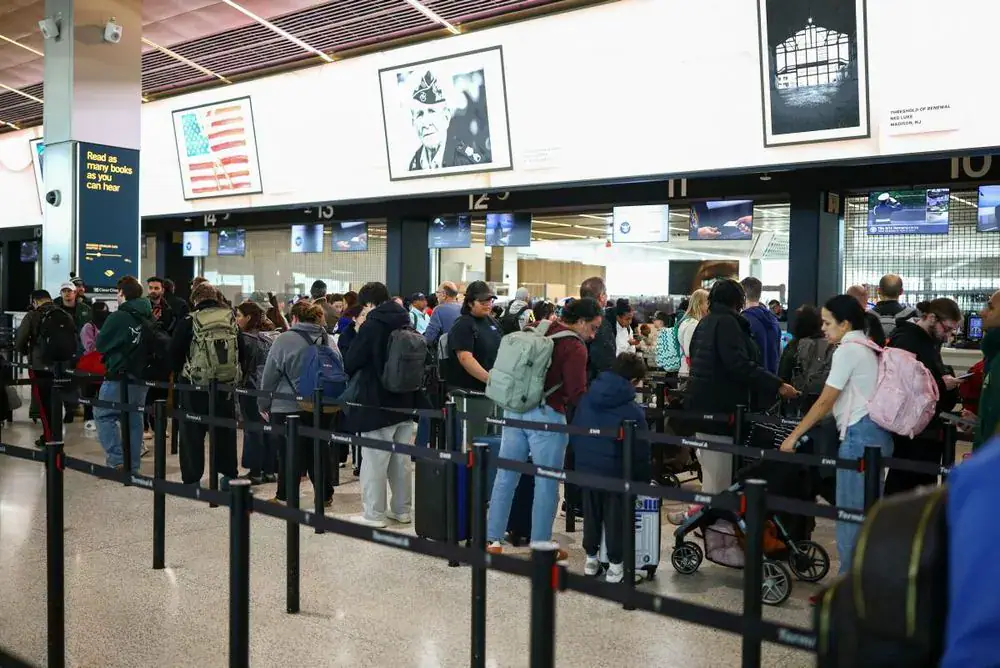
As of Sunday evening, more than 55 US-related flights scheduled for Monday were cancelled, according to industry tracker FlightAware. This marked a significant decrease from the over 1,960 flights cancelled on Sunday. The disruptions led to chaotic scenes at airports, with stranded passengers waiting for updates or rebooking. The Trump administration sought to reassure weary flyers, but questions remained over how such chaos could occur in the world's largest economy.
President Donald Trump ended his silence on the ground stop on Sunday, blaming his predecessor, Joe Biden, for the debacle. Trump insisted he inherited a mess from the Biden administration and said Congress must approve funds to upgrade America's outdated air traffic control system. FAA chief Bryan Bedford had initially said air travel would return to normal by Sunday, but Transportation Secretary Sean Duffy later clarified it would take longer.
Duffy attributed the disruptions to outdated air traffic control infrastructure, including radar equipment dating back to the 1960s. He rejected calls for his resignation, stating that he inherited the woefully outdated system. Duffy appealed for $50 billion in funds to upgrade and modernize the air traffic control system, calling on Congress to "meet this moment." Democrats countered that Congress, under Trump's Republicans, could have already addressed this issue.
The ground stop not only caused travel chaos but also raised concerns about the country's aging infrastructure. The disruptions highlighted the need for modernization and upgrades to the air traffic control system. Duffy's comments on CNN emphasized the challenges faced by the current administration in addressing these long-standing issues.
The incident sparked a heated debate about the state of US infrastructure and the need for investment in critical systems. As the country looks to upgrade its air traffic control infrastructure, there are concerns about the allocation of funds and the prioritization of projects. The disruptions also raised questions about the resilience of the US air travel system and its ability to handle unexpected events.
As US air travel returns to normal, the incident serves as a reminder of the complexities and challenges of managing a vast and intricate air travel system. The episode highlights the need for sustained investment in infrastructure and technology to prevent similar disruptions in the future. The US government faces pressure to address these issues and ensure that air travel remains safe and efficient.
Key points
- The US air travel system was disrupted for three days due to a faulty upgrade to communications equipment.
- The disruptions led to over 1,960 flight cancellations on Sunday, with numbers decreasing as the system returned to normal.
- The incident raised concerns about the country's aging infrastructure and the need for investment in air traffic control modernization.