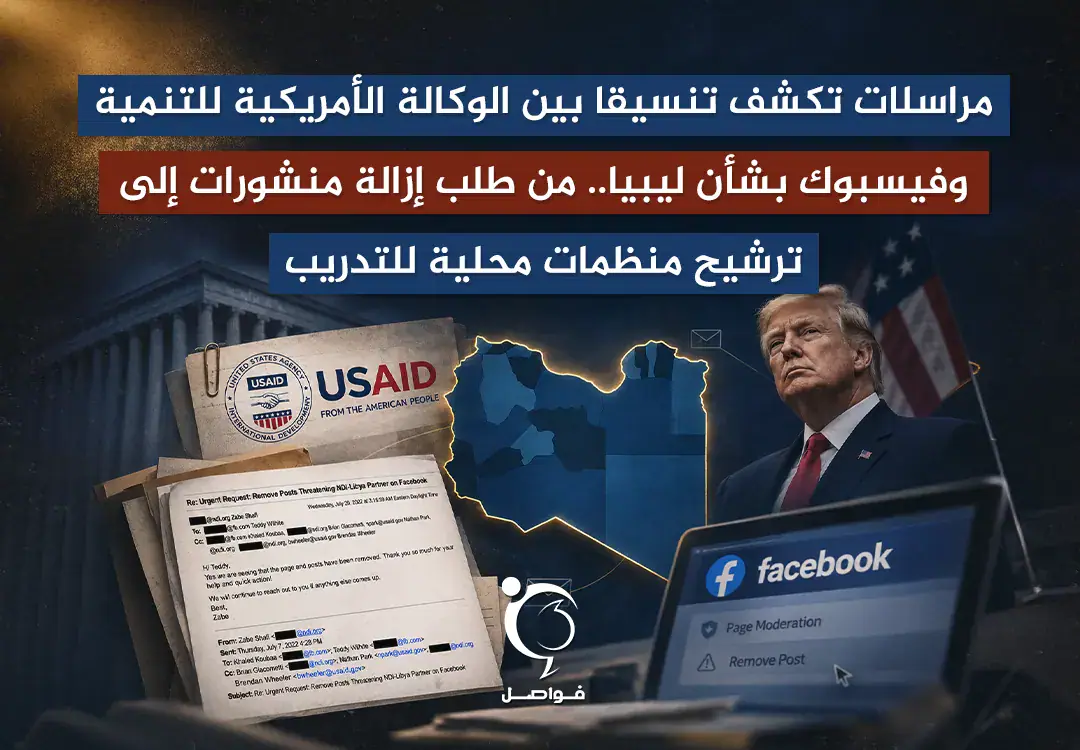
A series of emails from 2021 and 2022 reveal coordination between the US Agency for International Development (USAID) and Facebook on dealing with harmful content on the platform in Libya. The emails show that USAID officials worked with Facebook representatives to address misinformation and hate speech related to the country's elections. In one email, Megan Doherty, deputy assistant director of USAID's Middle East office, noted a surge in misinformation and hate speech ahead of Libya's December 24, 2021 elections.
The emails also show that USAID and Facebook discussed organizing a training session for Libyan organizations on media strategies and public engagement. In July 2022, USAID's Libya office proposed a meeting with Facebook to discuss the training, which would target employees of USAID and local Libyan organizations. The training aimed to help participants understand the technical level of content on Facebook and support the selection of participants for future training sessions.
In July 2022, USAID requested that Facebook remove content it deemed threatening against the "H20" institution and its director, Mrowa. Facebook was asked to take urgent action to remove the content, which included calls to gather in front of the institution and images of road closures and burning tires. Brendan Weller, USAID's democracy and good governance officer in Libya, reiterated the request, citing concerns about the safety of the Libyan partner.
On October 6, 2022, Sara Skahill of USAID sent an email to Khalid Qabeea, proposing Libyan organizations to participate in a Facebook-organized training on media strategies and public engagement. The training was part of a broader effort by USAID's Libya office to support the development of local organizations. Skahill suggested that 20 participants be selected for the training, including 12 Libyan employees of the company Chemonics and 8 representatives of local partners.
The proposed training was intended to help USAID's Libya office understand the technical level of content on Facebook and support the selection of participants for future training sessions. The office worked with local organizations in various regions of Libya, including Tripoli, Benghazi, Sirte, and Sabha. The training aimed to enhance the capacity of Libyan organizations to engage with the public and develop effective media strategies.
The emails reveal a close working relationship between USAID and Facebook on content removal and training in Libya. The coordination reflects the challenges faced by international organizations in addressing misinformation and hate speech on social media platforms in fragile or conflict-affected countries. USAID's efforts to support Libyan organizations and promote democratic governance in the country are also highlighted.
The development underscores the complexities of international cooperation on social media regulation and content removal. As social media platforms continue to play a significant role in shaping public discourse, particularly in countries with fragile or conflict-affected environments, the need for effective coordination between international organizations, governments, and social media companies will remain a pressing concern.
Key points
- USAID and Facebook coordinated on removing harmful content and training local Libyan organizations on media strategies and public engagement.
- The training aimed to enhance the capacity of Libyan organizations to engage with the public and develop effective media strategies.
- The coordination reflects the challenges faced by international organizations in addressing misinformation and hate speech on social media platforms in fragile or conflict-affected countries.