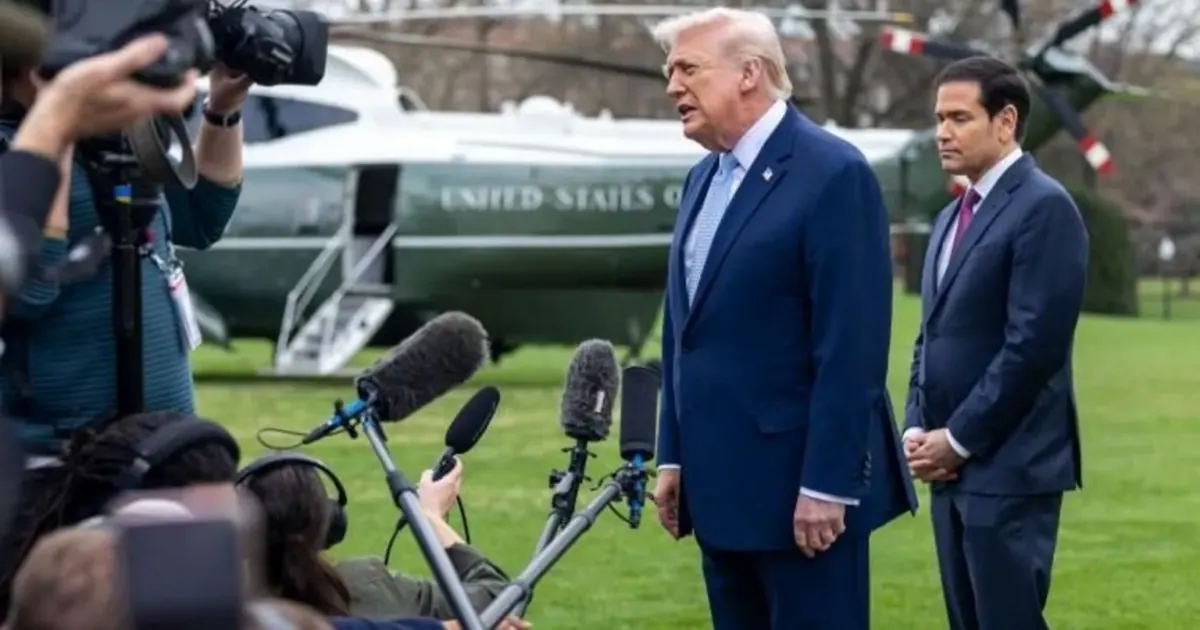
The US Justice Department has filed documents in a District of Columbia court accusing CNN, Politico, and MSNBC of spreading verifiable falsehoods and threatening national security. The three media outlets were banned from the White House by President Donald Trump last week, who claimed they were spreading fake news. The ban was met with a joint lawsuit from the outlets, who argue that the move is unconstitutional and breaches their rights under the First Amendment.
According to the court filing, the White House provided the three outlets with a list of reporting incidents before the ban was implemented. The incidents include stories about construction at the White House, such as a security bunker and a new ballroom, as well as a report on an internal information leak investigation. The Justice Department argues that access to the White House is a privilege, not a right, and that the outlets' reporting threatened national security.
The three media outlets have strongly disputed the accusations, arguing that the ban is an attempt to silence them and threaten press freedom. In a joint statement, they said that the White House revoked their journalists' credentials without notice or process, and that this threatens the public's right to independent journalism free from government interference.
A judge is set to decide whether to issue an order temporarily lifting the ban, pending a full hearing, on Wednesday. The case has sparked widespread debate about the role of the media in a democratic society and the limits of government power. Major TV networks have withdrawn from a media-sharing arrangement with the White House in protest over the ban.
In response to the ban, the White House has launched its own streaming channel, Trump TV, which operates a 24/7 feed of clips of the president. The move has been seen as an attempt to bypass traditional media outlets and communicate directly with the public. The ban has also sparked concerns about the erosion of press freedom and the increasing polarization of the media landscape.
The US and other countries have seen a rise in tensions between governments and media outlets in recent years. The issue has sparked debates about the role of the media in holding those in power accountable and the need for a free and independent press. The outcome of the court case is likely to have significant implications for the future of press freedom in the US.
The case is ongoing, with a decision expected soon. The three media outlets are seeking a temporary injunction to restore their access to the White House. The Justice Department is defending the ban, arguing that it is necessary to protect national security. The case has significant implications for the relationship between the government and the media in the US.
Key points
- The US Justice Department has accused three media outlets of spreading falsehoods and threatening national security.
- The ban on the media outlets has sparked debate about press freedom and government power.
- The White House has launched its own streaming channel in response to the ban.