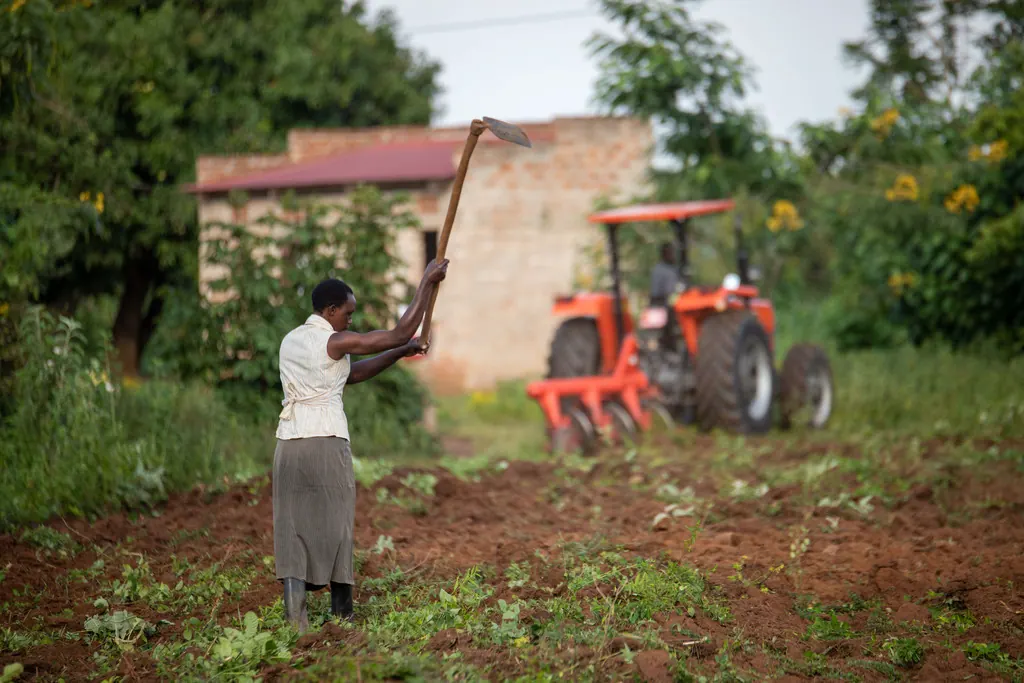
Tanzania's agricultural sector is poised to tap into a new commercial frontier, where crop residues and agro-processing by-products are being viewed as feedstock for new businesses and industries. Millions of tonnes of materials from cassava peels and rice husks to maize cobs, sugarcane bagasse and coffee-processing waste are being explored for use in fertiliser, animal feed, energy, biochar and other industrial products. This shift is driven by biotechnology and innovation, offering ways to convert agricultural leftovers into marketable products while creating additional revenue streams for farmers, processors and entrepreneurs.
The country generates an estimated 14.4 to 20.7 million tonnes of solid waste annually, with organic and agricultural waste accounting for more than 63 per cent. Much of this material is burned, dumped or left to decompose. Experts say residues from crops such as cashew, coconut, coffee, rice, maize, sugarcane, banana, sisal and sunflower could provide feedstock for new businesses if appropriate technologies, markets and collection systems are developed. The Tanzania Commission for Science and Technology (COSTECH) is leading research and innovation efforts to transform agricultural waste into an economic resource.
COSTECH Director General, Dr Amos Nungu, says research should establish what residues are available, where they are produced, in what quantities and during which seasons. Such information can help investors identify viable value chains and suitable technologies. The opportunity is built around a circular bioeconomy, where materials remain in productive use rather than becoming waste. Crop residues can be processed into fertiliser, animal feed, biogas, biochar, fibres, construction materials and other products, creating additional value from the same agricultural output.
Agricultural Growth Corridors of Tanzania (AGCOT) Chief Executive Officer, Mr Geoffrey Kirenga, says residues should be directed to their highest sustainable value, depending on their characteristics, availability and farming needs. Some could be used for animal feed, others returned to the soil, while suitable residues could be converted into biochar, energy or industrial products. This could allow a single crop to generate several economic products instead of losing value once the main harvest has been sold.
One promising opportunity is biochar, a carbon-rich material produced by heating biomass under limited oxygen. Studies in Tanzania have found that, under specific conditions, biochar can improve soil properties and support crop productivity. Research in the Southern Highlands, for example, examined maize-cob biochar in coffee farms and reported improvements in soil properties and coffee and maize yields. However, experts caution against treating biochar as a universal solution.
Agricultural and organic waste can also be processed into compost, soil conditioners and biofertilisers, creating markets around locally available materials. Tanzania already has companies operating in the fertiliser sector, including Guavay, Minjingu, ITRACOM and Yara Tanzania, while research initiatives are exploring locally produced organic fertilisers. Agricultural residues also offer opportunities in the energy business, with dry materials processed into briquettes and pellets, and suitable organic waste converted into biogas.
However, before agricultural waste becomes wealth, someone has to collect it. Residues from processing facilities are generally easier to collect, but maize stalks and rice straw can be widely scattered, making collection, storage and transportation costly. Despite the logistics challenge, experts believe that with the right technologies, markets and collection systems, Tanzania can unlock the potential of its agricultural waste and create new business opportunities.
Key points
- - Tanzania generates an estimated 14.4 to 20.7 million tonnes of solid waste annually. - Crop residues can be processed into fertiliser, animal feed, biogas, biochar, fibres, construction materials and other products. - Biochar has been found to improve soil properties and support crop productivity in specific conditions.