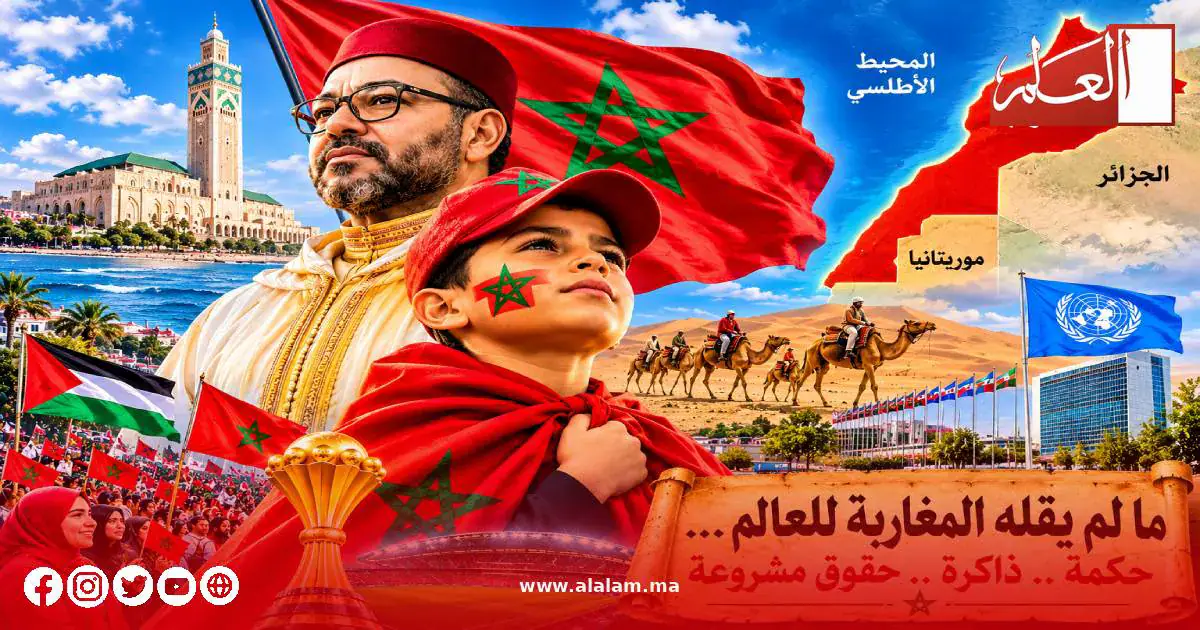
Moroccan writer Bouchaib Hamraoui has recently published a book that addresses several unspoken issues regarding Morocco's history, politics, and international relations. In his work, Hamraoui tackles sensitive topics such as the Western Sahara conflict, the country's stance on Palestine, and its relationships with neighboring countries. He argues that Moroccans have chosen wisdom over revenge, extending a hand of reconciliation despite past grievances. This approach, according to Hamraoui, does not imply forgetting or abandoning their rights.
One of the primary issues Hamraoui discusses is the Western Sahara conflict. He explains that Moroccans propose autonomy under Moroccan sovereignty as a solution to the longstanding dispute. This initiative, presented in 2007, aims to bring an end to the conflict and provide the region's inhabitants with extensive powers to manage their affairs. Hamraoui emphasizes that this proposal is not a renunciation of Moroccan sovereignty but rather a willingness to find a political solution that preserves national unity.
The international community's response to Morocco's autonomy proposal has been mixed. Some countries have supported the initiative, while others have expressed reservations or maintained a neutral stance. Hamraoui criticizes certain nations for prioritizing their interests over finding a solution to the conflict. He also highlights the need for transparency and accountability in the United Nations' handling of the issue, particularly regarding the MINURSO mission, which has been in place since 1991.
Another topic Hamraoui addresses is the status of Ceuta and Melilla, two Spanish enclaves on Morocco's northern coast. He argues that Morocco considers these cities a historical issue that has not been resolved between the two countries. While Spain claims Ceuta and Melilla as its own, Morocco maintains that their status is a matter of national sovereignty and historical grievance. Hamraoui asserts that Morocco's silence on this issue does not imply abandonment of its claims.
Hamraoui also touches on the Eastern Sahara, a region that has been a point of contention between Morocco and Algeria. He notes that Morocco could have used its historical claims to this region as leverage during Algeria's struggle for independence but chose not to. Instead, King Mohammed V opted to support the Algerian independence movement, demonstrating Morocco's commitment to regional solidarity.
The writer emphasizes that Moroccans have a long memory, preserving the good while not forgetting past grievances. He argues that their approach to international relations is guided by a desire for peaceful coexistence and cooperation. Hamraoui's work is an attempt to shed light on Morocco's unspoken truths, providing a nuanced understanding of the country's history, politics, and relationships with the world.
Ultimately, Hamraoui's book aims to provide a more comprehensive understanding of Morocco's stance on various international issues. By examining the country's history, politics, and relationships with neighboring countries, he offers insights into the complexities of Moroccan foreign policy. His work serves as a valuable resource for those seeking to understand the intricacies of Morocco's position on key global issues.
Key points
- Morocco's autonomy proposal for Western Sahara is not a renunciation of sovereignty but a willingness to find a political solution.
- The country's silence on certain issues, such as Ceuta and Melilla, does not imply abandonment of its claims.
- Moroccans prioritize peaceful coexistence and cooperation in their international relations.