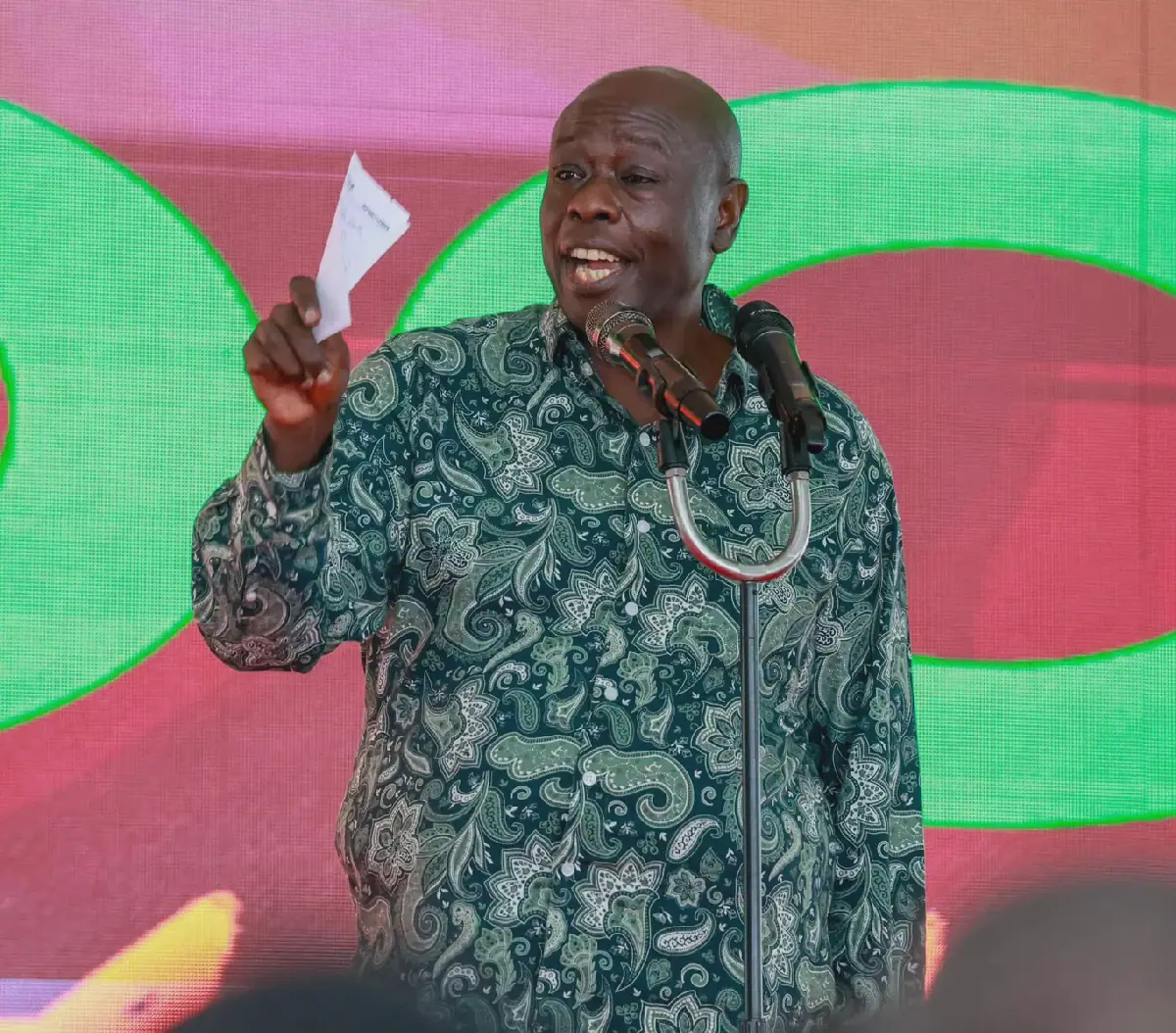
Former Deputy President Rigathi Gachagua has publicly criticised Jubilee leader Fred Matiang'i and former Attorney General Justin Muturi for describing him as a hindrance to opposition unity. On November 3, Gachagua responded to their remarks, arguing that the presidential contest depends on voter numbers rather than ideas or policy plans. He emphasised that a solid voter base is crucial for success. Gachagua's comments were made in Wamunyoro, where he addressed the issue of opposition unity and vote mobilisation.
Gachagua rejected claims that he was proud of his numbers, insisting that the figures were earned through hard work and mobilisation rather than entitlement. He accused Matiang'i and Muturi of waiting to be handed the presidency and urged them to engage in grassroots campaigning instead of relying on boardroom discussions. According to Gachagua, removing President William Ruto would require about 18 million votes, a target that cannot be achieved through press conferences or letters.
The former Deputy President called for respect in political discourse, warning that he would not tolerate being spoken to in a patronising manner. He questioned Muturi's authority to lecture him on vote mobilisation, noting the Democratic Party's poor showing in a recent MCA by-election. In the by-election, the Democratic Party mobilised only 35 supporters, resulting in a 238-vote loss.
Gachagua suggested that the criticism stemmed from jealousy after the Democratic Citizens Party's victory in the Ol-Kalou parliamentary by-election. In the by-election, his party secured more than 35,000 votes, while other United Opposition parties managed only a few hundred. He highlighted the significant difference in voter mobilisation between his party and others.
The Ol-Kalou win demonstrated Gachagua's capacity to mobilise votes against President Ruto, countering claims that his pride would undermine opposition unity. He emphasised that his party's grassroots numbers, not elite talk, will decide the opposition's chances. Gachagua's comments reflect his confidence in his party's ability to mobilise voters.
Gachagua's response to Matiang'i and Muturi's criticism reflects a deeper debate within the opposition on how to challenge President Ruto. The debate centres on the best approach to voter mobilisation and the role of grassroots campaigning in the presidential contest. Gachagua's stance is clear: he believes that a strong voter base is essential for success.
The exchange between Gachagua and the Jubilee leaders highlights the complexities of opposition politics in Kenya. As the country prepares for the presidential contest, various factions within the opposition are vying for influence and position. Gachagua's comments have added fuel to the debate, underscoring the challenges of building a united opposition front.
Key points
- Gachagua criticises Jubilee leaders for relying on boardroom discussions rather than grassroots campaigning.
- The former Deputy President emphasises the need for 18 million votes to remove President Ruto.
- Gachagua cites the Ol-Kalou by-election as evidence of his party's voter mobilisation capacity.