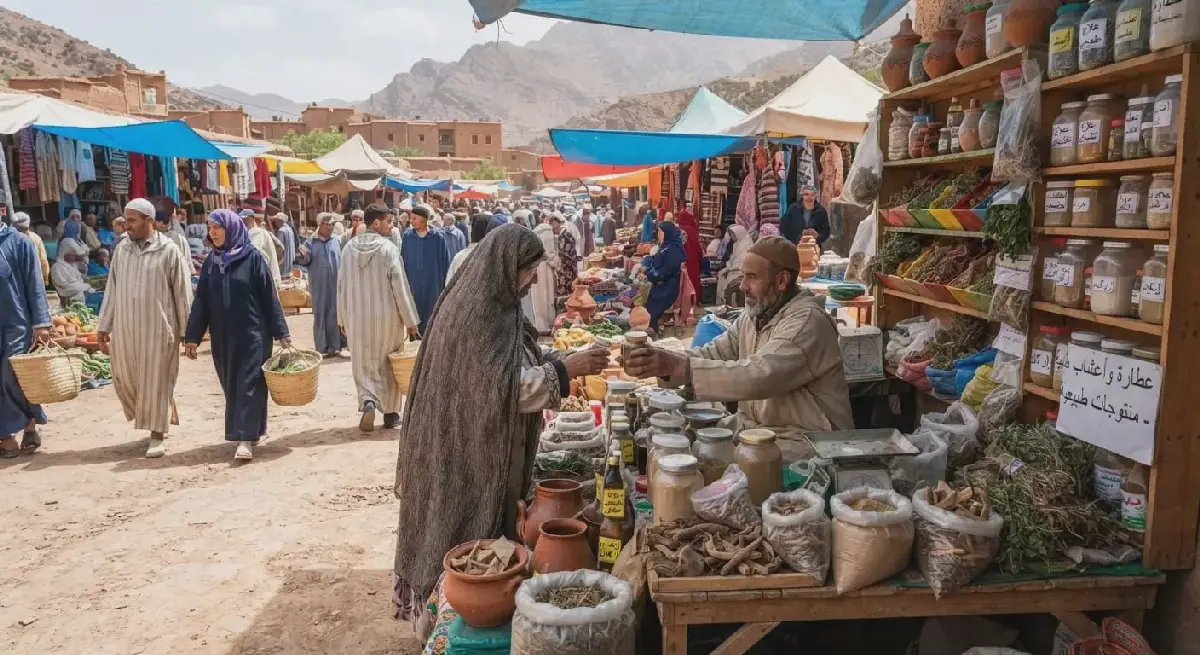
Weekly markets in Morocco's rural areas, such as the Sabaayoun market in the Hajeb province, have become essential economic and social hubs for local residents. These markets offer a range of food products and daily necessities. However, they are also marred by negative phenomena, including the sale of unlicensed medicines through loudspeakers, causing significant disturbance to shoppers and vendors alike.
Vendors of these unlicensed medicines claim that their products can cure various ailments, including joint pain, rheumatism, and digestive issues. They use misleading marketing phrases to convince citizens of their products' supposed extraordinary healing powers, despite the lack of scientific or medical guarantees. This phenomenon is not unique to the Sabaayoun market but has been observed in several rural and weekly markets across Morocco.
The issue raises concerns among citizens, who wonder how unlicensed medicines are allowed to be sold in public markets without any oversight. They also question the absence of administrative police, health authorities, and consumer protection associations in addressing this issue. The situation is further complicated by the fact that these vendors often make exaggerated claims about their products' capabilities.
The consequences of consuming unknown substances can be severe, particularly for vulnerable groups such as the elderly, children, and those with pre-existing medical conditions. Furthermore, the sale of unlicensed medicines undermines trust in healthcare institutions and may lead patients to delay seeking proper medical treatment. The use of loudspeakers to promote these products also contributes to noise pollution and disturbance in the markets.
To address this issue, authorities must take measures to regulate the sale of medicines in rural markets. This includes conducting regular health and administrative checks, banning the sale of unlicensed medicines, and imposing penalties on violators. Additionally, public awareness campaigns are necessary to educate citizens about the risks associated with purchasing unlicensed medicines.
The goal is not to stifle legitimate trade or deprive rural markets of their vitality but to protect citizens' health and well-being. By taking a proactive and coordinated approach, authorities can ensure that rural markets remain safe and reliable spaces for economic and social exchange.
Ultimately, it is crucial that rural markets like Sabaayoun remain spaces for legitimate economic activity and safe trade, rather than becoming platforms for promoting unlicensed and potentially hazardous products.
Key points
- Unlicensed medicines are being sold in rural Moroccan markets, often promoted through loudspeakers, and pose a significant threat to public health.
- The sale of these medicines undermines trust in healthcare institutions and may lead patients to delay seeking proper medical treatment.
- Authorities must take measures to regulate the sale of medicines in rural markets, including conducting regular health and administrative checks.