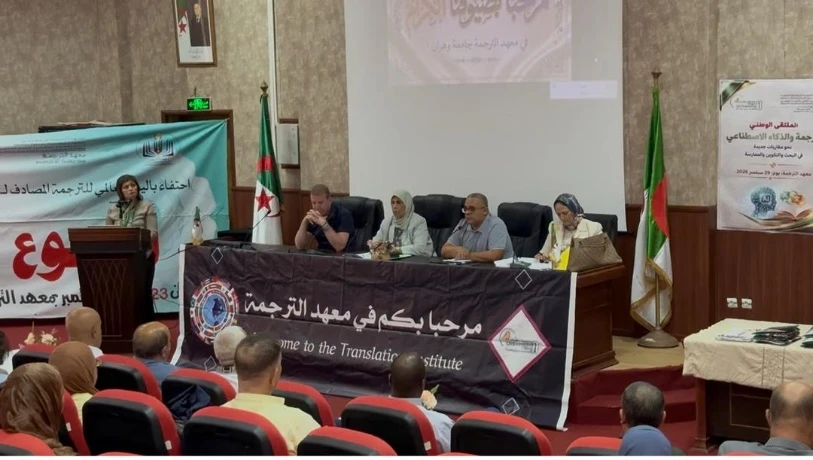
The University of Oran 1 Ahmed Ben Bella recently organized a study day on the use of artificial intelligence in translation, bringing together experts and professionals in the field. The event, held at the Institute of Translation, aimed to explore the impact of AI on the translation profession and identify opportunities for investment in modern technologies. The meeting was attended by academics, researchers, and students, who discussed the benefits and challenges of using AI in translation.
The Director of the Institute of Translation, Jazia Ferkani, emphasized that the meeting was designed to approach the topic of artificial intelligence from three main axes: student training, scientific research in translation, and professional practice. She noted that the event was motivated by the increasing debate about the future of the translation profession in the face of the widespread adoption of AI applications. Ferkani stressed the importance of training students to use AI tools effectively and to develop their skills as translators, editors, and reviewers.
The meeting also featured a presentation by Dr. Touhami Wassam, Director of the Laboratory of Translation and Text Types at the University of Oran 1 Ahmed Ben Bella. Dr. Wassam highlighted the significance of the event, which coincided with the International Day of Translation, and noted that it provided an opportunity to assess the current state of the profession and the challenges faced by students and professionals in the face of rapid AI developments.
The use of AI in translation has become increasingly prevalent, with many tools and platforms available to support the translation process. However, there are concerns about the potential impact of AI on the translation profession, with some arguing that it could lead to job losses or changes in the role of translators. The University of Oran's study day aimed to address these concerns and explore ways to harness AI to improve the translation process.
The event included discussions and debates on the benefits and limitations of AI in translation, as well as presentations on the latest developments in the field. Participants emphasized the need for translators to develop their skills in using AI tools and to work effectively with these technologies. They also highlighted the importance of preserving the human element in the translation process and ensuring that AI is used to support, rather than replace, human translators.
The study day was part of a broader effort to promote innovation and investment in modern technologies in Algeria. The country has been actively promoting the development of its digital economy and has launched several initiatives to support the growth of the tech sector. The University of Oran's event was seen as an important contribution to this effort, highlighting the potential for AI to drive growth and innovation in the translation sector.
The University of Oran 1 Ahmed Ben Bella has been at the forefront of efforts to promote innovation and investment in modern technologies in Algeria. The university has established several research centers and laboratories focused on AI, translation, and other emerging technologies. The study day on artificial intelligence in translation was part of a broader program of events and activities aimed at promoting collaboration and knowledge-sharing between academics, researchers, and professionals in the field.
Key points
- The University of Oran 1 Ahmed Ben Bella organized a study day on the use of artificial intelligence in translation to explore the impact of AI on the translation profession.
- The event aimed to promote the use of AI in translation and to identify opportunities for investment in modern technologies.
- The meeting highlighted the need for translators to develop their skills in using AI tools and to work effectively with these technologies.