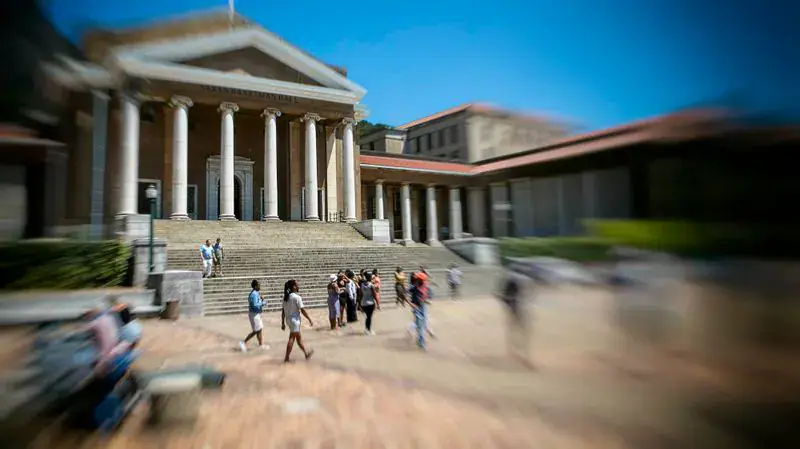
Student hunger is a pervasive issue at South African universities, with many students struggling to balance their studies and survival. Without funding, some students rely on their parents' social grants or university food programmes to get by. Universities are trying to provide daily meals to thousands of needy students, but only a certain number can be supported due to limited resources. The University of Cape Town's Food Sovereignty Programme, established in 2008, has supported 2,315 students with monthly grocery packs in 2026 alone.
The University of Cape Town's programme provides food assistance through grocery packs containing non-perishable food items and toiletries. According to spokesperson Elijah Moholola, a donation of R455 can provide a student with up to two weeks' worth of non-perishable food items and a month's supply of toiletries. The programme's ability to respond to demand is dependent on financial contributions and donations. The University of the Witwatersrand supports 5,000 students annually, offering a combination of direct food distribution, free prepared meals, food gardens, and a student communal kitchen.
The University of Pretoria's Student Nutrition and Progress Programme (Snapp) supported 4,316 students from 2021 to 2025. The programme provides food assistance through food parcels, meal allowances, and immediate support. Deputy Director: Student Affairs, Dr Lekwa Mokwana, noted that demand for food assistance has continued into 2026, partly due to delays in National Student Financial Aid Scheme (NSFAS) payments. Students without funding often rely on university food programmes and donations to survive, with some going hungry for extended periods.
Students from various universities shared their experiences with food hunger. A first-year student at Walter Sisulu University, who wished to remain anonymous, relies on her uncle and grandmother for support, as her parents live on a grant. She sometimes goes hungry and bunk classes, but forces herself to study during exams. A Cape Peninsula University of Technology (CPUT) student also receives help from friends and the university, using a food voucher programme to access groceries.
Universities are exploring various initiatives to address student hunger. CPUT's spokesperson, Lauren Kansley, mentioned that the university averages around 500 requests from students for food and is considering food banks, voucher programmes, and nutritional workshops. The university has also acquired land to train agriculture students and produce food for students. Other universities, such as the University of Johannesburg, issue non-perishable food items to students.
Research by the University of the Western Cape indicates that hunger among students across South African universities ranges from 30% to 65%. The Union Against Hunger's recent submission to the South African Human Rights Commission inquiry into South Africa's food systems highlighted the issue. Universities are working to provide meals daily, but financial challenges can limit programme sustainability. The University of Mpumalanga and Stellenbosch University are among those offering food assistance to students.
Despite the efforts of universities, student hunger remains a significant challenge. The University of the Witwatersrand's manager for student support and community outreach, Karuna Singh, noted that student hunger mirrors broader societal issues of poverty, inequality, and food insecurity. To address this, universities must continue to seek innovative solutions and support from donors and the broader public to ensure that students can access nutritious food and succeed academically.
Key points
- University food schemes face funding constraints and rising demand.
- Student hunger affects up to 65% of South African university students.
- Universities are exploring innovative solutions, including food gardens and voucher programmes.