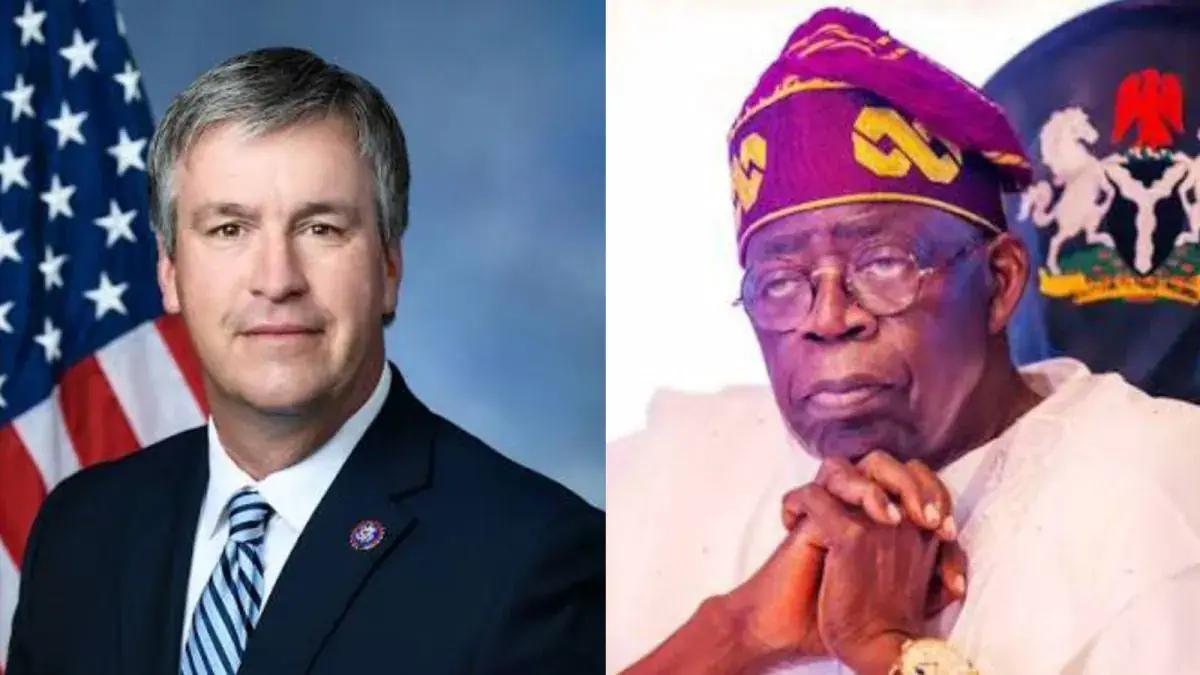
US Congressman Barry Moore has introduced a bill aimed at preventing the Nigerian government from paying lobbying firms to represent its interests in the United States. The proposed legislation, H.R. 10939, was introduced on October 29, 2026, amid increasing pressure in Washington over Nigeria's security situation and allegations of attacks against Christian communities. Moore, a Republican representing Alabama's First Congressional District, argues that the Nigerian government has continued to spend substantial amounts of money engaging lobbying firms in Washington to influence public opinion and defend its record on religious freedom.
The bill seeks to restrict individuals and organisations in the US from receiving payment to lobby on behalf of the Nigerian government while Nigeria remains designated as a Country of Particular Concern (CPC) over religious freedom violations. Moore stated that the Nigerian government should not be allowed to use paid lobbyists to influence its image in the US while concerns over attacks and killings remain unresolved. He emphasised that the legislation would place a restriction on individuals and firms receiving financial compensation for lobbying activities on behalf of the Nigerian government.
The proposed legislation is expected to affect the activities of lobbying and public relations organisations working for the Nigerian government in the US. It would also place additional pressure on Abuja's efforts to manage its diplomatic relationship with Washington while the religious freedom designation remains in force. However, the proposal is still at an early stage of the legislative process and has not been passed by the House of Representatives or the Senate.
US President Donald Trump redesignated Nigeria as a Country of Particular Concern on October 31, 2025, following accusations that Christians were facing severe persecution and targeted killings in parts of the country. The designation brought Nigeria's security and religious freedom situation under renewed scrutiny in Washington and opened the possibility of diplomatic and other measures under American religious freedom legislation.
The Nigerian government has repeatedly rejected claims that it is deliberately targeting Christians or allowing systematic religious persecution. Abuja has maintained that insecurity affects people of different religious backgrounds and that armed groups, including terrorists and criminal organisations, attack both Christian and Muslim communities.
In January 2026, reports emerged that Nigeria had hired Washington-based lobbying and consulting firm DCI Group to help explain its efforts to protect Christian communities and address what the government considers misleading narratives about religious persecution. The six-month agreement was valued at $4.5 million, with a possible additional $4.5 million renewal. The arrangement was disclosed in a filing with the US Department of Justice on December 18, 2025.
If H.R. 10939 eventually receives congressional approval and becomes law, lobbying firms operating in the US could face restrictions on accepting payments from the Nigerian government for the duration of the CPC designation. The introduction of the bill comes against the background of renewed tensions between Nigeria and the US over allegations of religious persecution and the Nigerian government's handling of insecurity.
Key points
- US Congressman Barry Moore introduces bill to prevent Nigerian government from hiring US lobbyists amid concerns over religious freedom violations.
- The proposed legislation, H.R. 10939, aims to restrict individuals and organisations in the US from receiving payment to lobby on behalf of the Nigerian government while Nigeria remains designated as a Country of Particular Concern.
- The bill's introduction comes amid renewed tensions between Nigeria and the US over allegations of religious persecution and the Nigerian government's handling of insecurity.